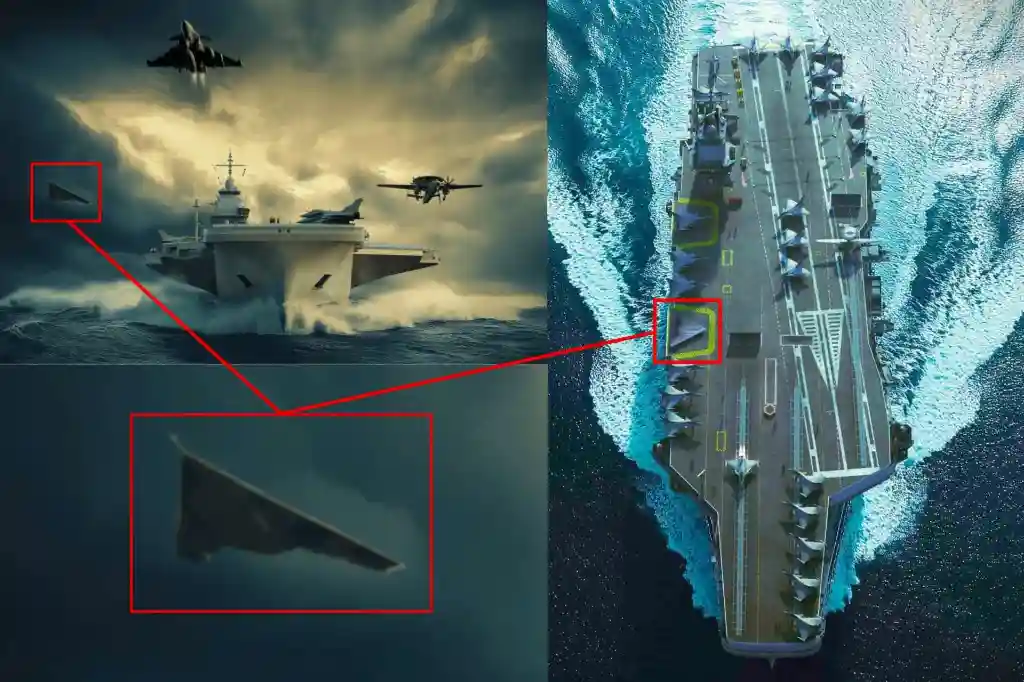
France has taken a decisive step into the future of naval aviation with the unveiling of its next-generation nuclear-powered aircraft carrier, France Libre—a platform designed not merely to replace the aging Charles de Gaulle, but to redefine the very architecture of carrier-based warfare. Announced by Emmanuel Macron, the program signals a bold doctrinal shift toward an integrated air wing where crewed fighter jets and stealth unmanned systems operate as a unified combat ecosystem.
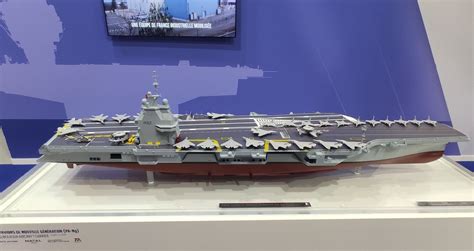
The significance of this announcement extends far beyond symbolism. At 310 meters in length and powered by nuclear propulsion, France Libre is being engineered as a strategic centerpiece for French naval power projection well into the second half of the 21st century. Scheduled for sea trials in 2036 and entry into service by 2038, the carrier is not simply larger—it is fundamentally smarter, more flexible, and future-ready.
A Carrier Designed for the Age of Hybrid Air Power
The design philosophy behind France Libre reflects a profound transformation in military thinking. Unlike traditional carriers that rely almost exclusively on manned fighter aircraft, this new platform is being built from the ground up to support a mixed air wing—a seamless blend of crewed and uncrewed systems operating in coordination.
At the heart of this air wing will be the navalized Dassault Rafale M, a combat-proven multirole fighter that will continue to serve as the backbone of French naval aviation. However, the real innovation lies in the integration of next-generation unmanned systems tied to the Future Combat Air System (FCAS), also known in France as SCAF.
This integration is not an afterthought—it is a core design requirement. The flight deck, launch systems, and mission architecture are all being optimized to accommodate future unmanned combat aerial vehicles (UCAVs), enabling a level of operational flexibility that legacy carriers simply cannot match.
Electromagnetic Catapults and the Future of Launch Systems
One of the most critical technological upgrades aboard France Libre is the adoption of electromagnetic aircraft launch systems (EMALS). This advanced launch technology replaces traditional steam catapults with a system that offers greater precision, reduced stress on airframes, and the ability to launch a wider variety of aircraft—including lighter unmanned platforms.
This capability is essential for the deployment of stealth drones, which often require different launch parameters compared to heavier, crewed fighters. By incorporating EMALS, France ensures that its carrier will remain compatible with evolving airframe designs for decades to come.
The inclusion of such systems also aligns France with cutting-edge naval aviation practices, positioning France Libre alongside the most advanced carriers globally in terms of launch and recovery capabilities.
Stealth Drones: From Concept to Operational Reality
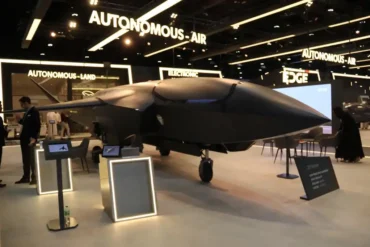
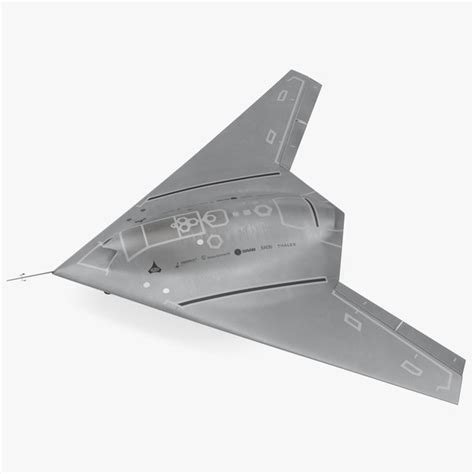
Perhaps the most intriguing aspect of the France Libre reveal is the visual confirmation of a tailless stealth drone integrated into the carrier’s conceptual air wing. While no official designation has been confirmed, the aircraft’s design strongly echoes the characteristics of the Dassault nEUROn, a technology demonstrator developed by Dassault Aviation in collaboration with European partners.
It is crucial to understand that nEUROn itself is not an operational platform, but rather a testbed for low-observable technologies, autonomous systems, and advanced mission profiles. The drone depicted in the France Libre model is more accurately interpreted as a future carrier-capable UCAV, likely derived from the technological foundation established by nEUROn.
This distinction matters. What France is signaling is not the deployment of an existing drone, but the intent to field a new generation of stealth combat drones specifically designed for carrier operations—an ambitious leap that places it at the forefront of naval innovation.
Redefining the Carrier Air Wing
The implications of integrating stealth drones into a carrier air wing are profound. Traditionally, aircraft carriers have relied on manned fighters for strike, reconnaissance, and air superiority missions. However, the introduction of UCAVs fundamentally alters this equation.
Stealth drones can operate in high-risk, heavily defended environments where sending a human pilot would be unacceptable. They can serve as forward sensors, electronic warfare platforms, or decoys, extending the reach and survivability of the entire carrier strike group.
In the context of France Libre, this means the air wing could evolve into a distributed, networked combat system where each asset—manned or unmanned—plays a specialized role within a larger operational framework. Fighters like the Rafale M may focus on command and complex engagement scenarios, while drones handle penetration, surveillance, and suppression of enemy defenses.
This shift is not merely incremental—it represents a paradigm change in how naval air power is conceived and executed.
Integration Within the FCAS Ecosystem
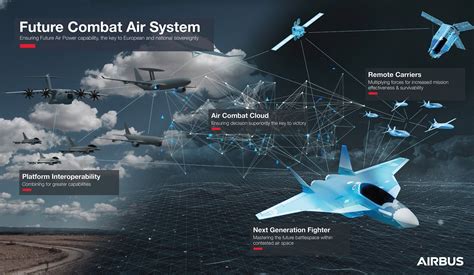
The connection between France Libre and the Future Combat Air System is central to understanding the program’s long-term trajectory. FCAS is not just a fighter jet; it is a system of systems, encompassing manned aircraft, remote carriers (drones), and a sophisticated combat cloud that links all elements in real time.
By aligning the carrier’s air wing with FCAS, France is effectively ensuring that its naval aviation capabilities will be fully integrated into this broader ecosystem. This means that drones launched from France Libre could operate in coordination with land-based assets, satellites, and other platforms, creating a multi-domain combat network.
Such integration enhances situational awareness, accelerates decision-making, and enables more complex mission profiles—all critical advantages in modern warfare.
Strategic Implications for Naval Power Projection
Beyond the technical innovations, France Libre carries significant strategic weight. As the successor to the Charles de Gaulle, it will serve as the flagship of the French Navy, enabling sustained operations in contested regions around the globe.
The addition of stealth drones enhances this capability by allowing the carrier to operate more effectively in environments where anti-access/area denial (A2/AD) systems pose a serious threat. By deploying low-observable UAVs ahead of the main force, France can gather intelligence, disrupt enemy defenses, and create windows of opportunity for follow-on operations.
Moreover, the flexibility offered by a mixed air wing ensures that France Libre can adapt to a wide range of mission profiles—from high-intensity conflict to humanitarian assistance—without being constrained by the limitations of a single type of aircraft.
A Measured but Decisive Evolution
Despite the excitement surrounding stealth drones, French officials have been careful to avoid overstatement. France Libre is not being labeled as a “drone carrier,” nor is any specific UCAV platform being officially confirmed at this stage. This measured approach reflects a commitment to technological realism and strategic flexibility.
What is clear, however, is the direction of travel. France is investing in a carrier that can evolve alongside emerging technologies, rather than being locked into a fixed configuration. This adaptability is perhaps its greatest strength.
The inclusion of unmanned systems is not just an enhancement—it is a foundational element of the carrier’s design, ensuring relevance in an era where autonomy, stealth, and networked warfare are becoming dominant factors.
The Future of French Carrier Aviation
As the 2030s approach, France Libre stands poised to become a symbol of a new era in naval aviation—one defined by integration, innovation, and strategic foresight. The combination of nuclear propulsion, electromagnetic launch systems, and a hybrid air wing positions France at the cutting edge of maritime military power.
If the envisioned stealth UCAV becomes operational, the carrier will be capable of executing layered, distributed operations that were previously unimaginable. It will not just project power—it will reshape the battlespace, leveraging a blend of human expertise and machine precision.
In this context, France Libre is more than a replacement for an aging vessel. It is a statement of intent, a declaration that France is prepared to lead in the next generation of naval warfare—where the line between manned and unmanned systems blurs, and where the future belongs to those who can integrate both into a cohesive, lethal force.