The idea of $29 transatlantic flights sounds like aviation fantasy, the kind of number usually reserved for marketing headlines rather than boarding passes. Yet that exact figure has resurfaced as Wizz Air UK quietly takes its first formal step toward flying to the United States. The ultra-low-cost carrier has applied for a US foreign air carrier permit, a move that opens the door to charter and scheduled flights across the Atlantic under the UK–US Open Skies Agreement. The application alone is enough to reignite speculation about whether long-haul budget travel is finally ready for its next disruption—or whether this is something far narrower, more tactical, and far less revolutionary than the headline fare suggests.
What makes this development compelling is not just the permit itself, but who is applying and how carefully limited the ambition appears to be. Wizz Air has spent years publicly rejecting the idea of scheduled North Atlantic services, repeatedly calling them uneconomic and strategically risky. This application, therefore, is less a reversal and more a controlled experiment, shaped by timing, regulation, and a very specific global event.
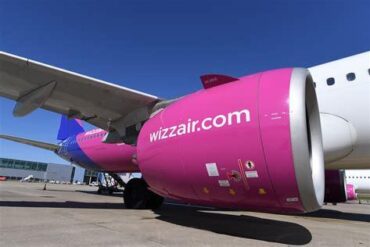
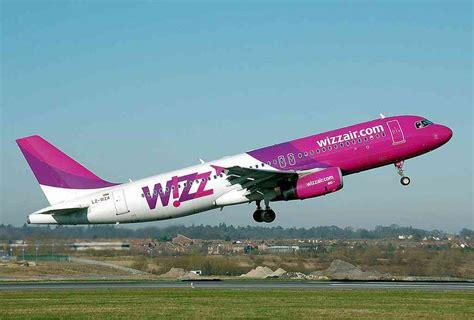
Wizz Air UK’s filing with the US Department of Transportation was submitted on January 23 and requests expedited processing to allow services to begin “as soon as possible.” No routes, aircraft, or launch dates were disclosed, a silence that is typical for regulatory filings but revealing in its restraint. This is not a grand unveiling of a transatlantic network. It is a permission slip—nothing more, nothing less.
The structure of the application matters. By applying through its UK operating certificate, Wizz Air sidesteps some of the political and regulatory resistance that derailed its 2022 attempt via its Hungarian unit. That earlier bid, tied to a single A330 freighter operating on behalf of the Hungarian government, was rejected outright. This time, the legal footing is stronger, the precedent clearer, and approval far more likely, even if opposition from US aviation unions is almost guaranteed.
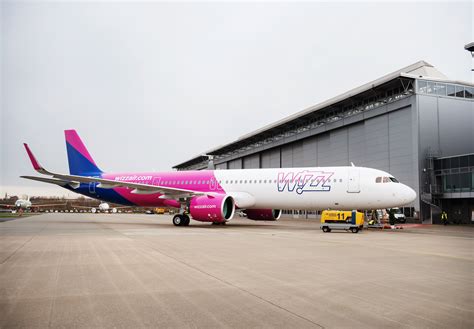
Approval, however, does not equal execution. Flying across the Atlantic introduces a cascade of operational requirements that Wizz Air has historically avoided. ETOPS certification, specialized pilot training, extended maintenance protocols, and contingency planning for long overwater segments all add cost and complexity. While there are theoretical workarounds—hugging coastlines to reduce ETOPS exposure, for example—those solutions increase flight time and reduce payload efficiency. For an airline built on razor-thin margins, every extra minute in the air matters.
This is where the “twist” becomes clear. Wizz Air has indicated that its initial US operations would be charter flights, not regular scheduled services. That distinction is crucial. Charter operations allow airlines to operate outside the relentless frequency, pricing transparency, and competitive pressure of scheduled routes. They also align neatly with event-driven demand, where planes are full, yields are predictable, and marketing costs are minimal.
The most plausible catalyst is the FIFA World Cup, which will be partly hosted in the United States. Wizz Air has extensive experience operating event-specific charters across Europe, moving football fans at scale for major tournaments. In those cases, seats were sold directly on its website, fares were aggressively priced, and aircraft utilization was tightly optimized around match schedules. Applying that model to transatlantic travel transforms a risky long-haul venture into a finite, high-demand operation with a clear end date.
This context also explains why the oft-cited $29 fare should be treated as symbolic rather than literal. On a transatlantic flight, taxes, airport fees, and security charges alone exceed that figure many times over. Any advertised base fare would represent only a fraction of the final ticket price. The real value proposition would be lower total fares than legacy carriers, not impossibly cheap ones.
Still, timing matters, and the broader transatlantic market is shifting in ways that make even limited entry intriguing. Aer Lingus’s decision to close its Manchester base and withdraw transatlantic routes to destinations like New York JFK has left a measurable capacity gap in Northern England. With approximately 70% of Manchester–US passengers originating in the UK, brand familiarity matters, and Wizz Air already has strong regional awareness through services at Liverpool and Leeds/Bradford.
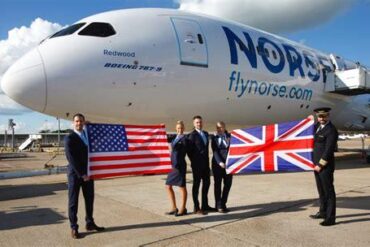
A similar pattern is emerging at London Gatwick, where Wizz Air UK bases its incoming A321XLR fleet. British Airways, Delta Air Lines, and JetBlue have all exited Gatwick–JFK, leaving Norse Atlantic as the sole operator. Reduced competition has thinned capacity, though it also reflects softer demand compared to Heathrow. From a purely strategic standpoint, these gaps are tempting, even if Wizz Air insists it has no intention of filling them with scheduled flights.
That insistence has been consistent and emphatic. CEO József Váradi has repeatedly dismissed the North Atlantic as a graveyard for low-cost ambitions, arguing that the economics simply do not work. His now-famous remark about airlines being “buried in the ocean” was not hyperbole but a blunt assessment rooted in fuel volatility, labor costs, and the unforgiving nature of long-haul disruption. From that perspective, the current application does not contradict past statements; it carefully avoids them.
Charter flexibility also explains why the application includes permission for scheduled services, even if they never materialize. Securing broad authority now avoids the need for a second regulatory process later. In aviation bureaucracy, optionality is a strategic asset.
What emerges from all this is not a revolution but a calculated probe. Wizz Air is testing the boundaries of its model without committing to a permanent transatlantic presence. It is positioning itself to exploit a short-term demand spike, leverage regulatory alignment, and observe real-world economics under controlled conditions. That approach is entirely consistent with an airline that has grown by saying “no” far more often than “yes.”
The fascination with $29 fares misses the deeper story. The real signal is that even the most skeptical low-cost operator in Europe sees situational value in crossing the Atlantic—just not in the way many expect. If Wizz Air does fly to the US, it will do so on its own terms: limited, opportunistic, and tightly bounded by risk. That may not rewrite the rules of long-haul travel, but it does reveal how those rules are being quietly tested, one permit at a time.