
In the ever-evolving world of airfare pricing, there’s one persistent myth that continues to linger: that Tuesday is the cheapest day to book flights. While it holds a sliver of truth, the reality is far more nuanced. Airline pricing operates on complex algorithms, reacting to real-time demand, seat availability, and even competitor pricing. Relying solely on outdated booking myths is no longer enough for travelers aiming to score serious savings.
Travelers must learn the timing secrets, understand day-specific trends, and stay flexible if they want to beat the system. Through extensive data from platforms like Expedia and Hopper, we break down when you should book and when you should fly to truly fly smart and save big.

Best Day to Book Flights: The Data-Backed Reality
The idea of there being a single best day to book is a legacy of outdated travel habits. In 2025, according to Expedia’s latest Air Travel Hacks Report, Sunday emerges as the winner — but with key conditions.
For domestic flights, booking on a Sunday offers average savings of 6% compared to booking on Mondays or Fridays. For international flights, the savings jump to 17%. However, this doesn’t mean Sunday always delivers the lowest fare. Rather, it signals a statistical trend based on booking behaviors and airline adjustments during the week.
Airlines frequently revise their prices throughout the week, with pricing fluctuations sometimes occurring multiple times per day. This is because fares are managed by automated revenue management systems that adjust prices depending on seat demand, competition, and historical data.
The Myth of Tuesday: Why It’s No Longer the Golden Day
Tuesdays were historically considered the sweet spot for flight booking due to legacy systems where airlines released fare batches early in the week. However, this pattern has dissolved. Airlines now practice dynamic pricing, meaning adjustments happen constantly — not just once per week.
While some budget-conscious flyers still scan deals on Tuesdays, the margin of savings is minor at best and often inconsistent. Instead, the best day to book is simply the day you find the right fare for your route and schedule.
The Best Days to Fly: Saturday Takes the Crown
Although booking is unpredictable, flying on the right day can yield substantial savings. Based on data collected by Hopper and Expedia, Saturday consistently offers the cheapest airfare across both domestic and international routes.
- Domestic flights on Saturday are on average 17% cheaper than flying on Sunday.
- Tuesday and Friday also tend to offer budget-friendly alternatives for domestic travel, averaging 12% lower fares than Sundays.
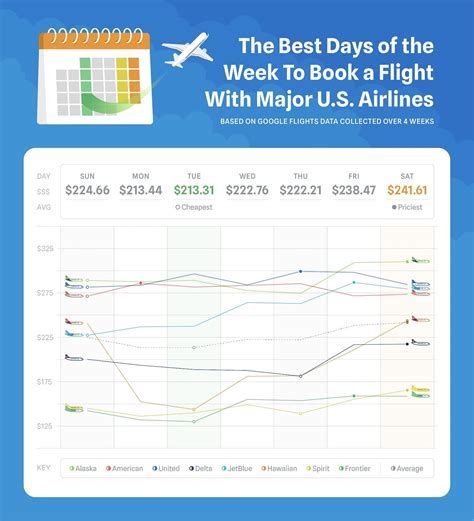
In contrast, Sunday and Monday are the most expensive days to fly, especially for domestic routes. These days are popular for both business and leisure travelers returning from weekend getaways, driving up demand and prices.
Best Days for International Travel: Midweek is Golden
If you’re flying abroad, Wednesdays and Saturdays offer the best deals. Midweek flights tend to carry lighter passenger loads, which means more opportunity for discounts.
According to Hopper, flying to Europe on a Wednesday can save you up to 10% compared to a Friday departure. While that may seem modest, on longer international routes, even a 10% difference can mean hundreds of dollars saved.
What matters most is combining multiple cost-saving strategies: booking within the ideal window, choosing the right day to fly, and avoiding high-traffic holidays whenever possible.
How Holidays Impact Airfare: Plan or Pay
Holiday seasons are an entirely different beast in the airfare world. Whether it’s Thanksgiving, Christmas, or Labor Day, airlines see a dramatic spike in demand — which leads to steeper prices and fuller planes.
Booking holiday flights early — typically 70+ days in advance — is essential. For example, data from Google Flights shows that booking mid-December flights exactly 71 days ahead often results in the lowest fares.
Another cost-cutting strategy is flying on the holiday itself. Christmas Day and Thanksgiving Day typically offer cheaper fares than traveling the day before or after.

Avoiding Peak Days: The Tactical Traveler’s Guide
If you can’t fly on the cheapest day, aim to avoid the priciest. Here’s what current data suggests:
- Sundays are often the most expensive for both booking and flying.
- Mondays are also costly, especially for early morning business travel.
- Tuesdays and Fridays offer a sweet spot — balancing schedule convenience and relative affordability.
Whenever possible, opt to travel during non-peak hours (mid-morning or late evening) to squeeze out additional savings.
Timing Is Everything: Book in the Golden Window
While day-of-week plays a role, booking within the right time frame is even more critical. Here are the optimal windows for booking based on data from Expedia:
- Domestic Flights: Book 1 to 3 months in advance. Fares during this window are on average 25% cheaper than last-minute deals.
- International Flights: Aim to book 2 to 8 months ahead. The longer lead time accommodates more complex pricing models and limited seat availability.
Travelers banking on last-minute deals are often disappointed — not only are the prices high, but the best routes are frequently sold out.
Set Price Alerts and Automate the Hunt
Manually checking fares every day is tedious and inefficient. Instead, use fare tracking tools like:
- Google Flights
- Hopper
- Skyscanner
- Kayak
These platforms monitor fluctuations and alert you when prices drop. Automation is the traveler’s secret weapon.
Take Advantage of Rebooking Policies
With most major airlines adopting flexible cancellation policies, it’s now easier to rebook flights when a cheaper fare pops up. Here’s how to make the most of this trend:
- Book flights that allow free changes or cancellations.
- Set a price alert for your booked flight.
- If the price drops, cancel and rebook the same route for less.
Note: Some airlines offer travel credit rather than refunds, so ensure you’ll use that credit within a year.
Flexibility is the Foundation of Cheap Travel
At the core of every smart travel strategy is flexibility. Adjusting your departure airport, embracing long layovers, or shifting your dates by a few days can make a dramatic impact on your total trip cost.
Platforms like Google Flights Explore allow travelers to leave the destination field blank, showcasing deals to various global locations. This is especially useful for leisure travelers who prioritize budget over specific destinations.

Using the Right Credit Card for Bonus Savings
Maximizing flight savings doesn’t stop with booking — using the right travel rewards credit card can elevate your game even further. Cards like the Chase Sapphire Preferred® and American Express Gold® offer generous point systems, travel insurance, and bonus earnings on airfare.
Some of the best cards for flights include:
- Chase Sapphire Preferred® Card: 5x points on travel via Chase, 2x on other travel.
- Amex Platinum®: 5x points on flights booked through Amex Travel.
- Citi Strata Premier℠ Card: 3x points on air travel.
When paired with promotional welcome bonuses, these cards can save hundreds (or thousands) in free flights annually.
Conclusion: Cheap Flights Are a Strategy, Not a Coincidence
The era of casually scoring cheap flights is over. With modern algorithms and rapid fare changes, savings now depend on a tactical, data-informed approach. There is no one-size-fits-all answer, but by:
- Booking on Sundays
- Flying on Saturdays or Wednesdays
- Planning ahead during holiday seasons
- Using automation tools and flexible policies
- Leveraging rewards programs and smart credit cards
…you can consistently find flights that fit both your schedule and your budget. The best deals don’t come from superstition — they come from strategy and timing.