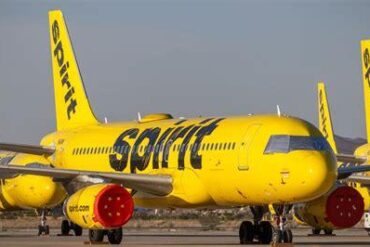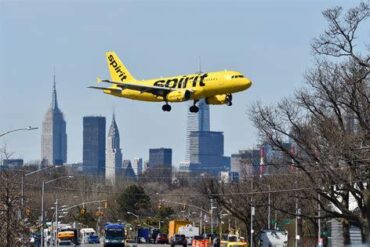
For years, Spirit Airlines occupied a strange place in American travel culture. Passengers mocked the cramped seats, complained about baggage fees, and turned the airline into an endless stream of internet jokes. Yet behind the ridicule sat an uncomfortable truth for the rest of the aviation industry: Spirit Airlines kept ticket prices low for millions of travelers, including people who never flew the airline even once.
Now that Spirit has collapsed, the consequences are beginning to surface with startling speed. What happened in Minneapolis-St. Paul after Spirit exited the market is no longer viewed as an isolated event. It increasingly looks like a preview of the future of air travel across the United States. Fares on routes once disciplined by Spirit’s ultra-low-cost competition surged almost immediately, in some cases doubling within months.
The disappearance of one airline may ultimately reshape the economics of domestic travel far more dramatically than many passengers realize.
For travelers already exhausted by inflation, rising hotel costs, and expensive vacation packages, the end of Spirit Airlines could mark the beginning of a far more expensive era in American aviation.
The irony is impossible to ignore. The airline many people claimed to hate may have been the company saving them the most money all along.
Spirit Airlines Collapsed Faster Than Almost Anyone Expected
Spirit Airlines had spent years dancing along the edge of financial instability. Industry analysts repeatedly questioned whether the ultra-low-cost carrier could survive mounting fuel costs, rising labor expenses, and intensifying competition from larger airlines. Still, many travelers assumed Spirit would somehow endure.
The airline had survived previous crises through restructuring efforts, aggressive cost cutting, and debt negotiations. That created a perception that another bailout, merger, or emergency financing package would eventually appear.
Instead, the collapse arrived with shocking speed.
Spirit ceased operations on May 2 after a proposed $500 million government rescue package fell apart while jet fuel prices surged far beyond the airline’s internal projections. Spirit reportedly built major portions of its recovery strategy around fuel costs near $2.24 per gallon. By late April, prices had climbed to approximately $4.51 per gallon, devastating a business model dependent on razor-thin margins and ultra-cheap fares.
The shutdown triggered immediate chaos across the country. More than 4,000 scheduled domestic flights were canceled within two weeks, and approximately 17,000 employees suddenly found themselves without jobs.
Spirit once represented roughly 5% of all domestic US flights. That may sound small, but in aviation economics, even a modest percentage can dramatically influence pricing behavior.
Especially when that airline is willing to undercut everyone else.
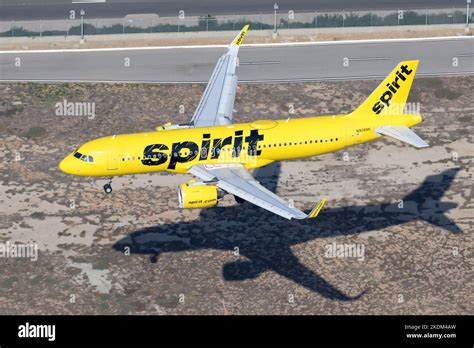
Why Spirit Airlines Mattered More Than Passengers Realized
Many travelers misunderstood Spirit’s true role in the airline industry.
The company was never designed to compete with Delta Air Lines or United Airlines on comfort, loyalty programs, or premium experiences. Spirit competed almost entirely on price. Its entire business model revolved around stripping air travel down to the bare minimum and charging separately for every possible add-on.
Carry-on bag? Extra fee.
Seat assignment? Extra fee.
Printed boarding pass at the airport? Extra fee.
Passengers frequently complained about the experience, but those stripped-down fares created enormous pressure on larger airlines. Even travelers who refused to book Spirit flights still benefited from the carrier’s presence because competing airlines often had to lower prices to avoid losing cost-conscious customers.
That dynamic fundamentally reshaped the modern airline industry.
The rise of “basic economy” fares at American Airlines, Delta, and United did not happen by accident. Legacy carriers introduced those products largely because ultra-low-cost airlines like Spirit and Frontier were attracting huge numbers of budget travelers.
Spirit effectively forced billion-dollar airlines to rethink pricing strategies.
Without that pressure, the incentives begin to change rapidly.
Airlines no longer need to defend against aggressively cheap competitors on many routes. That allows ticket prices to climb higher without triggering massive customer defections.
For consumers, the result may feel subtle at first. Flights that once cost $59 suddenly become $129. Weekend getaways that used to feel spontaneous start requiring careful budgeting.
Over time, those increases compound across the entire travel economy.
Minneapolis Became The Warning Sign For The Entire Country
Long before Spirit disappeared nationwide, Minneapolis-St. Paul International Airport quietly demonstrated what happens when ultra-low-cost competition vanishes.
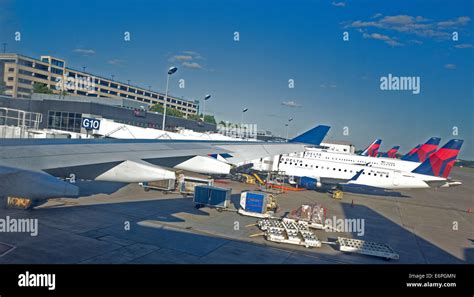
Spirit exited MSP late last year, leaving Delta Air Lines with even greater dominance in the Twin Cities market. Soon afterward, fares on several affected routes climbed sharply.
The increase was not simply coincidence.
Airline executives often argue that fares are primarily determined by labor expenses, fuel prices, airport costs, and passenger demand. Those factors certainly matter. But competition remains one of the strongest pricing forces in commercial aviation.
Spirit never needed to dominate a route to influence fares. Sometimes just a handful of ultra-cheap seats was enough to force competing airlines into lower pricing structures.
Once those seats disappeared from MSP, the remaining airlines faced less pressure to maintain bargain-level pricing.
That pattern is now raising alarm throughout the industry because Spirit’s national shutdown effectively replicated the Minneapolis situation across dozens of airports simultaneously.
The airline did not merely cancel flights.
It removed a major source of competitive downward pressure from the entire domestic market.
Fort Lauderdale, Orlando, And Las Vegas Could Be Hit Hardest
Not every city will experience identical fare increases, but several major leisure markets appear especially vulnerable.
Fort Lauderdale-Hollywood International Airport stands near the top of the list. Spirit built much of its network around South Florida and maintained one of its largest operational hubs there for years. The airline provided enormous competitive pressure on routes connecting Florida with northeastern cities, the Midwest, and Caribbean destinations.
Without Spirit, competing airlines suddenly gain more flexibility to raise prices.
Orlando International Airport may face even greater sensitivity because family travel is intensely price-driven. Parents planning vacations to Disney World or Universal Studios often prioritize affordability above nearly everything else. Spirit regularly flooded Orlando routes with ultra-cheap fares that forced larger airlines to respond aggressively during peak travel seasons.
Las Vegas represents another critical market.
Travelers flying to Vegas frequently choose flights based almost entirely on cost, particularly for short leisure trips. Spirit excelled in exactly that environment. The airline consistently undercut competitors on routes where passengers cared more about saving money than inflight comfort.
Newark Liberty International Airport could also experience substantial pricing pressure. The New York region already suffers from congestion, slot limitations, and reduced low-cost competition compared to many other parts of the country. Spirit offered one of the few major ultra-low-cost alternatives in the area.
Its disappearance leaves a major competitive void.
Meanwhile, Dallas/Fort Worth may experience a quieter but still important shift. American Airlines already dominates DFW with overwhelming market share. Spirit never controlled a large percentage of traffic there, but its presence still forced competitive responses on overlapping routes.
Even small low-cost competitors can influence giant hubs more than passengers realize.
The Emotional Final Flights Hid The Real Economic Story
The collapse of Spirit Airlines generated enormous emotional attention online.
One viral moment showed a Spirit pilot struggling through tears while making an announcement aboard one of the airline’s final flights into Dallas/Fort Worth. The video spread rapidly across social media because it captured the human side of the shutdown in painfully direct fashion.
Thousands of employees lost their jobs with little warning. Pilots, flight attendants, gate agents, mechanics, and operational staff suddenly found themselves facing uncertainty.
That emotional dimension mattered deeply.
But economically, the larger story was unfolding quietly behind the scenes inside airline pricing systems.
As Spirit vanished, algorithms across the industry immediately began recalculating competitive conditions. Airlines that once needed to defend against ultra-cheap fares suddenly found themselves operating in less hostile pricing environments.
That shift may ultimately affect millions more people than the shutdown itself.
Because when airfare rises substantially, travel behavior changes.
Families take fewer vacations.
College students visit home less frequently.
Weekend trips disappear.
Last-minute travel becomes financially painful.
Low-cost airlines do more than move passengers. They expand access to travel itself.
That is why Spirit’s disappearance carries consequences extending far beyond aviation enthusiasts or airline employees.
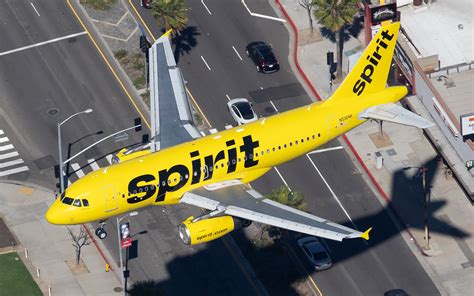
Other Airlines Cannot Fully Replace What Spirit Offered
Several airlines moved quickly after Spirit’s collapse to present themselves as replacements.
Frontier Airlines immediately targeted former Spirit customers, positioning itself as the closest surviving ultra-low-cost alternative. Major carriers such as American, Delta, and United temporarily introduced emergency fare caps on select routes to help stranded travelers.
The Department of Transportation also coordinated short-term responses designed to stabilize pricing and reduce disruption.
But replacing flights is not the same as replacing Spirit’s pricing behavior.
Legacy airlines operate under fundamentally different economic structures. Their labor costs are higher. Their service expectations are broader. Their revenue models depend heavily on premium seating, corporate contracts, and loyalty programs.
Spirit operated differently.
The airline focused relentlessly on stimulating demand through fares so cheap that travelers booked trips they otherwise never would have considered.
A spontaneous weekend in Las Vegas suddenly became realistic when round-trip airfare cost less than dinner for two.
A family vacation to Orlando became manageable because airfare represented only a small fraction of the total travel budget.
That kind of demand stimulation is extraordinarily difficult for legacy airlines to replicate consistently.
Even Frontier may struggle to fully replace Spirit’s influence because the broader market now contains one fewer major ultra-low-cost competitor.
Less competition almost always leads to higher pricing power.
The End Of Spirit Airlines Could Permanently Change Budget Travel In America
For decades, the US airline industry moved toward increasing consolidation. Major mergers steadily reduced the number of large carriers competing nationally. Delta merged with Northwest. United combined with Continental. American absorbed US Airways.
Each merger created larger, more powerful airlines with broader control over routes and pricing.
Ultra-low-cost carriers like Spirit disrupted that consolidation trend by injecting aggressive fare competition back into the system.
Now one of the most influential disruptors is gone.
The long-term effects may unfold gradually rather than dramatically. Travelers probably will not wake up tomorrow to find every ticket doubled overnight. Instead, the changes may emerge slowly through fewer flash sales, reduced ultra-cheap inventory, and steadily rising baseline fares.
The psychological shift could be just as important as the economic one.
For years, Americans became accustomed to the idea that incredibly cheap flights were always available somewhere. A $39 ticket or a $59 weekend getaway felt normal.
That expectation may now begin fading.
Air travel could increasingly return to something closer to its older economic reality: a product that remains accessible, but less impulsive, less flexible, and noticeably more expensive for ordinary travelers.
Spirit Airlines spent years serving as America’s favorite airline punchline.
But as the carrier disappears from airports across the country, travelers may soon discover that the joke was hiding one of the most important forces keeping airfare affordable in the first place.