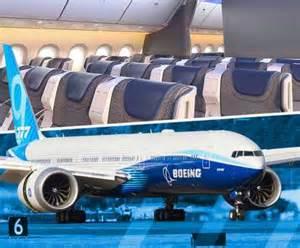
The Airbus A350 has transformed the long-haul aviation market since entering service, earning a reputation as one of the most advanced and passenger-friendly widebody aircraft ever built. Its composite fuselage, lower cabin altitude, improved humidity levels, quieter engines, and spacious twin-aisle interior helped redefine expectations for modern air travel. For years, the A350’s Extra Wide Body (XWB) design gave Airbus a powerful advantage, especially among passengers who valued comfort on long international flights.
However, the A350’s position as the world’s widest twin-engine passenger aircraft is approaching a major turning point. Boeing’s upcoming 777X family, particularly the 777-9, has been designed with a wider passenger cabin that will surpass the A350 in usable interior width. When the new Boeing aircraft finally enters commercial service, the A350 will lose a title that has been central to its identity since launch.
The change does not mean the A350 will suddenly become outdated. Instead, it highlights a broader competition between Airbus and Boeing over how future widebody aircraft should balance passenger comfort, airline economics, and operational efficiency. The battle is no longer simply about building a bigger airplane; it is about maximizing every inch of cabin space while keeping operating costs under control.
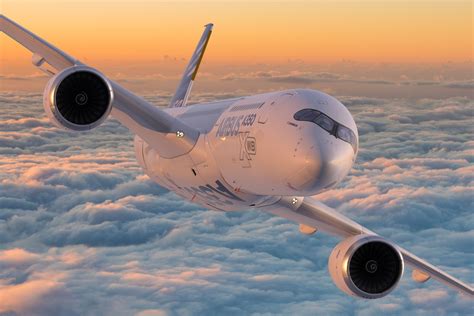
The Airbus A350 Established a New Standard for Widebody Cabin Comfort
When Airbus introduced the A350 XWB, the aircraft was designed around a simple but ambitious goal: create a more comfortable long-range aircraft while improving fuel efficiency. The name itself, “XWB,” highlighted the aircraft’s wider fuselage compared with previous Airbus twinjets such as the A330 family.
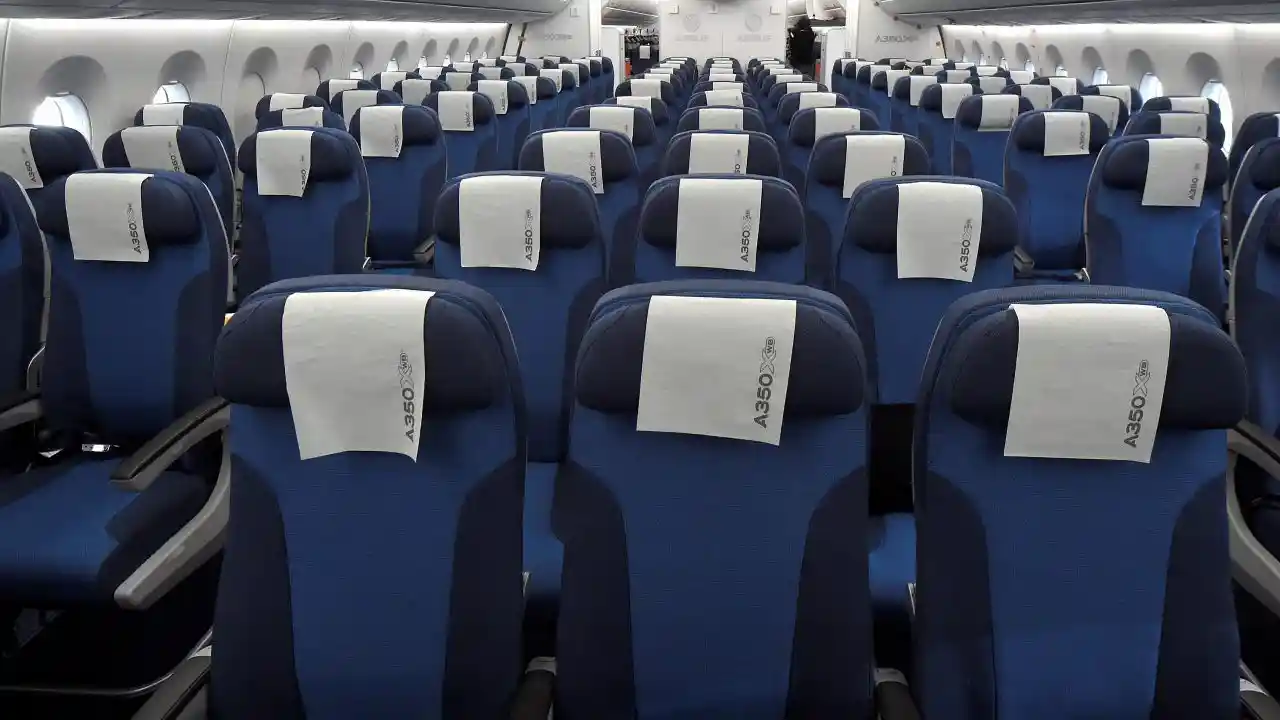
The A350 features a fuselage width of approximately 5.96 meters (19 feet 7 inches) and an internal cabin width of about 5.61 meters (18 feet 5 inches). That additional space allowed airlines to operate a comfortable nine-abreast economy configuration, typically arranged in a 3-3-3 layout.
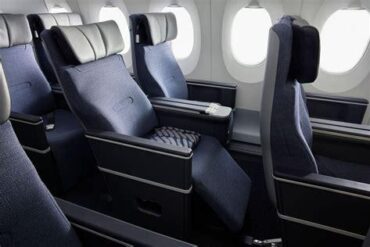
For passengers, the difference was noticeable. Compared with older widebody aircraft configured with tighter seating arrangements, the A350 offered wider seats, improved shoulder room, larger overhead storage compartments, and a more open cabin atmosphere. Many travelers quickly recognized the aircraft as one of the most comfortable choices for ultra-long-haul routes.
The aircraft also benefited from its composite fuselage construction. Unlike traditional aluminum aircraft, the A350’s carbon-fiber structure allowed Airbus to maintain structural strength while reducing weight and improving corrosion resistance. The design supported a lower cabin altitude of approximately 6,000 feet, higher humidity levels, and a quieter onboard environment.
Airlines around the world embraced the A350 because it provided an attractive combination of efficiency and passenger appeal. Carriers including Qatar Airways, Singapore Airlines, and Air France selected the aircraft for premium international routes where passenger experience mattered.
For much of the last decade, Airbus could confidently market the A350 as one of the widest and most advanced twin-engine aircraft available. That advantage helped it compete directly against Boeing’s popular 777 family, particularly as airlines began replacing older four-engine aircraft such as the Airbus A340 and Boeing 747.
Boeing 777X Introduces a Wider Cabin Design
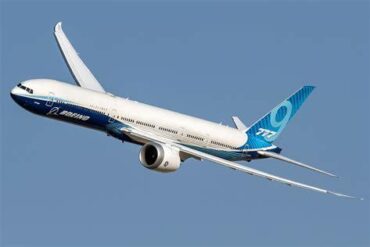
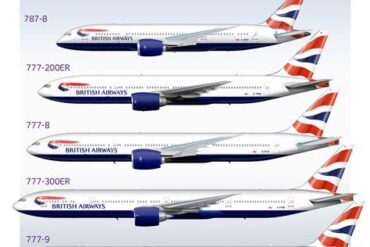
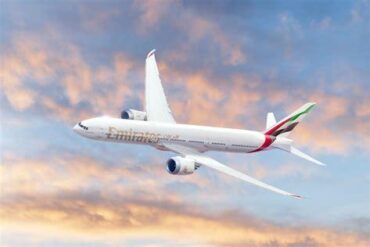
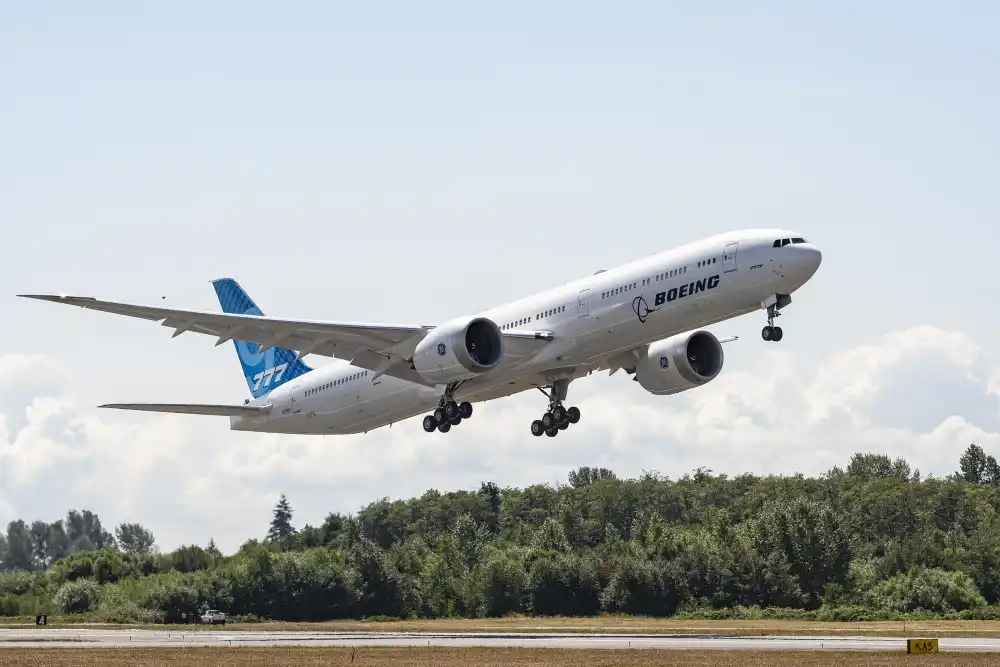
The aircraft threatening the A350’s cabin-width leadership is Boeing’s 777X, the next-generation successor to the highly successful 777-300ER. While the 777X maintains the familiar appearance of the original 777 family, Boeing has made significant changes beneath the surface.
The 777X retains a fuselage width of approximately 6.20 meters (20 feet 4 inches), making it physically wider than the A350. More importantly, Boeing has redesigned the internal cabin structure to create additional usable passenger space.
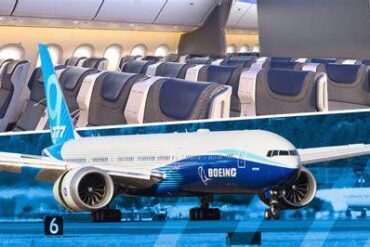
The company claims the 777X cabin is about four inches wider than the 777-300ER, thanks to improvements including thinner insulation, optimized sidewall designs, and more efficient interior structures. The result is a cabin width of roughly 5.97 meters (19 feet 7 inches), giving the 777X a measurable advantage over the A350.
The additional width may appear small on paper, but in commercial aviation, even a few inches can significantly affect passenger experience. Aircraft cabins are carefully optimized around seat width, aisle space, armrest dimensions, and emergency evacuation requirements. A small increase in available space can allow airlines to create wider seats, larger aisles, or improved premium cabin layouts.
Boeing’s approach reflects a different philosophy from Airbus. Rather than creating an entirely new fuselage design, Boeing has refined the existing 777 platform and extracted additional value from its proven architecture.
The company believes the wider cabin gives airlines more flexibility. A carrier could use the additional space to provide larger economy seats, more generous premium economy cabins, or improved business-class suites. Alternatively, airlines focused on maximizing capacity could still install dense seating arrangements while maintaining slightly better comfort compared with previous-generation aircraft.
Why Cabin Width Matters More Than Ever in Commercial Aviation
Cabin width has become an increasingly important selling point as airlines compete for long-haul passengers. Modern travelers spend many hours inside aircraft, and small improvements in personal space can influence airline selection.
A wider cabin affects several important aspects of the passenger experience. Seat width is the most obvious factor, but it is only one part of the equation. Additional space can improve aisle movement, reduce shoulder contact between passengers, and create a less crowded feeling throughout the cabin.
For airlines, wider cabins also provide more opportunities to design premium products. The growth of premium economy seating, larger business-class suites, and luxury first-class concepts has increased demand for flexible cabin layouts.
The 777X is expected to offer airlines the ability to install 10-abreast economy seating while potentially maintaining seat widths close to 18 inches in certain configurations. By comparison, some A350 operators that maximize capacity may offer narrower economy seating when increasing seat density.
However, the final passenger experience depends heavily on airline decisions. A wide aircraft does not automatically guarantee a comfortable journey. A carrier can take a spacious cabin and fill it with additional seats, reducing the advantage.
This is why the A350 will likely remain highly competitive. Airlines that prioritize passenger comfort can continue operating generous A350 layouts with excellent results, even after the 777X becomes technically wider.
The A350 Still Has Advantages Beyond Cabin Dimensions
Although Boeing’s 777X will claim the wider cabin title, the Airbus A350 remains one of the most capable aircraft in the world. Cabin width represents only one part of overall aircraft performance.
The A350’s lightweight composite structure provides strong fuel efficiency benefits. Its current operational history gives airlines confidence in reliability, maintenance planning, and fleet integration. Thousands of pilots, engineers, and airport teams are already familiar with the aircraft.
Airbus has also continued improving the A350 through updated cabin concepts and the New Passenger Standard (NPS) program. These improvements focus on better use of cabin space, reduced weight, improved passenger features, and enhanced operational performance.
The aircraft’s large windows, advanced lighting systems, quiet cabin environment, and efficient environmental controls remain major advantages. For many passengers, these features may matter as much as a few additional inches of width.
A well-designed A350 cabin with thoughtful airline configuration could still feel more comfortable than a densely packed 777X. The aircraft with the widest fuselage will not necessarily be the aircraft with the best passenger experience.
How the 777X Could Change Airline Fleet Strategies
The arrival of the Boeing 777X could influence how airlines plan future long-haul fleets. The aircraft offers a combination of large capacity, long range, and improved passenger space, making it attractive for carriers operating major international routes.
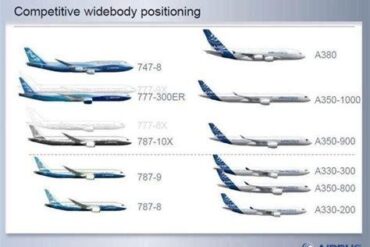
The 777-9 is expected to become one of the largest twin-engine passenger aircraft ever built. With a length of approximately 76.7 meters, it will exceed the A350-1000 in overall size and offer airlines significant passenger capacity.
For high-demand routes between major global hubs, the 777X could provide an efficient replacement for older large aircraft. Airlines that previously relied on Boeing 777-300ER fleets may find the transition relatively straightforward.
Meanwhile, the A350 is likely to remain popular among airlines seeking efficiency and flexibility. Its smaller variants, including the A350-900, are particularly attractive for routes where demand does not justify the enormous capacity of the 777-9.
The future widebody market will therefore not be determined by cabin width alone. Airlines must balance passenger demand, fuel prices, airport infrastructure, route networks, and fleet commonality.
The End of the A350’s Width Advantage Does Not End Its Legacy
The Airbus A350’s era as the world’s widest twinjet may soon come to an end, but its influence on commercial aviation will remain significant. The aircraft changed expectations for long-distance travel and demonstrated that passenger comfort and efficiency could exist together.
The Boeing 777X will take the crown with a wider cabin, but the competition between the two aircraft represents more than a measurement contest. It reflects a larger industry debate about how airlines should use limited cabin space.
A wider aircraft can provide better comfort, but only if airlines choose to use that space wisely. Seat layouts, service quality, cabin design, and passenger-focused decisions will ultimately determine which aircraft delivers the better travel experience.
The A350 may no longer hold the title of the widest twinjet, yet it remains one of the most advanced and respected aircraft in aviation history. When the 777X enters service, passengers will finally discover whether Boeing’s additional cabin width creates a meaningful advantage or simply adds another number to an aircraft specification sheet.