Airbus has delivered 621 commercial aircraft in the first ten months of the year, a 6.2% improvement on the same period in 2025. Yet that gain is measured against a self-imposed benchmark of 870 jets for the full year, and the arithmetic is unforgiving. Meeting that number now requires 249 deliveries in November and December alone — a pace the manufacturer has never sustained for two consecutive months.
Airbus 870 Target Demands a Sprint That the Order Book Already Outpaces
Through October, Airbus averaged 62.1 deliveries a month when its 870 target implies a run rate of 72.5. To reach 870, it must deliver roughly 124.5 aircraft in the two remaining months, nearly double its year-to-date monthly average. The gap is not new. By the end of September, the manufacturer had handed over 547 jets, meaning the final quarter demanded 323 aircraft. That figure sits well above last year’s fourth-quarter total of 286, a number that was itself inflated by a record 136 deliveries in December. October offered no comfort: 74 jets were delivered, down from 78 in October 2025, a slight deceleration just as the year’s final push began.
Q3 Financial Results for Airbus Show Profitability Rising Even as Delivery Pace Stalls
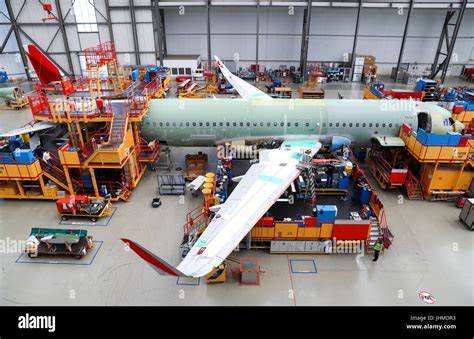
The 547 deliveries completed by the end of September included 68 Airbus A220s, 428 A320 family aircraft, 13 A330s and 38 A350s. Those handovers drove revenue up 8% to €36.7 billion ($41 billion), although a weaker dollar eroded part of the gain in reported terms. Profitability nonetheless improved across the group. Consolidated adjusted earnings before interest and taxes (EBIT Adjusted) rose 8% to €4.5 billion ($5 billion), while the commercial aircraft segment lifted EBIT from €3.27 billion ($3.65 billion) last year to €3.36 billion ($3.75 billion) this year. Airbus’ resilience therefore rests not on volume alone but on a widebody mix that continues to translate into stronger margins.
Airbus Order Backlog Rises to 9,310 Aircraft and Extends Beyond 10.5 Years
At the end of September, Airbus reported 9,310 outstanding orders. At an annual delivery rate of 870 aircraft, clearing that backlog would require more than 10.5 years — and every new order extends the horizon. In October alone, Airbus booked 202 gross orders against 71 cancellations, bringing net orders for the year to 1,305. Aircraft lessors Avolon and Aviation Capital Group each committed to 75 new narrowbody aircraft, firming up demand that will occupy production slots well into the next decade.
| Airbus orders and deliveries | 2026 | 2025 |
|---|---|---|
| Gross commercial aircraft orders | 1,174 | 610 |
| Net orders after cancellations | 1,105 | 514 |
| Commercial aircraft order backlog | 9,310 | N/A |
Airbus Production Ramp-Up Targets for A220, A320 Family, A330 and A350 Aircraft
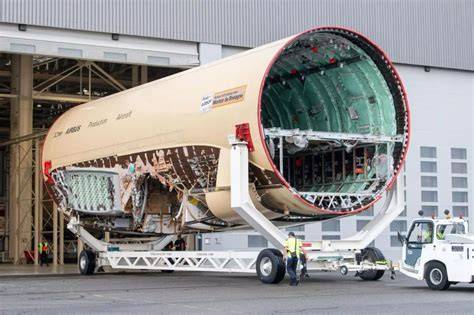
Clearing the Airbus backlog will not happen in a quarter; it is a multi-year production ramp-up. A220 output is planned to reach 13 aircraft a month in 2028. The A320 family is targeted at 70 to 75 jets a month by the end of 2027, sustained at 75 a month from 2028. On widebodies, Airbus aims for 12 new A350s a month in 2028 and five A330s a month in 2029. These sequences are ambitious in an environment still constrained by supplier capacity, and the current shortfall on the 870 target suggests the company may need to revisit them.
Why Airbus Rarely Misses Its Annual Delivery Target, and Why This Year May Differ
Airbus has traditionally banked heavy volumes in the closing weeks, a pattern it will rely on again. Yet the math behind the 870 target has been deteriorating since the summer, when the required run rate first overtook anything the manufacturer had demonstrated in recent years. Airbus has stated that its full-year delivery targets will remain in place until the end of the year, preserving the benchmark even as the window narrows. With October already slipping year on year, the coming eight weeks will determine whether the 2026 target stands as a symbol of discipline or an exercise in optimism.