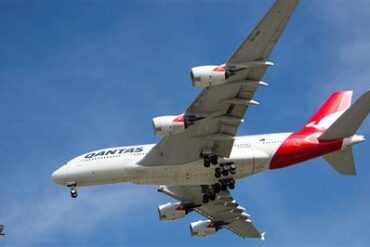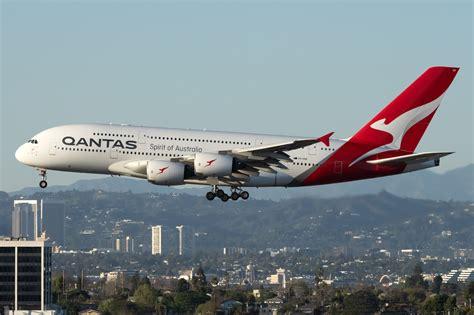
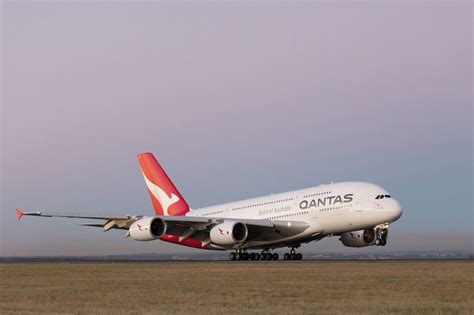
Qantas has officially returned one of its most iconic aircraft, the Airbus A380 VH-OQH, to long-haul service after a scheduled two-month hiatus for heavy maintenance. This milestone brings the airline’s active A380 fleet to eight units, reinforcing its global network and capacity ahead of the next international travel surge.
The aircraft departed the Elbe Flugzeugwerke (EFW) maintenance facility in Dresden on May 8, 2025, and resumed revenue operations with a flight to London Heathrow Airport (LHR). The next day, it operated on the high-demand route between Singapore Changi International Airport (SIN) and Sydney Kingsford Smith International Airport (SYD), marking its official reintegration into Qantas’ long-haul schedule.
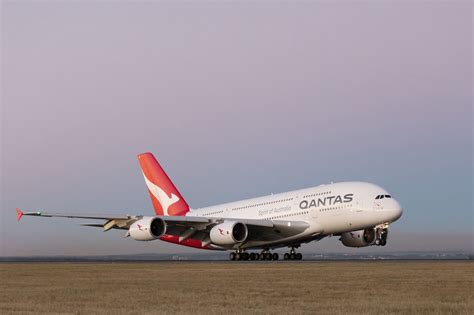
Strategic Maintenance Hub: Dresden’s Role in A380 Revival
Qantas’ decision to return VH-OQH to EFW in Dresden underlines the growing importance of this facility in the global Maintenance, Repair, and Overhaul (MRO) landscape. EFW, a joint venture between ST Engineering and Airbus, had reinstated heavy A380 maintenance operations in 2024 to support the worldwide resurgence of the superjumbo. The site has become a trusted location for Qantas, with prior work on the same aircraft completed in 2020, including a full cabin refurbishment.
Notably, Qantas scheduled multiple heavy checks at EFW throughout 2025, positioning the German facility as a crucial player in keeping its A380 fleet airworthy. However, EFW is not the airline’s sole maintenance partner. Hong Kong Aircraft Engineering Company (HAECO), Guangzhou Aircraft Maintenance Engineering Company (GAMECO), Etihad Engineering, and SIA Engineering also provide essential support for the complex A380 program, reflecting a diversified global maintenance strategy.
Details of VH-OQH: A Veteran of the Skies
The returned aircraft, VH-OQH, is a 15-year-old Airbus A380-842 powered by four Rolls-Royce Trent 900 engines. According to ch-aviation data, it features a spacious four-class layout accommodating 485 passengers:
- 14 First Class suites
- 70 Business Class seats
- 60 Premium Economy seats
- 341 Economy Class seats
As of February 28, 2025, VH-OQH had amassed 54,246 flight hours and 4,780 flight cycles, testifying to its significant operational history. It is one of 10 A380s in Qantas’ fleet, which has an average age of 15.7 years. While eight aircraft are currently in service, VH-OQC remains stored in Abu Dhabi, and VH-OQL is undergoing maintenance at another facility in the UAE.
A380’s Critical Role in Qantas’ International Strategy
Qantas has reaffirmed its commitment to the A380, strategically deploying it on major long-haul corridors connecting Australia with vital international hubs. From Sydney Kingsford Smith International Airport (SYD), the A380 is the aircraft of choice for the following global destinations:
- London Heathrow (LHR) via Singapore (SIN) — the legendary Kangaroo Route
- Los Angeles (LAX)
- Johannesburg (JNB)
- Singapore (SIN)
The SYD–LHR route, covering 9,272 nautical miles (17,175 km), is particularly notable for its prestige and demand. The Singapore–London leg alone extends 5,878 nautical miles (10,889 km), underscoring the aircraft’s range and capacity. Qantas operates this route daily with the A380, making it a flagship operation.
Additionally, Qantas has announced an expansion of A380 services to new long-haul markets. From August 2025, the superjumbo will operate between Sydney and Dallas/Fort Worth International Airport (DFW), further enhancing its U.S. network. Another notable deployment includes the Melbourne (MEL) to Los Angeles (LAX) corridor, though A380 availability remains subject to operational adjustments.
MRO Market Trends: Supporting the Superjumbo Revival
The resurgence of the Airbus A380 across global carriers has created renewed pressure and opportunity within the MRO market. Once thought to be at the end of its commercial viability, the aircraft has proven invaluable amid rising international travel demand and slot constraints at major airports.
Facilities like EFW in Dresden are now at the forefront of this renaissance. By recommitting to A380 heavy maintenance, they ensure that airlines like Qantas can rely on consistent, timely overhauls for these complex double-decker jets. Given that A380s require specialized infrastructure, tooling, and experience, only a select group of MRO providers possess the capabilities needed to service the aircraft at this level.
This ecosystem of A380-qualified MRO centers is essential for maintaining safety, fuel efficiency, and onboard amenities. For Qantas, the availability of such facilities worldwide enables a geographically flexible maintenance plan that aligns with the aircraft’s operating schedule.
A380 Cabin and Passenger Experience: Premium at Scale
Qantas’ A380s are outfitted to deliver a superior onboard experience, especially following multiple cabin refurbishments in recent years. VH-OQH, like its sister aircraft, features First Class suites, Business Class with lie-flat seats, an enhanced Premium Economy section, and spacious Economy Class seating with upgraded inflight entertainment.
The double-decker layout allows Qantas to spread out its premium products on the upper deck, with First Class and Business Class passengers enjoying quieter cabin zones and access to exclusive lounges onboard. In 2020, during its last visit to Dresden, VH-OQH received an extensive cabin upgrade that included new fabrics, improved seat ergonomics, and inflight entertainment enhancements — all of which continue to contribute to a luxury long-haul experience.
Operational Outlook: A380s Pave the Way to Network Recovery
Qantas’ ability to bring another A380 back into service ahead of the Northern Hemisphere summer represents a strategic gain. With premium travel recovering at a faster rate than expected, and long-haul routes seeing robust forward bookings, the airline is maximizing its high-capacity fleet to meet demand while preserving frequency on its most valuable international services.
The superjumbo offers significant cost-per-seat efficiencies when operated at high load factors. For key routes like SYD-LHR, where traffic volumes justify the aircraft’s scale, the A380 remains unmatched in delivering capacity without increasing frequencies — a critical advantage in slot-constrained airports like Heathrow and LAX.
Conclusion: A Testament to Enduring Aviation Engineering
The return of VH-OQH to Qantas’ active fleet is not just a mechanical milestone; it’s a statement of confidence in the enduring relevance of the Airbus A380. Despite prior predictions of obsolescence, the aircraft continues to offer strategic value to full-service carriers managing high-volume intercontinental traffic.
With MRO infrastructure like EFW in Dresden supporting continued airworthiness, and passenger demand justifying its operational economics, Qantas is positioned to maintain its A380 fleet well into the decade. The airline’s decision to expand A380 routes and invest in its upkeep affirms the aircraft’s ongoing importance within one of the world’s oldest and most respected flag carriers.
As global aviation continues its recovery, Qantas’ strategic use of the A380 superjumbo may well serve as a blueprint for other legacy airlines navigating the balance between fleet modernization and the proven performance of aviation icons.