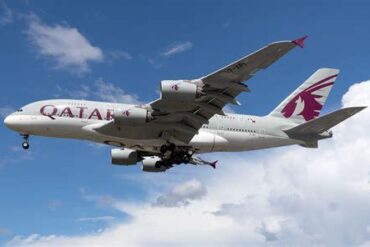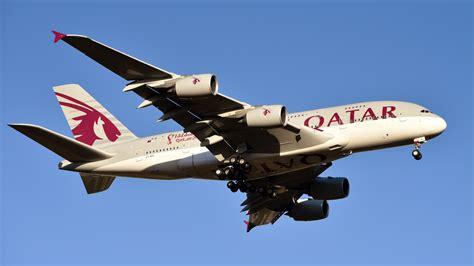
Qatar Airways has made a decisive and highly strategic move by grounding its entire fleet of Airbus A380 superjumbos for April and May, a decision that underscores the profound ripple effects of geopolitical tension on global aviation. The Doha-based carrier, widely regarded as one of the world’s most premium airlines, has simultaneously cut more than 12,000 scheduled flights and suspended service to over 60 destinations, marking one of its most significant operational contractions in recent years.
The temporary withdrawal of the 517-seat Airbus A380, the largest passenger aircraft in the world, is not merely a routine adjustment. It reflects a calculated response to shifting demand patterns, airspace concerns, and operational efficiency challenges triggered by instability in the region. While the airline has not publicly committed to an extended suspension, industry signals—such as flexible ticket refund policies stretching into July—suggest that Qatar Airways is preparing for a longer disruption window.
A Fleet Grounded: Where Qatar’s A380s Stand Today
Qatar Airways operates a total of ten Airbus A380 aircraft, though only eight have been active in recent years. Two airframes, including the historically significant A7-APA, have remained in long-term storage since 2020 and are unlikely to return to service. The remaining eight aircraft, which form the backbone of Qatar’s superjumbo operations, have now all been relocated back to Doha.
This consolidation is a deliberate logistical advantage. By centralizing the fleet at Hamad International Airport, Qatar Airways ensures that reactivation can occur rapidly once conditions stabilize. Interestingly, several of these aircraft were still flying commercial routes as recently as late March, even after regional tensions escalated, before being progressively withdrawn.
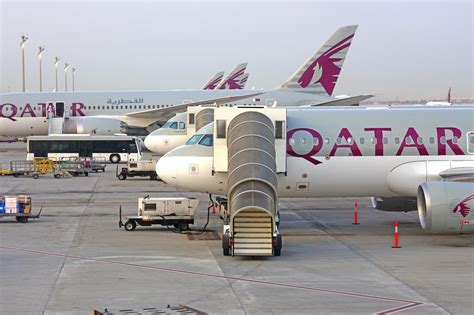
Each aircraft tells a story of recent movement: jets returned from major hubs like London Heathrow, Paris Charles de Gaulle, and Bangkok Suvarnabhumi, as well as storage locations such as Teruel and Rayong. This pattern highlights the airline’s agile fleet management, balancing operational readiness with cost control during uncertain times.
Why the Airbus A380 Was First to Go
The decision to ground the A380 fleet first is rooted in economics and flexibility. Operating a four-engine superjumbo is significantly more expensive than deploying modern twin-engine aircraft like the Airbus A350 or Boeing 787. In periods of reduced demand or volatile route viability, the A380 becomes a high-risk, high-capacity asset.
Moreover, the A380 is typically assigned to high-density, long-haul routes such as London, Sydney, and Bangkok. With passenger volumes fluctuating and certain air corridors potentially affected, maintaining such large-capacity aircraft becomes inefficient. By contrast, smaller widebodies offer greater route adaptability and lower operating costs, making them the preferred choice during disruptions.
Projected Return: June 1 and Beyond
As of now, Qatar Airways plans to reintroduce the Airbus A380 starting June 1, though this timeline remains fluid. On that date, five initial departures are scheduled from Doha, including flagship routes to London Heathrow, Bangkok, Singapore, Paris, and Sydney. These routes represent the airline’s most premium and high-demand markets, where the A380’s first-class cabins and expansive seating capacity deliver maximum value.
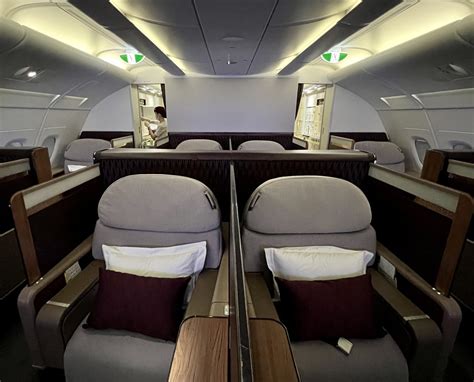
Looking further ahead, the airline’s schedule from June through December suggests a gradual but measured reintroduction. Bangkok is expected to see the highest frequency, with up to 10 weekly A380 services, though this will taper to daily flights by November. Meanwhile, London, Paris, Singapore, and Sydney are slated for consistent daily operations, reinforcing their status as cornerstone routes.
However, even with this planned return, overall A380 utilization remains below previous levels. For November and December, Qatar Airways is expected to operate 305 A380 departures from Doha, representing a 22% decline compared to the same period last year. This indicates a cautious approach, prioritizing demand alignment over aggressive capacity restoration.
Global Impact: A380 Activity Takes a Hit
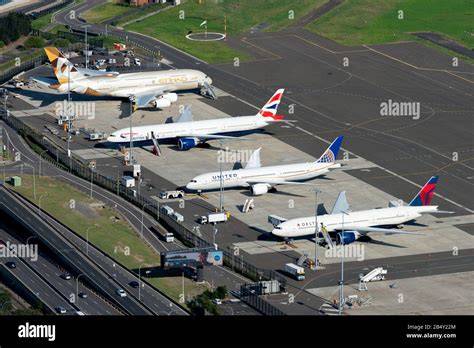
Qatar Airways’ decision has not occurred in isolation—it has had a measurable impact on global Airbus A380 activity. Across all operators, scheduled A380 flights for April and May have dropped to 12,449 two-way services, marking a 7% week-over-week decline.
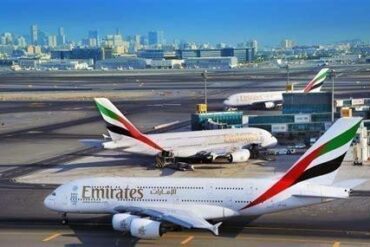
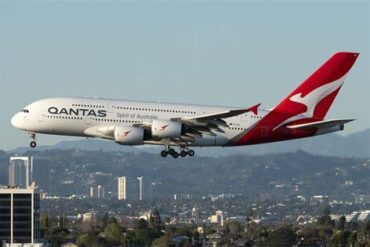
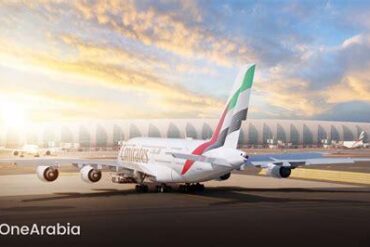
While Qatar Airways is the primary driver of this reduction, other Gulf carriers are also scaling back. Emirates, the world’s largest A380 operator, has reduced its superjumbo operations by 14%, while Etihad Airways has trimmed its schedule by 2%. Compared to 2025 levels, Etihad’s A380 usage is down by a notable 16%, signaling a broader regional trend.
Outside the Gulf, Singapore Airlines has also cut A380 services, including the removal of the aircraft from its Dubai route. This coordinated pullback reflects a global recalibration, where airlines are increasingly favoring fuel-efficient, right-sized aircraft over capacity-heavy giants.
What Comes Next for Qatar Airways
The grounding of the Airbus A380 fleet is not a retreat—it is a strategic pause. Qatar Airways has demonstrated a consistent ability to adapt quickly, leveraging its modern fleet and global network to navigate uncertainty. By temporarily sidelining its largest aircraft, the airline preserves both financial resilience and operational flexibility.
If regional conditions stabilize, the A380 will likely return to its role as a flagship product, showcasing Qatar Airways’ premium offerings on the world’s busiest routes. If not, the airline is well-positioned to extend the suspension, relying on its next-generation widebody fleet to maintain connectivity and service quality.
For now, the message is clear: in an industry where timing and adaptability are everything, Qatar Airways is choosing precision over presence, ensuring that when its A380s do return to the skies, they do so under conditions that maximize both efficiency and impact.