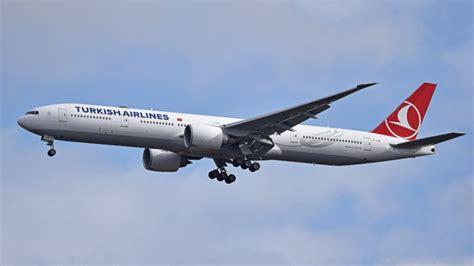
Turkish Airlines, long celebrated for its unmatched global reach and expansive international network, has taken the unusual step of suspending flights to 23 cities worldwide, signaling a strategic recalibration driven by geopolitical tension and rising operational costs. The move underscores how even the most far-reaching carriers must adapt swiftly when confronted with volatile fuel markets and restricted airspace conditions.
At the heart of this decision lies a combination of mandatory airspace closures and discretionary route suspensions, each reflecting different layers of complexity within the airline industry. While some routes have been paused out of necessity, others reveal a sharper focus on profitability and efficiency, particularly in regions where demand may not justify escalating costs.
The suspended destinations are divided into two distinct categories: five cities in Iran where operations are currently impossible due to closed airspace, and 18 additional cities across Africa, Asia, Europe, and Latin America where flights have been temporarily paused as part of cost-control measures.
African Network Reduction Signals Strategic Retrenchment
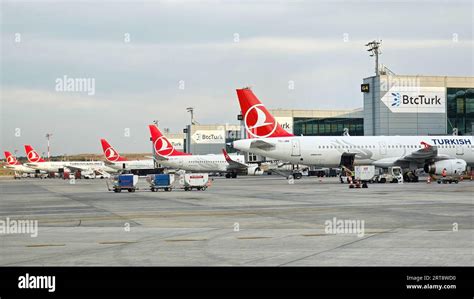
A significant portion of the suspended routes lies in Africa, where Turkish Airlines has long pursued an ambitious expansion strategy. The airline has halted flights to ten cities across the continent, including Bissau, Freetown, Hurghada, Juba, Kinshasa, Libreville, Luanda, Lusaka, Monrovia, and Pointe Noire. This represents nearly 20% of its African passenger network, a notable contraction for a carrier that once prided itself on connecting underserved markets.
What makes this development particularly striking is the operational model previously employed. Many of these routes were served using triangular or “tagged” flights, where a single aircraft would connect multiple destinations in one journey. This approach minimized risk and maximized aircraft utilization, but it also left routes vulnerable to fluctuations in fuel costs and demand elasticity.
With these suspensions, Turkish Airlines is effectively trimming routes that may struggle to remain viable under current economic conditions. In some cases, destinations that were previously linked may now be served independently or paired differently, potentially leading to reduced frequencies and diminished connectivity for travelers in those regions.
Hurghada stands out as an exception. Unlike the other African destinations, this Egyptian resort city appears to have been permanently removed from future schedules, marking the end of a route that has been in operation since 2012. Its final flight is expected in June, closing a chapter on a once-popular leisure corridor.
Iran Conflict Forces Immediate and Total Suspension
The most clear-cut suspensions involve five Iranian cities: Tehran, Mashhad, Shiraz, Esfahan, and Tabriz. These routes have been halted not by choice but by necessity, as ongoing conflict has rendered Iranian airspace inaccessible to commercial aviation.
In normal circumstances, Iran represents a critical market for Turkish Airlines, ranking among its top international destinations by frequency. Tehran alone has historically seen up to six daily flights, serving as a vital hub for both business and transit passengers.
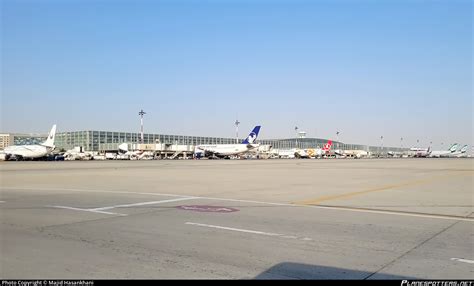
Although current schedules tentatively indicate a possible resumption in June for Tehran and October for other cities, these timelines are widely viewed as provisional placeholders. The reality on the ground suggests that any return will depend heavily on geopolitical stabilization, making near-term recovery uncertain.
Broader Middle East and Central Asia Adjustments
Beyond Iran, Turkish Airlines has also suspended service to Aqaba, Ferghana, Kirkuk, Najaf, and Turkistan, reflecting a broader reassessment of routes in the Middle East and Central Asia. These cities, while strategically located, often rely on niche demand and connecting traffic, making them particularly sensitive to cost pressures.
Some of these destinations are relatively recent additions to the network. For instance, flights to Kirkuk began in 2021, while Turkistan was introduced in 2022. Their inclusion in the suspension list highlights how newer routes, still in the process of maturing, can be disproportionately affected during periods of economic strain.
Aqaba presents a unique case. Previously operated as part of a multi-stop routing with Amman, its suspension disrupts a carefully structured itinerary designed to optimize passenger loads. The temporary halt suggests that even well-integrated routes are not immune when external pressures mount.
European and Latin American Routes Face Economic Reality
The final group of suspended destinations—Billund, Leipzig, and Havana—illustrates how even established markets in Europe and Latin America are not insulated from operational challenges. While these routes may not carry the same geopolitical weight as those in the Middle East, they are equally subject to the economics of fuel pricing and demand performance.
Havana, in particular, offers a compelling example. Turkish Airlines has served the Cuban capital since 2016, often linking it with Caracas in a tagged long-haul operation. However, rising fuel costs have reportedly forced some airlines to add refueling stops on similar routes, eroding efficiency and profitability.
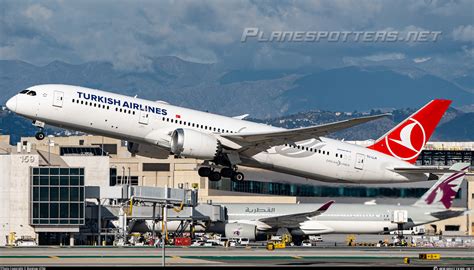
If flights to Havana resume as scheduled in October, they will likely operate as a three-times-weekly non-stop service using the Boeing 787-9, marking a shift toward a more streamlined approach. This adjustment reflects a broader trend within the airline industry: prioritizing direct, fuel-efficient operations over complex multi-stop itineraries.
Billund and Leipzig, though smaller markets, face similar challenges. Their suspension suggests that Turkish Airlines is concentrating resources on routes with stronger demand fundamentals, ensuring resilience in an increasingly unpredictable environment.
A Calculated Pause, Not a Retreat
Despite the scale of these suspensions, the overarching narrative is not one of decline but of strategic adaptation. Turkish Airlines remains one of the world’s most connected carriers, and many of the affected routes are expected to return once conditions stabilize.
What this moment reveals is the delicate balance between global ambition and operational sustainability. By temporarily stepping back from less viable markets, the airline positions itself to protect profitability while preserving long-term network integrity.
For passengers, the immediate impact may include reduced travel options and longer itineraries, particularly in regions heavily affected by the suspensions. For the industry, however, the move serves as a clear reminder that even the most expansive networks must remain flexible, data-driven, and responsive to an ever-changing landscape.