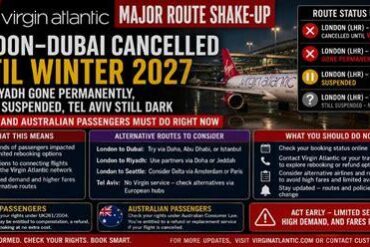
The abrupt withdrawal of the Heathrow–Riyadh service marks one of the most telling strategic pivots by Virgin Atlantic in recent years. What was once positioned as a bold expansion into a rapidly growing Middle Eastern aviation market has instead become a case study in how quickly external shocks and competitive realities can reshape airline networks.
Launched with confidence and backed by long-term growth projections, the route between London Heathrow Airport and King Khalid International Airport was intended to tap into Saudi Arabia’s ambitious transformation under Vision 2030. Yet, within just a year, the service has disappeared from schedules, underscoring the fragile balance between opportunity and risk in global aviation.
The decision was not sudden but evolved through a series of operational disruptions, strategic reassessments, and shifting market conditions. By April 2026, the airline had formally confirmed that the route would not return, effectively closing a short-lived chapter that once symbolized its Middle East ambitions.
A High-Profile Launch Built on Strategic Ambition
When Virgin Atlantic unveiled its Riyadh route, the move was far from experimental. It was a calculated expansion aligned with Saudi Arabia’s economic diversification goals and increasing global connectivity. The airline emphasized growing passenger demand, strong cargo potential, and the strategic importance of linking Riyadh not just to London, but to North America through its Heathrow hub.
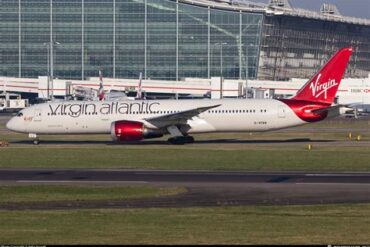
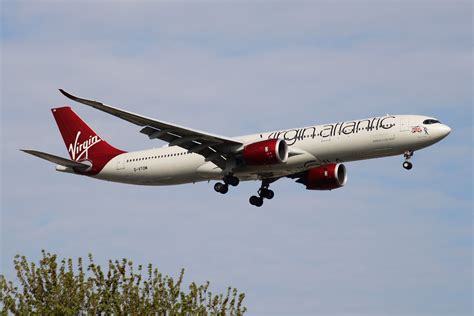
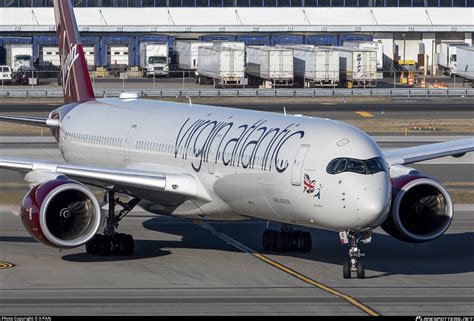
Central to this strategy was the deployment of the advanced Airbus A330-900, a next-generation aircraft designed for efficiency and premium passenger experience. Configured with a four-class layout, the aircraft reflected Virgin’s commitment to high-yield travelers, featuring Upper Class suites, an upgraded Premium cabin, and refined Economy seating.
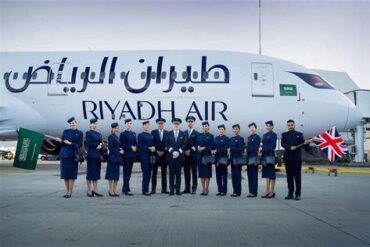
Rather than entering the market cautiously, the airline opted for a daily service from the outset, signaling confidence in sustained demand. The move was further reinforced through partnerships with Saudia and the emerging Riyadh Air, positioning the route as part of a broader ecosystem rather than a standalone operation.
Operational Disruptions Trigger Early Instability
Despite its strong foundation, the route quickly encountered turbulence—not from within the airline, but from external geopolitical developments. Escalating tensions across the Middle East led to airspace restrictions, airport disruptions, and heightened safety concerns.
Flights began facing cancellations as operational conditions deteriorated. The situation escalated to the point where Virgin Atlantic temporarily suspended the route, citing safety thresholds that could no longer be reliably met. These decisions were not isolated; several major European carriers followed similar paths, signaling a broader industry response to regional instability.
The temporary pause soon transitioned into a permanent cancellation. Internal evaluations pointed to a combination of safety risks, regulatory considerations, and weakening demand as key drivers behind the decision. What began as a precautionary measure ultimately revealed deeper structural challenges facing the route.
A Rapidly Saturating Market Intensifies Pressure
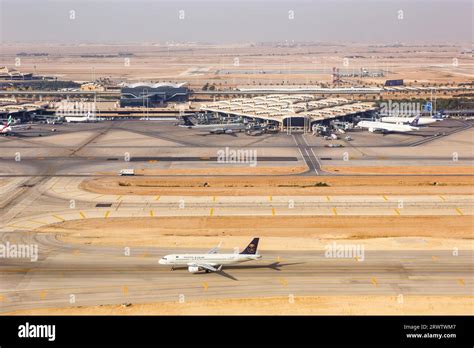
While geopolitical instability provided the immediate trigger, the underlying commercial environment had already become increasingly unfavorable. The Heathrow–Riyadh corridor, once relatively underserved, transformed into a highly competitive battleground within a short span of time.
Legacy operators such as British Airways maintained a strong presence, while Saudia significantly expanded its frequencies, offering multiple daily departures. The entry of Riyadh Air added another layer of premium-focused competition, intensifying pressure on yields and load factors.
In practical terms, capacity on the route more than tripled in just over a year. For Virgin Atlantic, this meant competing not only against established players but also against partners within its own alliance framework. As demand softened due to external disruptions, the economics of sustaining a daily widebody service became increasingly difficult to justify.
The airline faced a classic aviation dilemma: continue operating in a crowded, weakened market or redeploy valuable assets to more profitable routes. The answer, ultimately, was decisive.
Strategic Reallocation of Widebody Resources
The cancellation of the Riyadh route is best understood not as a retreat, but as a recalibration. By withdrawing from a challenging market, Virgin Atlantic has freed up critical long-haul aircraft capacity for redeployment into stronger, more predictable markets.
Aircraft previously assigned to Riyadh are now being redirected toward high-demand transatlantic routes, including services to Miami International Airport and Tampa International Airport. These destinations consistently attract leisure travelers and offer more stable revenue streams, particularly during peak travel seasons.
At the same time, the airline is doubling down on its North American core. Frequencies to John F. Kennedy International Airport are increasing, while additional capacity is being added to Las Vegas and Los Angeles. This shift reflects a clear prioritization of markets where Virgin holds a competitive advantage and brand strength.
Expanding Focus on India and Asia
Beyond the transatlantic market, the airline is also strengthening its presence in India and Asia, regions that continue to demonstrate robust growth potential. Increased frequencies to Bangalore and the deployment of larger aircraft on routes to Delhi and Mumbai signal a long-term commitment to these high-demand corridors.
The expansion aligns with broader industry trends, where airlines are increasingly targeting markets with strong diaspora traffic, business travel demand, and economic growth. Compared to the volatile Middle Eastern environment, these regions offer greater stability and predictability.
This dual focus—reinforcing North America while expanding in Asia—highlights a disciplined approach to network planning. Rather than spreading resources too thin, the airline is concentrating on routes that deliver consistent returns.
Partnerships Replace Direct Presence in Saudi Arabia
Importantly, the withdrawal from Riyadh does not signal a complete exit from the Saudi market. Instead, Virgin Atlantic is shifting toward a partnership-driven model, leveraging its relationships with Saudia and Riyadh Air to maintain connectivity.
This approach allows the airline to continue serving customers traveling between the UK and Saudi Arabia without bearing the full operational and financial burden of running its own flights. It is a strategic compromise that preserves market access while reducing exposure to risk.
From a commercial standpoint, this model makes increasing sense in an era where alliances and joint ventures play a central role in global aviation. By relying on partners, airlines can offer extensive networks without overextending their fleets.
Lessons from a Short-Lived Long-Haul Experiment
The rise and fall of the Heathrow–Riyadh route encapsulates the complexities of modern airline strategy. Even well-planned expansions, backed by strong economic narratives and advanced aircraft, can falter when confronted with unpredictable external factors.
For Virgin Atlantic, the experience underscores the importance of flexibility. The ability to quickly adjust network plans, reallocate resources, and pivot toward more resilient markets has proven crucial in navigating an increasingly volatile global environment.
At the same time, the episode highlights the risks of entering rapidly evolving markets where competition can intensify almost overnight. What initially appears as an underserved opportunity can quickly transform into an oversupplied corridor, eroding profitability.
A Calculated Shift Toward Core Strengths
Ultimately, the cancellation of the Riyadh route reflects a broader strategic realignment. Rather than pursuing expansion for its own sake, the airline is focusing on markets where it can deliver sustained value and maintain a competitive edge.
The decision reinforces a fundamental principle of aviation economics: success is not defined by the number of destinations served, but by the efficiency and profitability of the network as a whole. By concentrating on its core strengths—particularly transatlantic travel—Virgin Atlantic is positioning itself for more stable growth in the years ahead.
In the fast-moving world of global aviation, adaptability is not just an advantage; it is a necessity. The story of Heathrow–Riyadh serves as a reminder that even the most ambitious routes must ultimately prove their viability—or make way for better opportunities.