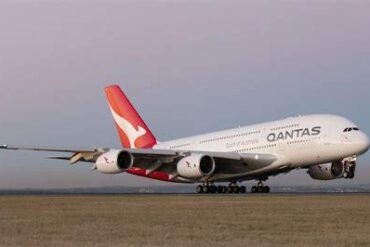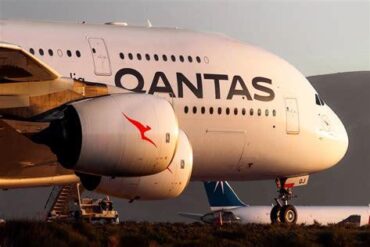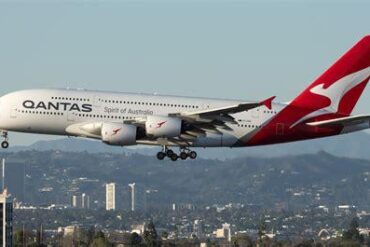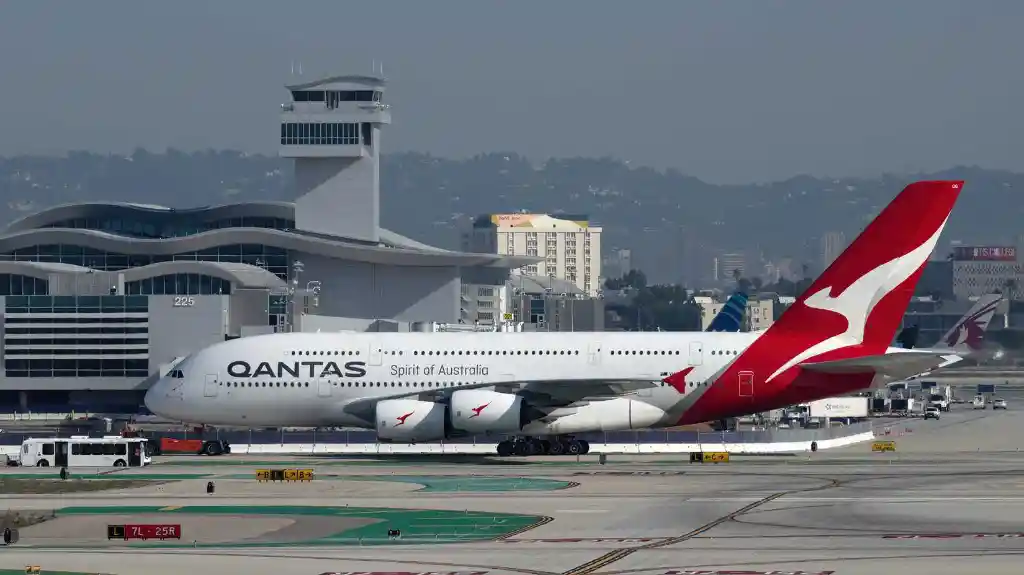
Qantas is close to restoring its entire Airbus A380 fleet to commercial service after an unusual recovery operation moved one of its grounded superjumbos across the Atlantic and Pacific in a single journey. The aircraft, VH-OQG, completed a rare ferry flight from London Heathrow Airport (LHR) to Los Angeles International Airport (LAX) on July 11, marking a significant step toward returning the airline’s flagship long-haul fleet to full operational strength.
The A380, operating as flight QF6007, had remained at Heathrow since early July after an unexpected engine issue forced it out of service. Instead of following Qantas’ traditional route back toward Australia through Singapore, the aircraft took a highly unusual direct path to Los Angeles. The decision reflected both operational urgency and the location of the replacement engine, which had been transported from the United States for the repair.
Qantas A380 Fleet Returns After London Engine Disruption
The disruption began during the week of July 3 when Qantas identified a problem with one of VH-OQG’s engines while the aircraft was parked in London. The airline arranged an unscheduled engine replacement at Heathrow, requiring a spare engine to be shipped from Los Angeles. Although the initial expectation was that the aircraft would return to service within a few days, the repair process took longer than planned.
The grounding created immediate pressure on Qantas’ international schedule. Several Airbus A380 flights connecting Sydney and Melbourne with Los Angeles were cancelled on July 3, July 4, and July 8 as the airline managed reduced aircraft availability. With only ten A380s in its fleet, even a single aircraft being unavailable can significantly affect long-haul operations because the type is primarily used on high-capacity international routes.
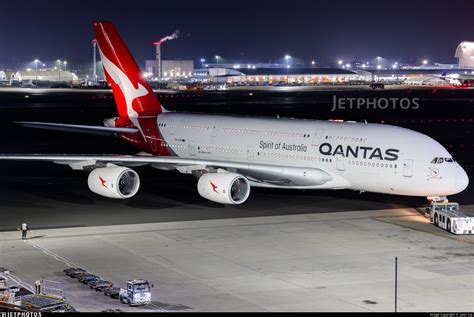
Before VH-OQG’s issue occurred, Qantas was already operating with limited flexibility because another A380, VH-OQI, was undergoing scheduled heavy maintenance in Dresden, Germany. This meant the airline had fewer spare aircraft available during a period when its superjumbo fleet was operating close to maximum capacity.
A separate technical issue briefly affected another aircraft, VH-OQH, which was removed from service on July 2 due to an air conditioning problem. However, that aircraft returned to operations the following day, limiting the impact on the overall fleet.
A Rare London To Los Angeles A380 Positioning Flight
The journey of VH-OQG attracted attention because of its unusual routing. Qantas A380 aircraft typically operate between Australia, Singapore, and London, with the Singapore stopover forming an important part of the airline’s long-range network. A direct London–Los Angeles ferry flight is far outside the aircraft’s normal pattern.
The routing allowed Qantas to avoid sending the aircraft through Asia and return it more quickly toward its Pacific operations. The replacement engine’s origin in Los Angeles also made the destination a practical choice. By positioning VH-OQG on the US West Coast, Qantas could place the aircraft closer to routes where it was needed while reducing unnecessary downtime.
The London-to-Los Angeles sector also shortened the aircraft’s repositioning requirement compared with a traditional return through Singapore. The flight was approximately 1,300 miles (2,100 kilometres) shorter than the usual London-to-Singapore journey, helping the airline recover capacity more efficiently.
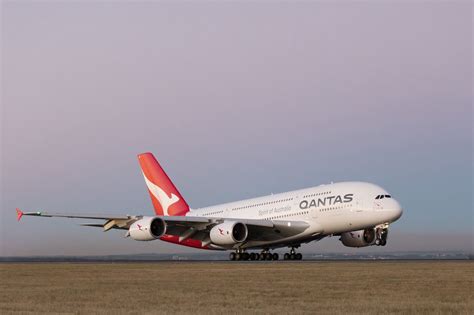
The operation demonstrates the complexity of maintaining a modern long-haul fleet. Although the A380 is no longer being produced, airlines such as Qantas continue to rely on the aircraft because of its unique combination of passenger capacity, range, and premium cabin space. Moving a grounded aircraft thousands of kilometres across multiple regions highlights the logistical planning required to keep large fleets operating.
VH-OQI Maintenance Completion Could Restore All Ten A380s
The final step toward full fleet availability depends on VH-OQI, which has been undergoing scheduled maintenance at Elbe Flugzeugwerke in Dresden since March. Unlike VH-OQG’s emergency repair, VH-OQI’s maintenance visit followed a planned schedule designed to ensure the aircraft remains reliable for future service.
Dresden has become an important maintenance location for Qantas because relatively few facilities worldwide have the expertise and equipment required to perform heavy checks on the Airbus A380. The airline has previously used the facility while rebuilding its A380 fleet after the pandemic period, when several aircraft were stored for extended periods.
Qantas reached a major milestone in December 2025 when its tenth A380, VH-OQC, returned to commercial service after almost six years on the ground. That achievement represented the first time since the pandemic that all ten aircraft were available for passenger operations.
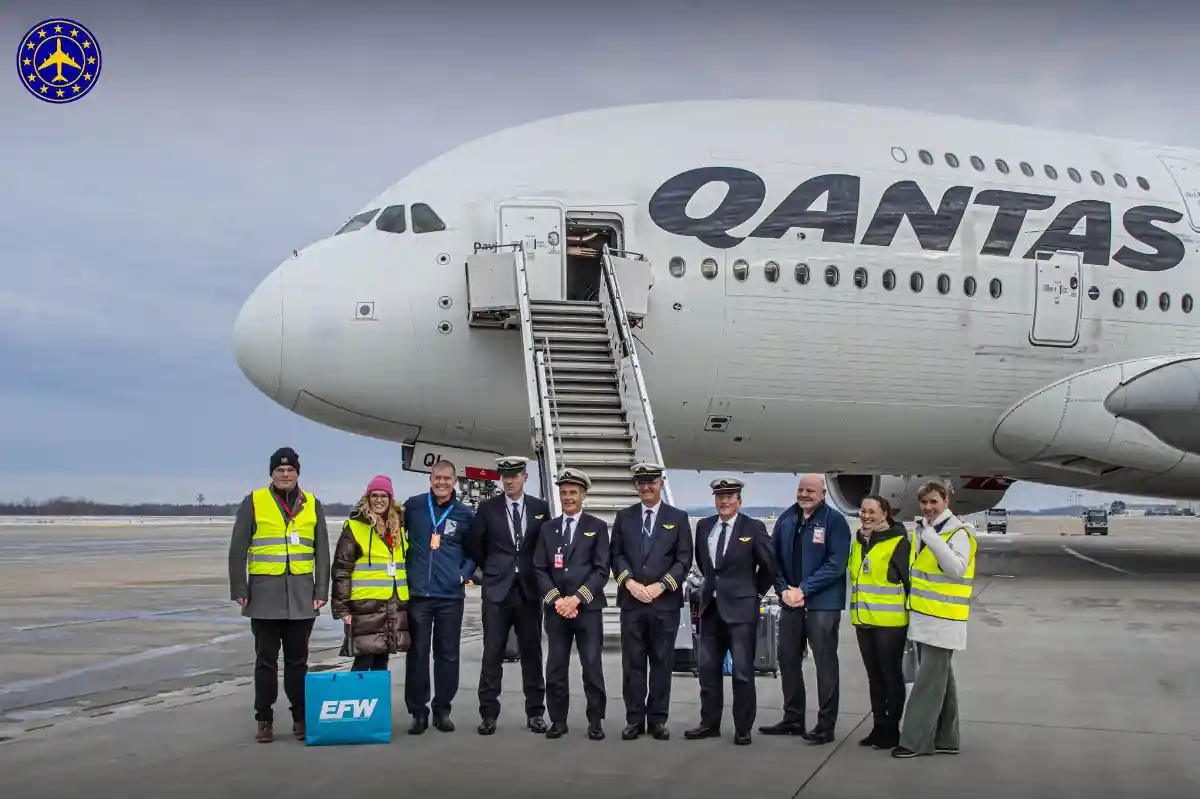
If VH-OQI completes its planned ferry flight back to Sydney, Qantas will once again have all ten A380s available. The restoration of full capacity so soon after the London disruption highlights the airline’s commitment to maintaining its superjumbo fleet despite the challenges of operating an aging aircraft type.
A380 Remains Important As Qantas Prepares For Next Generation Fleet
Qantas continues to view the Airbus A380 as a crucial part of its international network. While newer aircraft, including the Airbus A350-1000, are expected to join the fleet from 2027 as part of the airline’s long-range expansion plans, the A380 will remain an important aircraft for high-demand routes.
The airline does not currently expect A380 retirements to begin until around 2032, meaning these aircraft are likely to remain central to Qantas’ premium international strategy for several more years. Their large capacity, spacious cabins, and strong passenger appeal make them particularly valuable on routes where demand supports high-frequency, high-capacity services.
The successful return of VH-OQG and the expected completion of VH-OQI’s maintenance demonstrate that Qantas is still investing heavily in keeping its A380 fleet operational. For passengers and the airline alike, the return of all ten aircraft represents a return to stability after a brief but challenging period for one of the world’s most recognizable commercial aircraft fleets.