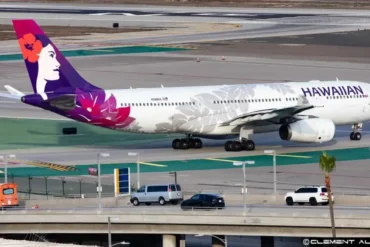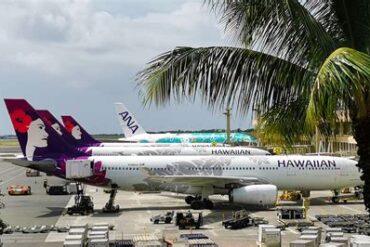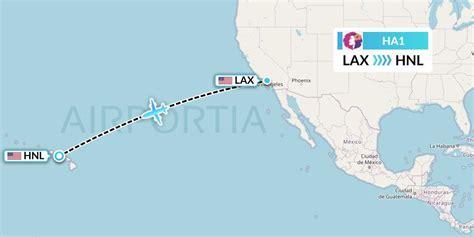
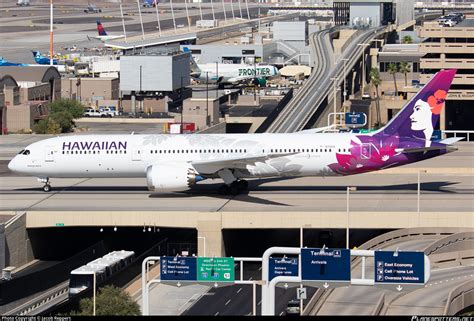
On July 19, 2025, what should have been a routine five-hour journey from Los Angeles International Airport (LAX) to Honolulu’s Daniel K. Inouye International Airport (HNL) became a day of disruption, anxiety, and a critical lesson in aviation safety. Hawaiian Airlines Flight HA1, operated on a Boeing 787-9 Dreamliner, experienced two successive diversions due to recurring mechanical issues, ultimately leading to a full cancellation of the transoceanic flight.
The Initial Departure and First Diversion
Scheduled for an 8:30 AM departure, Flight HA1 took off slightly behind schedule at 9:03 AM. The aircraft, one of Hawaiian Airlines’ flagship Dreamliners, smoothly ascended to its cruising altitude of 38,000 feet, embarking on the 2,556-mile journey across the Pacific Ocean. Approximately 80 minutes into the flight, a technical malfunction prompted the flight crew to abandon the route and return to LAX as a precautionary measure.
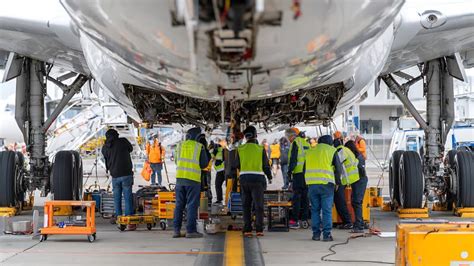
At 11:43 AM, the aircraft landed back in Los Angeles—two hours and 40 minutes after initial departure. Ground maintenance crews immediately began diagnostics, attempting to isolate and rectify the technical fault that caused the unscheduled turnaround.
Second Attempt and Recurrence of the Issue
After a 90-minute inspection and maintenance session, the Boeing 787 was cleared for a second departure. The aircraft once again took to the skies at 1:15 PM, only to encounter the same technical issue within 15 minutes of flight. With a strict adherence to safety protocol, the pilots made the prudent decision to return to LAX a second time, landing at 1:53 PM.
This second in-flight disruption confirmed the persistence of the mechanical anomaly. Given the transpacific nature of the route—where emergency landing opportunities are extremely limited—the airline made the final call to cancel the flight entirely, placing passenger safety at the forefront.
The Decision to Cancel: Safety Over Schedule
While the cancellation left many passengers understandably frustrated, Hawaiian Airlines’ decision to halt further attempts was a clear affirmation of its unwavering commitment to safety. Transoceanic routes like LAX to HNL require a different operational mindset, where safety calculations are stringent due to the lack of viable emergency diversion airports en route. Continuing a flight under technical uncertainty would pose unacceptable risk, regardless of prior repairs.
Though Hawaiian Airlines did not disclose the exact nature of the mechanical problem, aviation analysts speculate the recurring issue may have been tied to onboard electrical systems or engine sensors—components known for triggering cautionary alerts in advanced aircraft like the Boeing 787-9 Dreamliner.
Ground Response and Passenger Accommodations
Following the cancellation, Hawaiian Airlines swiftly mobilized its ground team to manage the fallout. Passengers were rebooked on alternative flights to Honolulu and were provided with accommodation assistance, meals, and real-time updates regarding their revised itineraries. The airline’s customer support and cabin crew reportedly remained professional and transparent throughout the ordeal.
The airline issued a formal statement reaffirming its prioritization of “uncompromising safety and fleet consistency.” Hawaiian Airlines further praised the efforts of its flight crew and cabin staff, who managed the evolving situation with a calm demeanor and operational precision.
Complexity of the Boeing 787 Dreamliner Systems
Modern aircraft like the Boeing 787-9 Dreamliner are marvels of aviation engineering, featuring fly-by-wire controls, electrical systems integration, and composite materials. While these advancements enhance fuel efficiency and flight comfort, they also introduce complex interdependencies in onboard systems. A minor fault in a subsystem, such as electrical power distribution or avionics, can trigger cascading warnings and require immediate response.
In such cases, redundancy protocols come into play. If the issue recurs despite repair efforts, protocol dictates that the aircraft must not be flown over vast stretches of ocean until complete system integrity is restored. This was precisely the situation faced by Hawaiian Airlines on July 19.
The Real Cost of Operational Integrity
Although Hawaiian Airlines took a public relations hit and incurred operational costs for flight delays, maintenance, and accommodations, the airline chose principle over expedience. By grounding the aircraft, the airline mitigated the risk of a mid-ocean emergency that could have placed hundreds of lives in jeopardy.
This scenario also serves as a clear case study in aviation ethics. Airlines operate under tight schedules and financial constraints. However, the ability to suspend service in favor of safety reflects organizational maturity and respect for life over logistics. It also underscores the importance of aviation maintenance standards, which demand not only reactive repairs but preventive diligence.
Communication as a Crucial Element
Passenger frustration often escalates when transparency is lacking. In this case, Hawaiian Airlines was commended for keeping its passengers well-informed and assisted. From ground staff updates to digital notifications, the airline maintained an open channel of communication. This mitigated the emotional toll on passengers and upheld the company’s reputation amid a disruptive event.
Clear communication during such disruptions becomes not just a public relations tool, but a moral obligation. Whether the audience is frequent flyers or first-time tourists, passengers deserve to understand why delays occur—especially when safety is the core issue.
Lessons for the Aviation Industry
Incidents like the double diversion of HA1 are not just operational anomalies; they’re wake-up calls for the entire industry. They emphasize the limits of predictive maintenance and the importance of human judgment. Despite sophisticated onboard diagnostics, pilots and maintenance personnel must often act on intuition and precaution. No AI system or software can yet match the human ability to recognize patterns of failure and assess compounded risks.
Moreover, the airline industry must continue to invest in real-time aircraft health monitoring, improve redundancy across essential systems, and encourage a culture where safety overrides revenue concerns. Hawaiian Airlines, in this case, offers an exemplary model of how to balance customer service, mechanical responsibility, and operational leadership.
Final Thoughts: Safety as the North Star
Though inconvenient and frustrating for those aboard Flight HA1, the July 19 event reinforces a central tenet of aviation: safety must never be compromised. Hawaiian Airlines demonstrated that even when initial maintenance clears an issue, reappearance warrants conservative action.
From a broader perspective, such decisions build long-term trust. Passengers may not remember every on-time arrival, but they will remember how an airline responded under pressure—and more importantly, how it prioritized their safety.
In a world increasingly driven by metrics and margins, the HA1 cancellation reminds us that aviation remains a human-first industry, where machines may fly, but people must choose when and how.