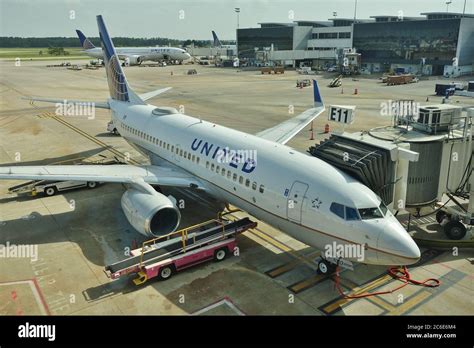
On May 27, 2025, United Airlines faced a rare and disruptive operational mishap that resulted in the accidental cancellation of a key domestic flight segment from Houston (IAH) to Los Angeles (LAX). The segment was part of Flight UA469, originally routed from San Antonio (SAT) to San Francisco (SFO) via Houston and Los Angeles. While the first leg from San Antonio to Houston was legitimately canceled — possibly due to weather or crew logistics — the subsequent Houston-to-Los Angeles leg was erroneously removed from multiple passenger itineraries.
The Origin of the Mistake: An Operational Chain Reaction
The incident began early morning when United Airlines canceled the SAT–IAH segment, scheduled to depart at 5:30 AM. The disruption was routine and likely due to standard operational constraints such as weather delays, crew rotation, or equipment unavailability. However, what followed was anything but routine. The airline’s internal systems appeared to cascade the cancellation downstream, erroneously removing the IAH–LAX leg scheduled for 9:45 AM from passenger bookings.
For many travelers, this created instant confusion. Those who were not departing from San Antonio but instead boarding at Houston were shocked to find their flights removed or rebooked altogether. As a result, passengers were assigned to later alternatives, sometimes departing hours behind schedule, thereby affecting tight business schedules, connecting flights, or personal plans.
Flight UA469: The Segment Breakdown
United Airlines Flight UA469 was originally structured as follows for May 27:
- SAT → IAH: 5:30 AM — Canceled legitimately
- IAH → LAX: 9:45 AM — Canceled in error, later reinstated
- LAX → SFO: 1:39 PM — Operated as planned
This segment structure, while typical of United’s multi-leg scheduling for transcontinental travelers, became the centerpiece of a digital mishap that drew sharp reactions from frequent flyers.
Travelers Scramble for Alternatives
As travelers began receiving alerts about cancellations, automated rebooking kicked in. One seasoned flyer, who documented the experience on Reddit, was rebooked onto a much later flight departing at 8:10 PM. This passenger, bound for Los Angeles on business, quickly recognized the schedule conflict and began to dig deeper.
Through manual flight searches on United’s website, the traveler found that the original IAH–LAX segment was still listed as active and available. Strangely, seat availability was wide open, suggesting that the majority of originally booked passengers had already been reassigned to alternate flights.
Upon re-selecting the flight and reserving a new seat, the traveler called United Airlines to confirm. The representative verified that the 9:45 AM segment from Houston to Los Angeles was indeed operating on schedule, and that the prior cancellation was the result of a system error tied to the SAT–IAH segment.
Behind the System Error: How Do These Mishaps Happen?
While airlines routinely deal with cancellations, delays, and reassignments, a mistaken removal of a flight segment not affected by weather or logistics points to a backend system logic flaw. When the SAT–IAH segment was canceled, the airline’s system may have been programmed to flag dependent connections — particularly if they were on the same flight number — as potentially invalid.
In such cases, automatic itinerary updates may initiate fallback bookings without confirming the operational status of downstream segments. While such measures are often aimed at preserving customer continuity, they can backfire — as seen in this case — when applied without granular logic controls. The ripple effect forced travelers into unnecessary reassignments and increased load on customer service and manual verification channels.
Impact on Passenger Trust and Brand Experience
For United Airlines, an airline known for tight operational discipline, this incident raises important questions about system oversight and customer experience design. Frequent flyers depend on precision, especially when their travel involves multiple hops and tight timelines. Errors like these, even when corrected quickly, erode traveler trust — not due to the delay itself, but due to the lack of real-time transparency and accurate rebooking logic.
United has been investing heavily in digital transformation, including predictive rebooking tools, AI-enhanced crew logistics, and mobile-first customer service interfaces. But this event reveals a key vulnerability: over-automation without robust contextual safeguards. It also highlights the need for clearer communication when changes occur, especially on high-traffic domestic corridors like Houston to Los Angeles.
What Passengers Should Learn from This
Travelers can’t always control flight cancellations, but they can improve their response when systems falter. This event underlines several vital tips:
- Double-check flight availability manually using the airline’s website or app — don’t rely solely on push notifications.
- Call the airline to confirm the status of downstream segments, especially if only one leg is officially canceled.
- Act quickly if a flight reappears in the system — empty seats may fill up fast as other travelers catch on.
- Screenshot your original itinerary and keep track of departure times and gate information.
These actions can help mitigate the fallout of a mistaken cancellation and ensure passengers aren’t left behind due to system assumptions.
A Pattern of Operational Strain?
It’s worth noting that this wasn’t the only operational glitch affecting United Airlines that day. In an unrelated but parallel incident, a United flight from Barcelona (BCN) to Chicago (ORD) was forced to divert to London Heathrow (LHR) after declaring an in-flight emergency. The Boeing 787-8 Dreamliner, registered as N26902, landed safely, but the reason for the diversion remains unclear at this time.
While it’s speculative to draw connections between the two events, May 27, 2025, was evidently a high-turbulence day operationally for United. When system resilience is tested across multiple geographies, even the most advanced networks show their pressure points.
Looking Ahead: Lessons for Airlines and Passengers Alike
The mistaken cancellation of Flight UA469’s Houston–Los Angeles segment may not seem monumental in isolation. However, it underscores how digital errors — not just mechanical or weather-related ones — now define the modern airline passenger experience. As carriers rely increasingly on algorithmic decision-making, the need for transparent, human-verifiable layers of control becomes more urgent.
For United Airlines, this is an opportunity to review and refine their itinerary modification logic, especially in cascading scenarios involving multi-leg flights. Better alert protocols, clearer messaging in the app, and intelligent exception handling could reduce confusion during future operational disruptions.
For travelers, the incident is a clear reminder to stay proactive and informed. While technology has streamlined check-ins and boarding, it has also introduced complexity when things go wrong. The savvy traveler of 2025 must be part flyer, part analyst — always ready to question, confirm, and adapt.
As United continues to push boundaries in global connectivity, its ability to balance automation with human oversight will remain critical — not just for operational efficiency, but for sustaining passenger loyalty in a fiercely competitive industry.