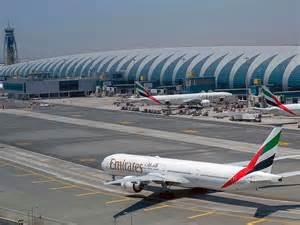
Emirates is restoring service to four major US gateways this week, marking a significant recovery of its North America network after months of disruption linked to the conflict involving Iran and regional airspace restrictions. Beginning May 1, the Dubai-based carrier resumes flights to Los Angeles, Miami, and Orlando, followed by Houston on May 2. With those routes back in operation, Emirates returns to service at 12 US airports, re-establishing the same weekly capacity it offered before the suspension period began.
The restart is more than a timetable update. It signals renewed confidence in operational stability across long-haul corridors connecting the Gulf, Europe, Asia, Africa, and the United States. Emirates has long relied on Dubai’s hub model, where passengers from dozens of cities connect efficiently onto transcontinental departures. Reopening these four routes restores an important piece of that strategy, especially for travelers connecting from South Asia, Southeast Asia, East Africa, and the Middle East.
Once all four routes resume, Emirates will schedule 96 weekly departures to the United States. That equals 14 daily flights on most days of the week, placing the airline back at pre-disruption levels. For premium and long-haul travelers, that means more connection options, stronger schedule flexibility, and increased seat availability in a market where demand has remained resilient.
Gradual Return Begins With Limited Frequencies
Although the routes are returning this week, Emirates is taking a measured approach rather than immediately launching full daily operations. Miami will initially receive four weekly flights, while Los Angeles, Orlando, and Houston begin with three weekly services each. All four routes are expected to return to daily frequencies later in May, assuming operating conditions remain favorable.
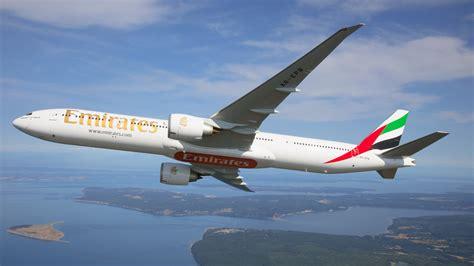
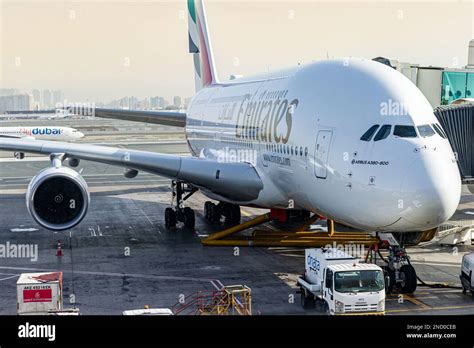
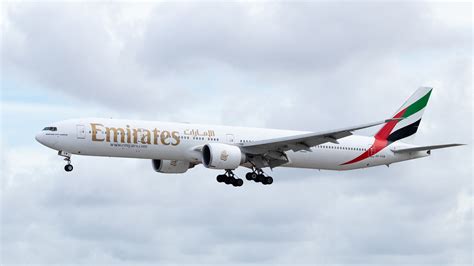
Aircraft deployment also reflects the importance of these markets. Houston and Los Angeles will be served by the airline’s flagship Airbus A380, configured with 484 seats across four classes. Miami receives the Boeing 777-300ER in a four-class layout with 328 seats, while Orlando is assigned a three-class 777-300ER with 354 seats.
That mix matters. The A380 remains a powerful capacity tool for slot-constrained or high-demand routes, while the 777-300ER offers more flexibility on developing or seasonally variable services. Emirates continues to use both aircraft types strategically, matching premium demand and cargo opportunities with market performance.
Miami Route Remains One of Emirates’ Most Ambitious Services
Among the restored cities, Miami stands out because the flight continues onward to Bogotá, Colombia. That routing has become one of Emirates’ most remarkable network plays, linking Dubai, South Florida, and northern South America on a single itinerary.
With total journey times reaching 22 hours and 25 minutes, it is considered the airline’s longest route. Emirates launched the service in 2024, replacing its previous Dubai–Barcelona–Mexico City operation. The Miami-Bogotá tag has allowed the carrier to tap growing traffic flows between Latin America, the Gulf region, and Asia.
The route also demonstrated operational creativity during the suspension period. One Emirates 777-300ER reportedly remained in Florida for several days due to airspace complications and temporarily operated between Miami and Bogotá before eventually returning to Dubai. That episode highlighted how global network carriers adapt quickly when geopolitical events interrupt normal schedules.
Los Angeles Flights Become Longer Due to Rerouting
The biggest schedule impact from current airspace realities appears on the Los Angeles route. Because Emirates can no longer use some previously efficient corridors over Iran and nearby regions, flights must take alternate paths that increase journey times.
Dubai to Los Angeles is now scheduled at up to 17 hours 15 minutes, roughly 55 minutes longer than comparable schedules before the conflict. The return flight from Los Angeles to Dubai rises to as much as 17 hours, an increase of around 1 hour 10 minutes.
Longer block times create real commercial consequences. More flying time means higher fuel burn, increased crew utilization, and potentially reduced competitiveness against one-stop alternatives through European hubs. Even so, nonstop convenience remains a strong selling point, especially for travelers heading beyond Dubai to India, Pakistan, Thailand, Indonesia, and Africa.
Emirates is expected to route these flights via southern corridors, potentially similar to those used on San Francisco services. It is not the shortest path—but in aviation, sometimes the safest route wins, and efficiency must follow later.
How Emirates’ US Departure Banks Work
A major reason Emirates performs so strongly in long-haul markets is the precision of its Dubai hub structure. Flights depart in coordinated “banks,” allowing inbound passengers from dozens of cities to connect with minimal layovers.
On May 2, the first US-bound wave includes departures to Miami, Washington Dulles, Dallas/Fort Worth, New York JFK, and Orlando in the early morning hours. These flights are timed to receive inbound traffic from South Asia, Africa, and regional Middle East markets.
The second departure wave includes Los Angeles, Boston, New York JFK, San Francisco, Houston, Chicago O’Hare, Seattle, and Newark via Athens. This later bank captures even more connecting traffic and showcases how Emirates turns Dubai into a global transfer machine.
What the Return Means for Travelers
For passengers, the restoration of these routes means more seats, better fares, and improved connectivity. Travelers heading to secondary markets across Asia and Africa will once again have broader one-stop options through Dubai. US-based flyers also regain access to Emirates’ premium cabins, onboard service reputation, and extensive onward network.
For Emirates, the message is equally clear: despite geopolitical turbulence, the airline intends to defend its global reach and restore capacity quickly whenever conditions allow. Returning to 12 US airports and 96 weekly departures is not just a recovery milestone—it is a statement of scale.
This week’s restart shows that even after disruption, major international aviation networks can rebound fast when demand remains strong and strategy stays disciplined.