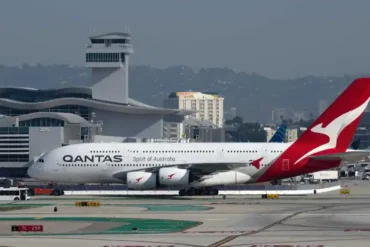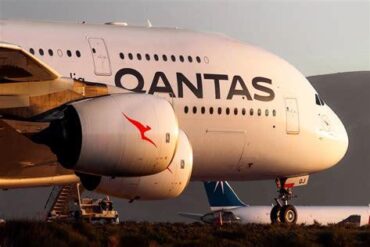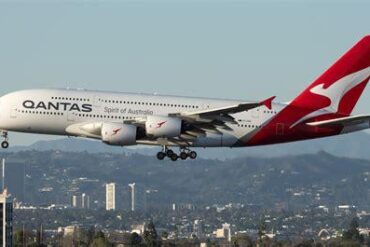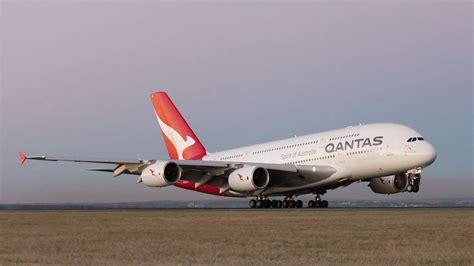
Australian flag carrier Qantas has been forced to temporarily cancel several long-haul Airbus A380 services after an unexpected engine issue grounded one of its flagship superjumbos in London. The disruption highlights the increasingly delicate balance involved in operating a relatively small fleet of aging four-engine aircraft, where even a single unscheduled maintenance event can ripple across an airline’s international network. While Qantas has moved quickly to reaccommodate affected passengers, the incident demonstrates how limited fleet redundancy can translate into immediate schedule changes during peak travel periods.
The airline currently operates 10 Airbus A380s, making it one of the world’s remaining major operators of the iconic double-deck aircraft. Although the fleet continues to play an important role on high-demand international routes, the aircraft average nearly 17 years of age, meaning maintenance requirements are becoming more frequent and increasingly complex. Unlike newer twin-engine widebodies, the Airbus A380 requires specialized components, engineering expertise, and carefully coordinated logistics whenever unexpected technical issues arise.
Qantas normally requires eight or nine A380s to remain operational every day to maintain its published international schedule. That leaves virtually no spare capacity whenever an aircraft requires prolonged maintenance, particularly during busy travel seasons when demand remains consistently high across long-haul markets.
An Unscheduled Engine Change Created Immediate Operational Challenges
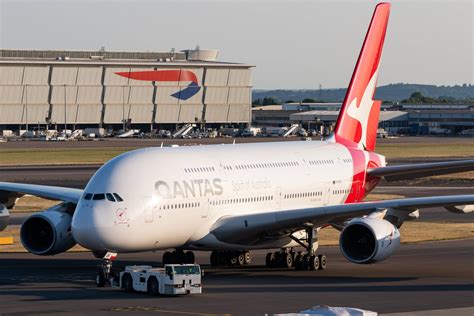
The primary disruption began after Airbus A380 VH-OQG encountered an engine issue shortly after arriving in London Heathrow Airport. Engineers determined that the aircraft required an unscheduled engine replacement, a maintenance procedure far more extensive than routine inspections or component replacements.
Replacing an engine on an Airbus A380 is a highly specialized operation involving heavy lifting equipment, dedicated engineering teams, detailed inspections, and extensive post-installation testing before the aircraft can safely return to commercial service. Since spare engines are rarely positioned at every destination worldwide, airlines must often transport replacement powerplants internationally, adding valuable days to the repair timeline.
According to Qantas, a replacement engine was shipped from Los Angeles to London immediately after the issue was identified. Engineers have since begun fitting the engine, with the airline expecting the aircraft to re-enter service shortly after completion of the installation and mandatory testing procedures.
The carrier explained that the technical issue was discovered during routine operational checks rather than during an in-flight emergency, allowing maintenance personnel to address the problem safely before the aircraft resumed passenger operations.
Multiple Aircraft Already Offline Reduced Fleet Flexibility
The engine replacement became significantly more disruptive because another Airbus A380, VH-OQI, has already been undergoing scheduled maintenance in Dresden, Germany, since March. With one aircraft already unavailable for several months, the fleet had little remaining flexibility to absorb another unexpected grounding.
A brief air-conditioning issue affecting another A380, VH-OQH, also temporarily reduced fleet availability during the same period. Although that aircraft quickly returned to service, the overlap of multiple maintenance events created a perfect operational storm.
Large international airlines routinely plan for scheduled maintenance months in advance. However, unexpected technical events cannot always be predicted, especially among older aircraft that have accumulated thousands of long-haul flight hours. When a fleet consists of only ten aircraft serving numerous intercontinental destinations, losing even one additional airplane can immediately affect published schedules.
Los Angeles Flights Experienced the Greatest Impact
The most noticeable passenger disruptions occurred on Qantas’ Airbus A380 services between Australia and Los Angeles.
Several flights from Sydney to Los Angeles International Airport were cancelled, alongside one scheduled departure from Melbourne. These routes represent some of the airline’s busiest long-haul operations, particularly during the Australian winter travel season when demand for North American travel remains strong.
Sydney normally receives daily Airbus A380 service to Los Angeles, while Melbourne operates the superjumbo only twice each week, with Boeing 787 Dreamliners covering remaining frequencies. Because aircraft assignments are carefully optimized months in advance, substituting another aircraft type at short notice is not always operationally feasible, particularly when passenger demand exceeds the seating capacity of smaller aircraft.
Instead of operating significantly reduced-capacity replacements, Qantas elected to cancel selected departures while reaccommodating travelers onto alternative services.
Qantas Quickly Reaccommodated Affected Passengers
Despite the operational disruption, Qantas confirmed that every affected customer has been offered alternative travel arrangements.
The airline stated that replacement flights and revised itineraries were provided after the aircraft required an unexpected engine replacement in London. By utilizing available seats across its own network and partner airlines where appropriate, Qantas minimized the impact on travelers whose itineraries were interrupted.
This strategy reflects standard industry practice during irregular operations. Rather than allowing passengers to wait indefinitely for a repaired aircraft, airlines typically distribute customers across multiple available departures to restore travel plans as quickly as possible.
The Airbus A380 Remains Central to Qantas’ International Network
Although its fleet is relatively small, the Airbus A380 continues to serve some of Qantas’ highest-profile international destinations.
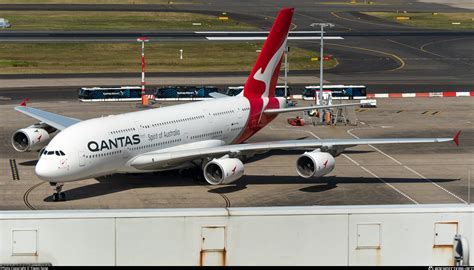
During July, the aircraft is scheduled to operate hundreds of flights connecting Australia with major international hubs. Daily services link Sydney with Singapore, with many continuing onward to London Heathrow. The superjumbo also operates regular flights between Sydney and Dallas/Fort Worth, providing extensive onward connections through fellow oneworld alliance member American Airlines.
Additional Airbus A380 operations include flights between Sydney and Johannesburg, while Los Angeles remains one of the aircraft’s most strategically important destinations because of strong business, tourism, and connecting traffic between Australia and North America.
These routes benefit from the aircraft’s exceptional passenger capacity, allowing Qantas to transport hundreds of travelers on each departure while maximizing valuable airport slots at congested international hubs.
Inside the Qantas Airbus A380 Cabin
The Qantas Airbus A380 accommodates 485 passengers across four cabin classes, offering one of the airline’s most premium travel experiences.
At the front of the lower deck sit 14 First Class suites, arranged in an exclusive 1-1-1 configuration that provides exceptional privacy and direct aisle access. Behind First Class, the lower deck is primarily dedicated to 341 Economy Class seats, allowing the aircraft to efficiently serve high-demand long-haul routes.
The upper deck combines premium travel products, featuring 70 fully flat Business Class beds configured in a 1-2-1 layout, ensuring every passenger enjoys direct aisle access. Behind the Business cabin are 60 Premium Economy seats, arranged in a spacious 2-3-2 configuration that provides additional comfort for long international journeys.
This multi-class layout enables Qantas to serve a diverse mix of premium business travelers, leisure passengers, and connecting customers while maximizing revenue across some of the world’s longest commercial routes.
Aging Superjumbos Continue to Require Careful Fleet Management
The recent cancellations illustrate the operational realities of maintaining an aging fleet of very large aircraft. While the Airbus A380 remains exceptionally capable on dense long-haul routes, its size, complexity, and specialized maintenance requirements mean that unexpected technical issues can have disproportionate operational consequences.
For Qantas, careful planning remains essential as each aircraft represents approximately 10% of the airline’s entire Airbus A380 fleet. Losing even one aircraft for several days can force schedule adjustments across multiple continents, especially when another aircraft is already undergoing heavy maintenance.
With the replacement engine now being installed in London and the aircraft expected to return to service shortly, the disruption appears temporary. Nevertheless, the incident serves as a reminder that maintaining reliable operations with a mature fleet requires not only engineering expertise but also flexible scheduling, efficient logistics, and rapid coordination across a global maintenance network.