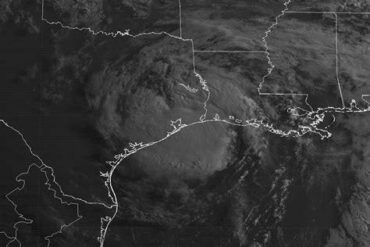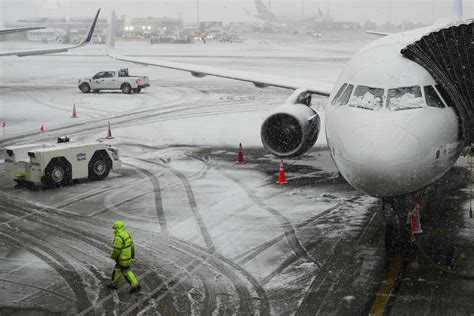
Winter Storm Hernando has forced a sweeping shutdown of air travel across the U.S. East Coast, grounding thousands of flights and disrupting one of the nation’s most densely trafficked aviation corridors. As heavy snowfall, fierce winds, and low visibility converge on major metropolitan hubs, airlines have moved aggressively to cancel services in anticipation of deteriorating conditions. The result is a cascading operational freeze stretching from Boston to Washington, D.C., with ripple effects expected nationwide through Tuesday.
By Sunday, February 22, flight tracking data confirmed that 2,733 flights to, from, and within the United States had already been canceled. The epicenter of the disruption lies squarely in the New York metropolitan region, where John F. Kennedy International Airport recorded 651 cancellations alone. The scale is not incidental. JFK serves as a vital domestic and international gateway, and when its schedules contract, the shockwaves travel far beyond the Northeast.
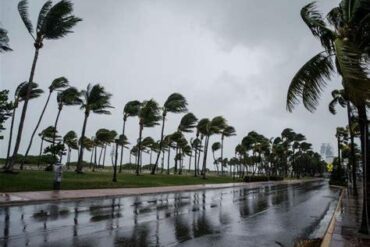
Forecast models warning of more than two feet of snowfall, wind gusts exceeding 40 miles per hour, and sustained low visibility made preemptive cancellations inevitable. Aviation operates on precision margins; aircraft require clear runways, predictable crosswinds, and reliable ground support. Hernando’s arrival threatens each of those variables simultaneously, making reduced schedules not just prudent but essential for safety and operational control.
Over 2,700 Flights Grounded as Major East Coast Airports Brace for Impact
Beyond JFK, LaGuardia Airport reported 523 cancellations, Newark Liberty International Airport recorded 376, Boston Logan International Airport counted 371, and Ronald Reagan Washington National Airport saw 256 flights scrubbed from schedules. These five airports collectively represent the backbone of East Coast aviation, handling millions of passengers each month. Their simultaneous contraction underscores the storm’s breadth.
Notably, while cancellations surged, delay figures remained comparatively modest. That pattern reflects a deliberate airline strategy: cut flights early to prevent chaotic bottlenecks later. By thinning schedules, carriers preserve operational reliability for the flights that do operate, protecting crews, aircraft positioning, and passenger connections from compounding breakdowns.
Airlines have broadly waived change and cancellation fees, encouraging travelers to rebook or postpone trips without penalty. This flexibility reduces airport congestion and call center overload while allowing carriers to reallocate aircraft and crews where they are most needed once weather conditions stabilize. Recovery, however, will not be instantaneous. Aircraft displaced from key hubs require repositioning, and crew duty-time limits further complicate restart logistics.
Monday Cancellations Surge Nearly 30% as Storm Intensifies
The most severe operational contraction is projected for Monday, February 23, when more than 3,500 flights are scheduled to be canceled. That figure represents a 29.6% increase compared to Sunday’s already elevated numbers. LaGuardia and Boston Logan are expected to experience the deepest reductions, with cancellation rates exceeding 80% of their departure schedules. Such figures approach near-total shutdown territory for facilities accustomed to relentless traffic.
Detailed airport data illustrates the scale of Monday’s disruption:
- LGA: 794 cancellations
- BOS: 792 cancellations
- JFK: 768 cancellations
- PHL: 439 cancellations
- EWR: 434 cancellations
With over half of arrivals and departures removed at several airports, the logistical consequences extend beyond stranded passengers. Cargo movements are delayed, international connections are disrupted, and aircraft rotation schedules are thrown off balance. Each canceled flight represents not merely a missed departure but a node removed from a tightly interlinked national network.
Major U.S. Airlines Face Heavy Operational Strain
All four major U.S. carriers—United Airlines, Delta Air Lines, American Airlines, and Southwest Airlines—maintain significant operational footprints across the East Coast. Consequently, each faces substantial exposure to Hernando’s disruption. Sunday’s cancellation totals show Republic Airways leading with 532 scrapped flights, followed by JetBlue with 423, American Airlines with 329, Delta Air Lines with 300, and Southwest with 239.
Republic Airways’ role is particularly significant. As a regional operator flying on behalf of United, Delta, and American under branded partnerships, its cancellations amplify the effective impact on those legacy carriers. United, for example, officially reported 165 cancellations Sunday, but Republic’s reductions on its behalf substantially increase that total in practice.

Monday’s projections reveal even steeper airline-specific contractions. JetBlue is expected to cancel 687 flights, American 517, Delta 462, Southwest 192, and United 160. Republic Airways has scheduled 662 additional cancellations on behalf of its partners, while Endeavor Air—Delta’s regional subsidiary—has cut 301 services. The combined data indicates Delta will likely shoulder the heaviest aggregate burden once affiliated regional operations are accounted for.
Carriers with strong New York and Boston concentrations, particularly JetBlue and Delta, face disproportionate strain. Hub-dependent operations amplify disruption because aircraft and crew rotations are tightly sequenced through these airports. When a hub slows dramatically, downstream destinations feel the impact within hours.
Operational Recovery Expected by Tuesday
Airlines anticipate gradual normalization beginning Tuesday as snowfall tapers and runway clearing operations gain traction. Airport crews will work continuously to remove accumulated snow, treat taxiways, and restore full runway availability. Yet full recovery depends on more than clear pavement. Aircraft must be repositioned, maintenance inspections conducted, and flight crews reassigned in compliance with federal rest requirements.
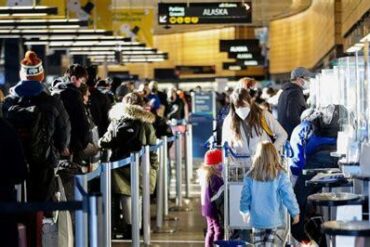
The backlog of displaced passengers will take several days to resolve, particularly on high-demand routes. Travelers holding flexible tickets may secure alternative itineraries sooner, while those bound for fully booked flights could experience extended delays. The concentrated timing of cancellations compounds demand pressure once operations resume.
Winter Storm Hernando illustrates the fragile equilibrium underlying modern aviation. A single large-scale weather system can compress schedules across multiple states, disrupt interconnected airline networks, and test recovery systems designed for resilience. While cancellations are disruptive, they reflect calculated decisions to prioritize safety and operational stability over short-term continuity.
As the East Coast weathers Hernando’s peak, airlines, airports, and passengers enter the next phase: rebuilding the rhythm of departures and arrivals that defines one of the world’s busiest air corridors. The coming days will determine how swiftly that rhythm returns.