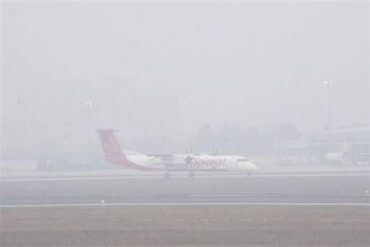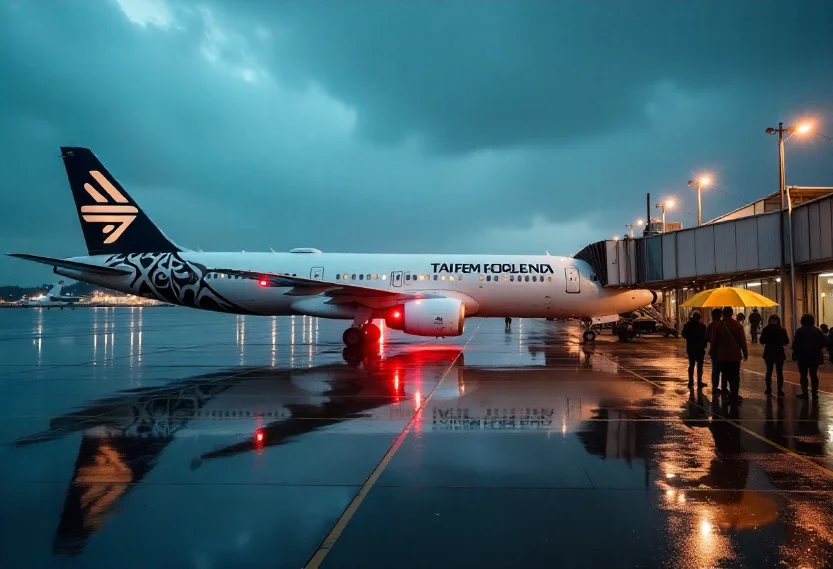
A powerful weather system has plunged New Zealand’s aviation network into disarray, disrupting air travel nationwide. Air New Zealand, Qantas, Emirates, China Eastern, Singapore Airlines, and several other carriers are grappling with sweeping flight delays and cancellations brought on by torrential rain and gale-force winds that have battered key cities including Auckland, Wellington, Christchurch, and Queenstown.
Auckland Airport Suffers the Heaviest Blow
As New Zealand’s busiest international gateway, Auckland Airport bore the brunt of the storm’s wrath. With hundreds of flights scheduled daily, the airport became a focal point of nationwide disruption. On Monday, July 28, the airport logged 61 delays and 6 cancellations, severely impacting international and domestic schedules. Air New Zealand experienced 37 delays, accounting for 13% of its operations, along with 3 flight cancellations. Qantas, though smaller in volume, reported 7 delays and 3 cancellations, while Jetstar noted 3 cancellations and 7 delays.
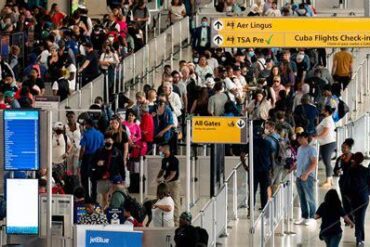
The situation saw marginal improvement by Tuesday, with 43 delays and only 1 cancellation, but passengers remained stranded, facing long queues and rebooking frustrations. International airlines, including China Eastern (3 cancellations, 7 delays) and Emirates (1 delay), were also caught in the storm’s grasp, underscoring Auckland’s vulnerability when weather collapses its operations.
Christchurch Struggles Through Disruption
On the South Island, Christchurch Airport—a critical hub for trans-Tasman and Pacific flights—also reported heavy operational strain. Monday saw 22 delays and 5 cancellations, with Air New Zealand enduring 16 delays. Jetstar saw a 17% disruption rate, while Emirates and Singapore Airlines each had at least one cancellation or delay. The congestion spilled into terminal areas, leaving both domestic and international travelers scrambling for alternatives.
Tuesday brought momentary relief as Christchurch reported no delays or cancellations, but operational recovery remains tentative. Airlines continue to shift resources and reroute aircraft to normalize schedules.
Wellington Grapples with Operational Backlog
Wellington Airport, situated at the southern tip of the North Island, experienced 15 delays and 6 cancellations on Monday. Air New Zealand, responsible for the majority of traffic through the capital, saw 7 delays and 5 cancellations, while Jetstar had a 22% schedule disruption and Qantas faced minimal impact with 1 delay. Sounds Air, servicing smaller regions, was not spared, adding 3 delays to the tally.
Tuesday brought some respite: 9 delays but no cancellations, though the backlog remained substantial. Airport operations were further hampered by unpredictable gusts and slippery runways, limiting takeoff and landing windows.
Queenstown Feels the Ripple Effect
Though smaller in scale, Queenstown Airport—a winter tourism magnet—was not immune. Monday saw 12 delays, mostly from Air New Zealand (9) and Qantas (2). Virgin Australia, operating key Australia–NZ routes, registered 1 delay. By Tuesday, 3 delays persisted, though no flights were canceled. With fewer flights and lower volume, Queenstown’s disruptions were relatively easier to manage.
Airline-by-Airline Breakdown of Disruptions
The storm has proven to be an operational nightmare for airlines across the spectrum, with Air New Zealand absorbing the heaviest hit.
Over a 48-hour window:
- Air New Zealand: 65 delays, 4 cancellations
- Qantas: 14 delays, 3 cancellations
- Jetstar: 13 delays, 3 cancellations
- China Eastern: 4 delays, 3 cancellations
- Fiji Airways: 6 delays
- Qatar Airways: 2 delays, 1 cancellation
- Emirates: 2 delays, 1 cancellation
- Singapore Airlines: Minor delays in Wellington and Christchurch
- Malaysia Airlines: 1 delay
Despite the turbulent conditions, airlines have scrambled to reaccommodate passengers, leveraging alliances and backup aircraft. Emirates, for example, successfully rebooked passengers onto alternate itineraries, while Qantas employed standby rosters to adjust schedules.
Aviation and Tourism Industry on Edge
Beyond flight disruptions, the storm’s ramifications echo through New Zealand’s broader travel and tourism ecosystem. Ground transportation has been impeded by flooded roads and fallen debris, complicating passenger movement to and from airports. Travel insurance claims have spiked, while customer service hotlines are overwhelmed.
Key tourist hubs like Queenstown, already in peak winter season, now face potential economic aftershocks. Hotels are reporting last-minute cancellations, while adventure tour operators in affected areas are scaling back activity. The ripple effect on travel itineraries could extend for weeks, especially as international tourists reschedule.
Infrastructure and Resilience Tested
While airports have emergency weather protocols, the intensity and breadth of this storm tested even well-rehearsed contingency measures. Runway waterlogging, air traffic control delays, and crew scheduling disruptions contributed to cascading failures. Auckland Airport, in particular, struggled to realign schedules quickly due to its high flight volume and international exposure.
Still, New Zealand’s aviation sector showed signs of resilience. Rapid deployment of alternative aircraft, staff mobilization, and enhanced communication kept the situation from devolving into a full shutdown. Ground crews, many working double shifts, managed terminal operations with limited resources.
What Passengers Should Know Now
Travelers flying into or out of New Zealand over the coming days should remain vigilant. Flight status updates, especially from Air New Zealand, Qantas, and Emirates, are crucial. The New Zealand MetService forecasts continued unstable weather patterns, with pockets of rain and gusts expected across the South Island and lower North Island.
Passengers are advised to:
- Monitor airline notifications and airport advisories
- Check in online and arrive early to navigate congested terminals
- Prepare for delays and overnight stays, especially if connecting internationally
- Stay flexible with itineraries, as some rebookings may require detours through Australia or Asia
Looking Ahead: Recovery and Operational Recalibration
While the storm is gradually weakening, its effects will linger throughout the week. Airlines are expected to gradually restore normal operations, though some routes may operate on reduced frequencies. Recovery is particularly challenging for long-haul flights with limited daily frequency, such as Auckland–Dubai (Emirates) or Christchurch–Singapore (Singapore Airlines).
Airports are also conducting post-storm assessments, with runway integrity checks and equipment recalibrations underway. Weather systems of this magnitude underscore the importance of adaptive aviation infrastructure, and industry stakeholders may push for greater investment in storm resilience.
Conclusion: An Aviation System Under Pressure, But Holding
The storm of late July 2025 has become a sobering reminder of how quickly nature can cripple even the most robust aviation systems. Yet amid the delays, cancellations, and stranded travelers, the combined response from airlines, airport staff, and transportation officials reflects a resilient, coordinated approach under duress.
As flight schedules stabilize and the skies clear, the full cost of this disruption—economic and logistical—will become clearer. For now, the focus remains on clearing the backlog, reconnecting stranded passengers, and learning from the crisis to strengthen response mechanisms for the future.