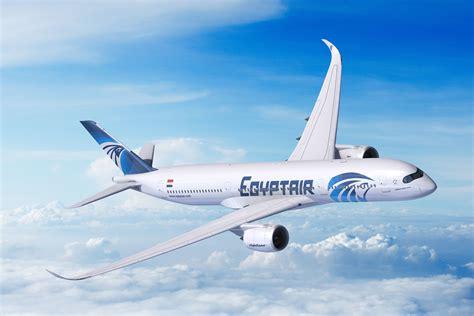
EgyptAir has officially set a new benchmark in its international ambitions by unveiling a transformative transatlantic strategy centered around a direct long-haul route from Cairo to Los Angeles, complemented by the introduction of Airbus A350 aircraft and a sweeping increase in U.S. flight frequencies. This bold move was revealed during the 2025 Paris Air Show, where EgyptAir’s CEO outlined a comprehensive expansion blueprint that positions the airline to become a more dominant player in the competitive U.S.–Middle East aviation corridor.
The Cairo–Los Angeles service, soon to be the longest route in EgyptAir’s network, addresses an enduring market demand and signifies a major step forward in the airline’s North American footprint. It will also mark Los Angeles International Airport’s (LAX) only nonstop connection to the African continent, bringing enhanced global connectivity to underserved transcontinental corridors.
Cairo to Los Angeles: A Long-Awaited Direct Link
The new nonstop route from Cairo to Los Angeles fills a glaring void in North American–African connectivity. Until now, no carrier operated direct services between these two bustling metropolises, despite considerable demand. According to OAG Traffic Analyzer data, approximately 63,000 passengers flew between Cairo and Los Angeles in the year ending July 2024, typically enduring long layovers and multi-leg itineraries. This high traffic volume made Los Angeles the largest unserved North American market from Cairo.
This upcoming route not only offers convenience for leisure and business travelers but strategically targets the West Coast’s sizable Middle Eastern and African diaspora. It also enables seamless transit for passengers connecting onward across North Africa, the Gulf, and Sub-Saharan Africa, positioning Cairo as a pivotal global aviation hub.
Powering Expansion with the Airbus A350
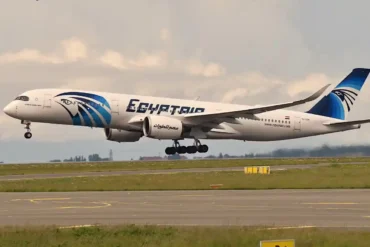
To fuel this transcontinental leap, EgyptAir is introducing the Airbus A350-900, a new widebody aircraft that blends fuel efficiency with passenger comfort for ultra-long-haul operations. EgyptAir has confirmed an initial order of ten A350s, with options for six more, with the first delivery slated for December 2025. These state-of-the-art aircraft will replace the airline’s aging Boeing 777s, which will begin retirement in late 2026.
The A350’s superior range and economics make it ideal for routes like Cairo–Los Angeles, allowing EgyptAir to deliver a premium in-flight experience while controlling long-haul operational costs. Passengers can expect next-generation cabin interiors, quieter cabins, and advanced air quality systems that elevate long-haul travel standards.

Elevating U.S. Connectivity: Daily Frequencies Across the Board
EgyptAir’s commitment to the U.S. goes far beyond a single route. The airline has laid out an ambitious plan to expand frequencies across all its North American destinations, aiming for daily service to all U.S. cities by early 2027. As of 2024, the airline serves the following destinations:
- New York JFK – Daily flights via Boeing 777-300ER with an average load factor of 71%.
- Washington Dulles (IAD) – Twice-weekly with Boeing 787-9, soon to increase to daily by 2027.
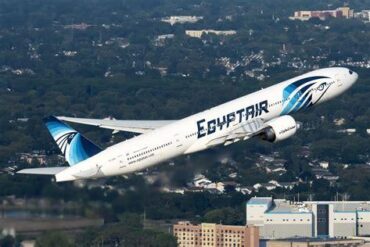
- Newark Liberty (EWR) – Thrice-weekly, also with Boeing 787-9, showing the strongest performance with 77% average load factor.
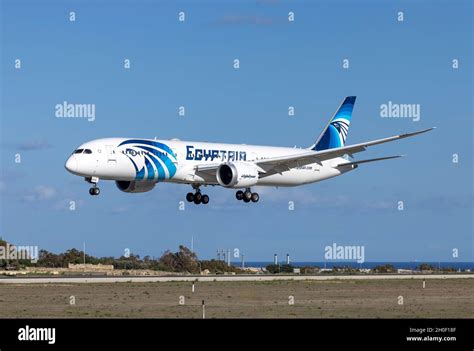
According to the airline, Newark was the best-performing U.S. route in 2024, drawing 61,000 round-trip passengers on 79,000 available seats. This strong utilization signals that EgyptAir’s existing U.S. routes are not only viable but ripe for expansion.
The expansion reflects decades of sustained demand. Despite geopolitical uncertainties and shifting immigration policies in the U.S., EgyptAir has maintained a strong and resilient performance in the region since launching transatlantic flights in the 1980s. This consistency now serves as the foundation for a second wave of aggressive growth.
Los Angeles as Africa’s New Western Gateway
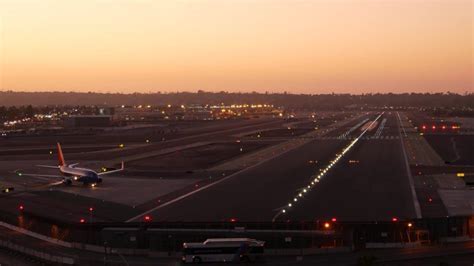
Perhaps most groundbreaking is EgyptAir’s role in establishing Los Angeles International Airport as a new gateway to Africa. This route will represent LAX’s first continuous air link to the African continent since Ethiopian Airlines’ short-lived Lomé service in 2019. That route was suspended due to operational challenges and limited feeder traffic.
By contrast, EgyptAir’s Cairo–Los Angeles service brings to the table:
- An established African hub at Cairo offering vast connectivity across the continent.
- Operational support from the new A350 fleet capable of flying long distances with better economics.
- Proven passenger demand, both point-to-point and connecting.
For LAX, this opens up new opportunities to cater to a previously underserved demographic, including tourists, business professionals, students, and families with African or Middle Eastern heritage. Cairo’s geographic location also provides fast access to Eastern Africa, the Middle East, and even South Asia, making the route even more appealing for transit passengers.
Global Reach Strengthened Through Strategic Partnerships
EgyptAir’s momentum is further supported by its strategic alignment with Accor Aviation, a collaboration announced alongside its U.S. expansion strategy. One of the key takeaways from this partnership is the implementation of Traffic Alert and Collision Avoidance Systems (TCAS) on the airline’s Boeing 737 MAX fleet.
This investment underscores EgyptAir’s commitment to aviation safety and fleet modernization, allowing the airline to maintain high standards as it grows. While this does not directly affect U.S. routes, it reflects a system-wide philosophy of excellence and reliability.
These developments, taken together, place EgyptAir in a stronger position to:
- Deliver seamless global connectivity from Africa to North America and beyond.
- Attract premium travelers seeking direct, comfortable flights without unnecessary connections.
- Compete with Gulf carriers, European giants, and U.S. airlines for transcontinental passenger loyalty.
A Vision for the Future: Cairo as a Mega-Hub
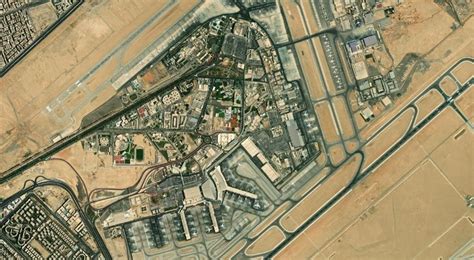
With new aircraft, broader U.S. reach, and exclusive new services to strategic cities, EgyptAir’s expansion is part of a long-term strategy to position Cairo International Airport as a major global transit hub. The geographic advantage of Egypt—serving as a crossroads between Africa, Europe, Asia, and the Americas—is being leveraged to maximum effect.
As EgyptAir grows its footprint in the West and upgrades its fleet, it is simultaneously improving operational efficiency, increasing load factors, and elevating the passenger experience. If the new Cairo–Los Angeles route succeeds as expected, it could serve as a template for future long-haul routes connecting Cairo with the likes of Chicago, San Francisco, or even Latin American capitals.
Conclusion: EgyptAir Enters a New Era of Global Ambition
The launch of the Cairo–Los Angeles nonstop service, the arrival of the Airbus A350 fleet, and the rapid escalation in U.S. route frequencies all signal a powerful new era for EgyptAir. With a laser focus on high-growth long-haul markets, a commitment to safety and modernization, and a track record of steady transatlantic operations, the airline is poised to become a major player on the world stage.
By connecting the Egyptian capital with one of America’s most important cities, EgyptAir is not just adding a route — it is redefining transcontinental access, strengthening diplomatic and economic ties, and ensuring that Cairo sits firmly among the world’s leading aviation gateways.