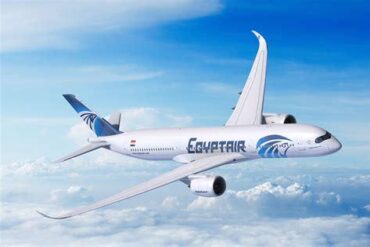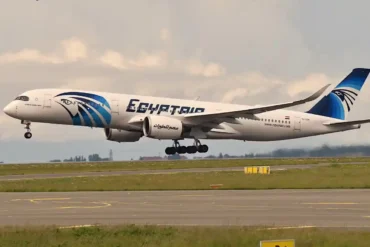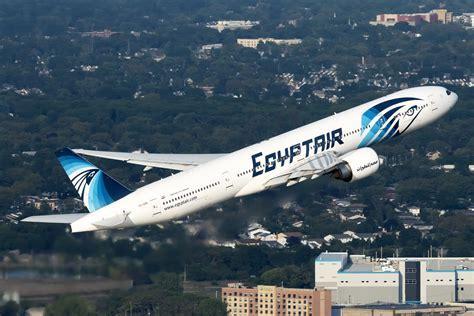
EgyptAir is executing its most ambitious United States expansion in decades, confirming two historic nonstop routes that will significantly reshape air connectivity between Cairo and North America. Beginning in 2026, the Egyptian flag carrier will launch direct services to Chicago O’Hare International Airport and Los Angeles International Airport, deploying its brand-new Airbus A350-900 fleet on both routes. The move marks a pivotal shift in EgyptAir’s long-haul strategy, elevating its US footprint to a record five destinations and reinforcing Cairo’s role as a strategic intercontinental hub.
This expansion is not incremental; it is transformational. With Chicago joining the network for the first time and Los Angeles returning after a 25-year absence, EgyptAir is signaling confidence in premium demand, diaspora flows, religious travel, and high-yield connecting markets across Africa and the Middle East.
By summer 2026, EgyptAir will operate nonstop flights from Cairo to Chicago, Los Angeles, Newark, New York JFK, and Washington Dulles, alongside Toronto in Canada. That brings its total North American destinations to six — the largest transatlantic footprint in the airline’s modern history.
Chicago O’Hare: EgyptAir Enters a Major Star Alliance Stronghold
The launch of Cairo–Chicago O’Hare on June 21 positions EgyptAir inside one of the most powerful aviation ecosystems in North America. O’Hare is not merely a large airport; it is a global Star Alliance hub, dominated by United Airlines. That alliance alignment provides EgyptAir with seamless feed opportunities while offering US passengers expanded access to Africa and the Middle East.
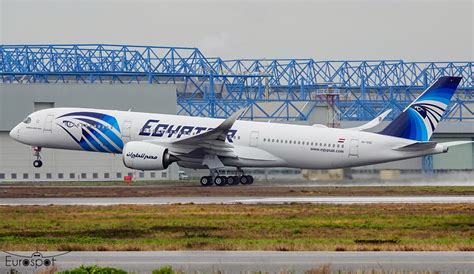
The route will operate three times weekly on the two-class, 340-seat Airbus A350-900, a next-generation widebody optimized for long-haul efficiency and passenger comfort. The aircraft’s advanced aerodynamics, composite materials, and fuel-efficient Rolls-Royce Trent XWB engines significantly lower operating costs, which is essential for sustaining new intercontinental routes.
Market fundamentals strongly support the launch. Booking data indicates approximately 41,000 annual round-trip point-to-point passengers between Cairo and Chicago. Nonstop service alone tends to stimulate demand, often by 30–40 percent, as it eliminates connection fatigue and reduces total travel time. Direct flights change traveler behavior. People who previously hesitated due to long layovers suddenly reconsider.
The schedule is strategically structured:
- Cairo to Chicago: 12:50 am – 5:15 am
- Chicago to Cairo: 10:30 am – 5:40 am (+1)
These timings are nearly identical to EgyptAir’s Washington Dulles service, creating a synchronized transatlantic bank that supports onward connections.
The real opportunity lies beyond Chicago itself. Sub-Saharan African cities such as Lagos, Abuja, and Accra represent strong traffic flows. While routing via Cairo involves a geographic detour compared to some competitors, EgyptAir can compete through pricing, baggage policies, and efficient transfer windows. For many travelers moving between the US Midwest and West Africa, this becomes a compelling alternative.
Equally important is Middle Eastern connectivity. Cities including Amman, Beirut, Dubai, Jeddah, Medinah, and Riyadh align well with the arrival and departure banks. Religious travel to Saudi Arabia, business traffic to the Gulf, and diaspora flows into the Levant add depth to the revenue mix.
Los Angeles: A 25-Year Return to California
On May 23, EgyptAir will re-enter the Los Angeles market after a quarter-century absence. The last time the airline served LAX was in 2001, when flights operated via New York JFK. This time, the service is nonstop — and strategically timed for maximum impact.
Los Angeles represents a much larger Cairo market than Chicago. Annual traffic between the two cities stands near 71,000 passengers, and projections suggest that figure could approach 100,000 within the first full year of nonstop operations.
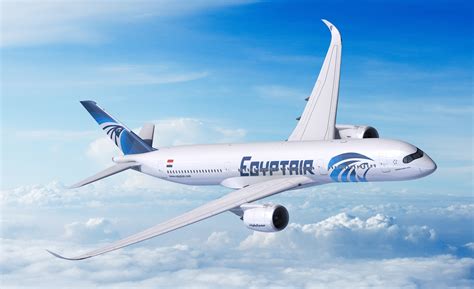
Flights will operate three times weekly on the A350-900, but unlike the overnight Chicago service, Los Angeles flights adopt a daylight westbound departure:
- Cairo to Los Angeles: 8:30 am – 1:20 pm
- Los Angeles to Cairo: 5:25 pm – 5:10 pm (+1)
This daytime departure from Cairo creates excellent connectivity from regional Middle Eastern markets while allowing for comfortable arrival into California during early afternoon hours.
Los Angeles is not merely a large US city; it is a premium leisure gateway. High-end tour operators specializing in Egypt’s archaeological and cultural tourism stand to benefit. Direct service eliminates the friction of European layovers and positions EgyptAir as a value-driven but full-service option.
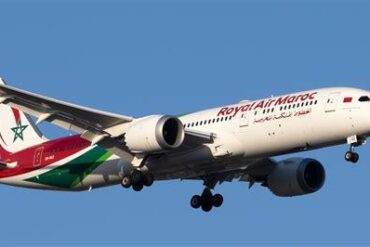
The competitive landscape adds another layer. Royal Air Maroc’s Casablanca–Los Angeles launch increases North African presence in California, yet EgyptAir holds a structural advantage: significantly higher existing Cairo-origin demand. Turkish Airlines has long captured substantial Middle Eastern and pilgrimage traffic from the West Coast, often routing passengers through Istanbul. EgyptAir’s nonstop service offers a more direct alternative, particularly for Hajj and Umrah travelers, Saudi students, and premium passengers seeking Star Alliance mileage accrual.
The Strategic Role of the Airbus A350-900
EgyptAir’s deployment of the Airbus A350-900 is central to the expansion’s viability. This aircraft is designed for ultra-long-haul missions with lower fuel burn per seat compared to older-generation widebodies. In practical terms, that means reduced risk during route maturation.
Cabin-wise, the A350 provides a modern two-class configuration emphasizing long-haul comfort. Wider seats, improved humidity levels, quieter engines, and advanced cabin pressurization enhance passenger experience on flights exceeding 12 hours. When entering competitive markets like Los Angeles, product quality matters as much as network logic.
The A350 also signals brand renewal. Airlines do not introduce flagship aircraft casually; they do so to mark strategic eras.
What About India and South Asia Connectivity?
EgyptAir serves both Delhi and Mumbai, raising natural questions about connectivity to Chicago and Los Angeles. However, route economics complicate that equation. India-origin traffic can offer strong volume but often lower yields — not ideal for expensive ultra-long-haul sectors.
Currently, Delhi connections align poorly with the new US banks. Mumbai presents theoretical potential, particularly from Los Angeles, where modest schedule adjustments could enable viable transfer windows. A slight shift in Cairo departure times would unlock two-way connectivity without major structural overhaul.
Similar logic applies to Amman and Beirut, both sizeable Los Angeles markets. Small timing refinements could capture additional demand. If those adjustments materialize, it will signal deliberate targeting of specific diaspora and business segments.
San Francisco: The Next Frontier?
With Chicago and Los Angeles confirmed, San Francisco becomes Cairo’s largest unserved North American market at approximately 38,000 annual passengers. Like O’Hare, Newark, and Dulles, San Francisco is a Star Alliance hub. Network symmetry makes it an obvious candidate.
Moreover, EgyptAir’s partnership with United Airlines enables easy Los Angeles–San Francisco connectivity, reducing immediate pressure to launch nonstop service while still capturing Bay Area traffic through codeshare arrangements.
The broader pattern is clear: EgyptAir is building density within Star Alliance gateways, maximizing alliance feed while leveraging Cairo’s geographic position bridging Africa, the Middle East, and Europe.
A Defining Moment for EgyptAir’s Transatlantic Strategy
EgyptAir’s confirmation of nonstop routes to Chicago and Los Angeles is more than a network update. It represents a calculated shift toward high-profile, high-visibility markets supported by modern aircraft and alliance leverage.
Five US destinations mark a historic peak for the airline. The combination of premium leisure demand, diaspora flows, religious travel, and African connectivity creates diversified revenue streams that reduce reliance on any single market segment.
Airlines rarely make bold long-haul bets without deep modeling. This expansion suggests confidence not only in demand but in Cairo’s ability to function as a competitive global hub.
If performance meets expectations, further North American growth is no longer speculative fantasy. It becomes a logical next chapter in EgyptAir’s resurgence — a calculated expansion built on modern aircraft, alliance integration, and a sharpened understanding of where global traffic truly flows.