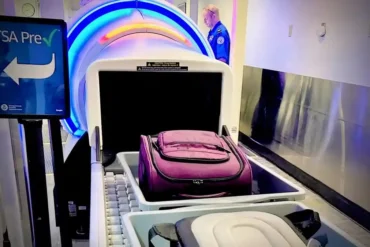
The rollout of computed tomography (CT) scanners across U.S. airport security checkpoints was supposed to make the screening experience easier. Travelers can generally keep laptops and permitted travel-size liquids inside their bags, while security officers receive detailed, rotatable 3D images that provide a much more sophisticated view of the contents. After years of testing and hundreds of millions of dollars in investment, the technology represents one of the most significant changes to airport screening in decades.
Yet the upgrade has produced an unexpected problem that has little to do with software, detection algorithms, or passenger behavior. Some rolling carry-on bags that travelers have every reason to believe are airline-compliant are simply too large to pass through the newer CT scanner tunnels. The airline’s baggage allowance has not necessarily changed. Instead, the machine processing the bag has.
That distinction is important because carry-on luggage has become increasingly optimized around the maximum dimensions airlines permit. Travelers routinely buy expandable rollers designed to squeeze as much capacity as possible into the cabin. Those bags can be perfectly practical at the boarding gate but become problematic several minutes earlier, when their packed dimensions meet the physical limits of a security scanner.
The result is an unusual mismatch between two systems that travelers normally assume are connected: the airline’s definition of a carry-on bag and TSA’s definition of what can physically enter a screening machine. As CT technology reaches more airports, that mismatch is becoming harder for travelers to ignore.

TSA CT Scanners Have A Smaller Tunnel Opening
The central issue is surprisingly simple. Many of the newer CT scanners being deployed at U.S. airports have a tunnel opening of roughly 24.5 inches wide by 16.5 inches high. Some of the older X-ray equipment being replaced offered a slightly larger opening, with the difference amounting to roughly 0.4 to 0.7 inches per side, depending on the equipment involved.
That sounds insignificant when discussing luggage. A fraction of an inch rarely changes how a traveler thinks about a suitcase. At a checkpoint, however, clearance is everything. A bag does not need to be dramatically oversized to encounter a problem. It only needs to be packed tightly enough that its shell, wheels, expansion section, handles, or bulging fabric consumes the small amount of space that previously existed around it.
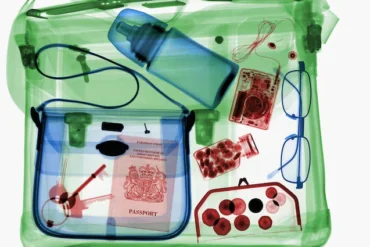
The irony is that the CT scanner is objectively a more capable piece of security equipment. Rather than producing a conventional two-dimensional X-ray image, the system generates detailed three-dimensional imagery that officers can rotate and examine from different angles. That additional information is what allows passengers in many CT-equipped lanes to leave laptops and permitted liquids inside their bags.
For the overwhelming majority of travelers, that is a worthwhile improvement. The inconvenience begins when the same machine has a physical entrance that is less forgiving of unusually large luggage.
The Nationwide CT Scanner Rollout Is Already Extensive
This is not an isolated experiment confined to a handful of major airports. TSA began testing CT technology at selected airports in 2018, gradually evaluating how the systems affected security detection and checkpoint operations before moving toward a much larger deployment.
The investment accelerated after TSA awarded a $781.2 million contract in 2022 for CT checkpoint technology. By July 6, 2026, the agency had installed 1,162 CT units across 296 airports, turning what had once been an emerging technology into a normal part of the American airport experience.
The gradual rollout explains why many passengers are encountering the luggage problem only now. Travelers who have passed through the same airport repeatedly may suddenly find that the equipment in their usual lane has changed. Their suitcase has not become larger, and the airline has not necessarily changed its carry-on rules. The physical checkpoint environment has.
That can create an especially confusing experience because passengers have become accustomed to thinking of airport security as a process governed primarily by regulations. In reality, the equipment itself imposes another layer of practical constraints.
A suitcase can comply with an airline’s published dimensions and still encounter a checkpoint machine whose opening provides less usable clearance. The scanner does not care what the luggage manufacturer’s label says. It only cares whether the physical object fits through the tunnel.
Why Maximum-Size Carry-Ons Are Most Vulnerable
A typical carry-on allowance of approximately 22 by 14 by 9 inches remains comfortably manageable for most passengers. Standard soft-sided rollers and reasonably proportioned hard-shell cases generally have enough flexibility and clearance to pass through the CT equipment without creating drama.
The more vulnerable category is the modern maximum-capacity expandable roller.
These suitcases are deliberately engineered to make aggressive use of the airline’s cabin baggage allowance. Their expansion zippers can add valuable packing volume, while the flexible construction allows the case to accommodate clothing and other belongings that would never fit neatly into an empty shell.
That extra capacity comes with a catch. A suitcase’s advertised dimensions may describe its dimensions in a particular configuration, often without capturing every way the bag can deform once it is packed. An expansion section filled to capacity can push the sides outward. Clothing can create pressure against the shell. A soft exterior can bulge around corners. Wheels and external components can also contribute to the actual envelope of the bag.
A roller that barely fit through an older screening machine can therefore become difficult or impossible to feed into a narrower CT tunnel when packed aggressively.
This is why packing technique matters almost as much as the suitcase’s nominal dimensions. The same bag can be perfectly manageable on one trip and problematic on another, depending on how much has been stuffed inside it.
Airline Carry-On Rules And TSA Scanner Limits Are Different Things
The biggest source of confusion is the assumption that an airline-approved carry-on is automatically a security-checkpoint-approved carry-on.
Those are different standards.
An airline’s baggage policy generally concerns whether a passenger can take a particular piece of luggage into the aircraft cabin. TSA’s checkpoint equipment has a different concern: whether the physical bag can pass through the screening process.
That distinction becomes particularly important when travelers purchase luggage marketed as “carry-on compliant.” Such wording usually refers to the manufacturer’s understanding of airline baggage restrictions. It does not guarantee that the suitcase will fit through every security scanner encountered at every airport.
The problem is therefore not necessarily that TSA has introduced a new carry-on size rule. Rather, the new equipment has created a physical bottleneck that can expose luggage sitting near the edge of the permitted size range.
For passengers, that difference may feel academic until they are standing beside a conveyor belt with a fully packed roller that will not enter the machine.
What Happens When A Carry-On Does Not Fit Through The CT Scanner?
TSA has several possible ways to handle an oversized bag at a checkpoint. An officer can hand-inspect the luggage, redirect it to a lane using older equipment if such a lane is available, or advise the traveler to take the bag back to the airline and check it.
In theory, those options provide flexibility. In practice, the third option can be especially disruptive.
A passenger who has already reached the security checkpoint may have assumed that the baggage portion of the journey was finished. Being told to leave the secure area, return to the airline counter, check the suitcase and then go through security again can consume valuable time.
The financial consequences can also be unpleasant. Depending on the airline and ticket conditions, a traveler could face a same-day checked-bag fee for a suitcase they had originally intended to carry into the cabin. Even if an airline waives the charge in a particular circumstance, the passenger still has to deal with the extra handling and the possibility that the bag will not be available at the destination in the same way a cabin bag would have been.
For travelers operating close to their boarding deadline, the biggest cost may simply be time.
Photographers Face A Separate CT Scanner Problem
The scanner’s improved imaging capability creates another consideration for a specific group of passengers: travelers carrying undeveloped photographic film.
Higher-powered screening technology can damage or fog undeveloped film, including film that remains loaded inside an analog camera. Travelers carrying film therefore have a reason to pay attention to the screening equipment and request a hand inspection when appropriate.
That issue is separate from the luggage tunnel problem, but the two can collide during the same journey. A photographer carrying a large roller full of equipment may encounter both the physical size limitation and the need to protect sensitive film.
The broader lesson is that airport security technology does not affect every passenger equally. Someone traveling with a compact soft-sided roller may never notice the CT tunnel dimensions. A photographer with a heavily packed hard-shell case can have an entirely different experience.
Which Travelers Are Most Likely To Be Affected?
The average traveler does not need to panic about the CT rollout. The issue is concentrated among luggage designs that leave little room for dimensional tolerance.
Expandable hard-shell rollers are particularly susceptible because their capacity can increase beyond the most conservative shape of the case. Families consolidating belongings into one very large cabin bag can also run into trouble, especially when the luggage is packed to its absolute limit.
Frequent flyers who deliberately buy the largest possible carry-on may be another group worth watching. Maximizing cabin capacity is rational when airline rules are the only constraint. But once a smaller physical scanner opening enters the equation, maximizing volume can reduce operational flexibility.
By contrast, a conventional soft-sided roller around 22 inches long that is not packed to bursting is unlikely to experience the same difficulty.
The safest strategy is therefore not necessarily buying an entirely new suitcase. It is understanding the dimensions of the luggage when it is actually packed for travel.
Horizon 25 Adds Another Layer Of Change At Airport Checkpoints
The luggage issue is unfolding alongside a much broader transformation within TSA. On August 24, 2026, newly confirmed TSA Administrator David P. Cummins unveiled the agency’s “Horizon 25” strategy while marking TSA’s 25th anniversary.
Horizon 25 emphasizes checkpoint modernization, passenger experience and security across transportation modes. At the same time, TSA is retiring the TSA Gold+ program in favor of an expanded Screening Partnership Program, increasing the potential role of private contractors in operating airport screening checkpoints under federal oversight.
The connection to the CT scanner problem is not direct, but the timing is significant. Travelers are experiencing changes to both the physical equipment and the organizational structure behind the checkpoint.
The Screening Partnership Program currently covers only a relatively small portion of U.S. commercial airports, with about 20 airports, or roughly 4.5% of the total, participating. Under the program, private screening contractors operate checkpoints while remaining under federal oversight.
That means the future airport security experience may vary not only because one airport has newer scanners than another, but also because the personnel structure operating those checkpoints can differ.
Why TSA Is Expanding Private Screening
The push toward a larger private screening role is closely tied to concerns about operational resilience.
During the partial U.S. government funding lapse between February and April 2026, more than 1,000 TSA officers reportedly resigned, placing additional pressure on federally staffed checkpoints. Airports already operating under the Screening Partnership Program were comparatively insulated from that specific federal staffing disruption because their screening personnel were employed through separate contractor arrangements.
That experience gave TSA a practical argument for treating private screening as a resilience tool rather than simply a cost-saving exercise.
Cummins’ background in transportation systems and vendor partnerships also fits naturally with a strategy that puts greater emphasis on outside operational capacity. Still, expansion is unlikely to happen overnight. Airports must voluntarily apply, TSA must approve applications, and private contractors must recruit and train enough personnel to support the additional operations.
The administrative transformation therefore moves on a different timetable from the scanner rollout. A passenger could encounter a new CT machine long before encountering a privately operated checkpoint.
How Travelers Can Avoid A Carry-On Surprise
The simplest solution is also the least glamorous: measure the suitcase after packing it.
Do not rely entirely on the dimensions printed on a luggage tag or listed on a retailer’s product page. Put the clothes and other belongings inside, expand the suitcase if that is how it will actually be used, close it, and measure its real-world width and height.
Travelers should pay particular attention to cases that are close to the maximum airline carry-on dimensions. A few fractions of an inch can suddenly matter when the available scanner clearance is limited.
It is also worth resisting the temptation to force an expandable case to its absolute capacity simply because the zipper allows it. A suitcase that looks perfectly reasonable at home can become substantially less cooperative after being filled with bulky clothing.
For photographers carrying film, checking whether a hand inspection is necessary before reaching the checkpoint can prevent a separate problem. Planning for the screening process rather than assuming every security lane works identically is becoming more important as airports modernize their equipment.
The Future Of Airport Security May Be Better, But Less Forgiving
TSA’s CT rollout represents a genuine technological improvement. Three-dimensional imaging, fewer requirements to remove electronics and permitted liquids, and more sophisticated screening capabilities can make airport security easier and more effective for millions of travelers.
But better imaging does not automatically mean every aspect of the checkpoint becomes more convenient.
The narrower tunnel is a reminder that technological upgrades often involve trade-offs that are invisible until passengers encounter them directly. A scanner can dramatically improve the quality of security imagery while simultaneously making a suitcase that previously sailed through the checkpoint physically awkward.
As TSA continues deploying CT equipment and implementing Horizon 25, travelers are entering a period in which the airport checkpoint is changing on several fronts at once. The rules printed on an airline website may remain unchanged while the machinery enforcing the practical boundaries of the airport experience evolves underneath them.
For most passengers, this will amount to little more than a slightly more careful approach to packing. For owners of maximum-capacity rollers, however, the message is clear: a carry-on bag is no longer defined only by the airline’s baggage chart. Its real-world dimensions, the way it is packed, and the security equipment waiting at the airport can all determine whether it actually makes it to the aircraft cabin.