The allure of low-cost airlines is undeniable: base fares that can dip as low as the price of a fast-food meal. But seasoned travelers know that what you save on the ticket, you often pay back—and more—in the form of add-ons and extra fees. Among America’s three ultra-low-cost carriers—Allegiant Air, Spirit Airlines, and Frontier Airlines—a careful analysis reveals which airline burdens passengers with the steepest ancillary costs, from baggage and seat selection to in-flight amenities and changes. While all three airlines rely heavily on fee-based revenue, their structures and pricing strategies are anything but uniform.
Seat Selection Fees: Paying for the “Privilege” of Sitting
On paper, each of the three airlines offers “free” assigned seating—but the reality is that these randomly assigned seats often separate families, split up traveling groups, and place solo travelers in middle seats. For any semblance of control, customers must pay. This is where Spirit begins to reveal its appetite for fee-based profits.
- Frontier Airlines charges from $15 per seat, per flight segment for standard seats. This can rise depending on the route and location of the seat.
- Allegiant Air offers a range of $1 to $80, depending on the desirability of the seat (window or aisle, front of the plane, etc.).
- Spirit Airlines, while offering seats from just $1, can charge up to $200 depending on the route and demand, particularly for exit rows and its more spacious “Go Comfy” options (though this excludes their separate “Big Seat” product).
What makes Spirit especially expensive here is its wide fee range and dynamic pricing, where prime seats can cost more than some international economy fares. However, Allegiant’s upper limit of $80 for a basic coach seat isn’t much better when traveling in peak periods.
Baggage Fees: A Minefield of Fine Print
No discussion about low-cost carriers is complete without an in-depth look at baggage charges. While traditional airlines allow at least one free carry-on, the likes of Spirit, Frontier, and Allegiant treat luggage as premium space—charging accordingly.
Carry-on fees:
- Allegiant Air: $10 to $75
- Spirit Airlines: $31 to $65
- Frontier Airlines: Determined through their Bag Price Checker, but typically lands within $30 to $60
Overweight checked baggage:
- Frontier: Starts charging at 41 lbs with $75–$100 per direction. Luggage over 100 lbs is outright rejected.
- Allegiant: Adds $50 for 51-70 lbs, and $75 for 71-100 lbs
- Spirit: A brutal $125 for any bag between 51-100 lbs
Oversized baggage:
- Spirit once again leads in cost, charging $150 for items between 63–80 linear inches.
- Allegiant and Frontier are slightly more forgiving, both charging $75 for oversized luggage.
Here, Spirit’s punitive overweight and oversized baggage fees far exceed its rivals, effectively penalizing travelers who fail to micro-pack or estimate weight accurately. Frontier’s unusual 40 lb weight cap for standard luggage is another trap, forcing customers to upgrade bags or pay overweight fees for what most airlines would consider standard.
Priority Boarding & Check-In: A Price for Punctuality
Skipping long lines or ensuring overhead bin space used to be an elite perk. Now, it’s available to all—for a fee.
- Allegiant Air: Offers Priority Boarding for $11.50 to $17.50
- Frontier: Has two tiers—Priority Boarding (Zone 2) at $0.99 to $9.99, and Board First at $2.99 to $14.99
- Spirit Airlines: Charges $7.99 to $9.99 for its Shortcut Boarding, and also offers Shortcut Security for up to $20
Moreover, Spirit differentiates itself through status-based priority. Members of its Free Spirit loyalty program, credit card holders, and premium fare passengers (Go Big, Go Comfy) automatically receive priority check-in and boarding—a benefit Allegiant and Frontier reserve only for paid upgrades.
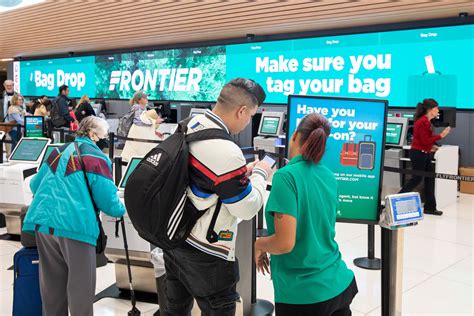
Booking Changes & Cancellation Penalties: The Ultimate “Gotcha” Fees
Few things are more frustrating than having to change or cancel a flight, and for low-cost carriers, this pain often comes with a fee.
Frontier Airlines:
- Name change: $75 per passenger
- Flight changes: $0 if more than 60 days in advance; $49 (7–59 days); $99 (6 days or fewer)
- Bundles (Economy, Premium, Business): changes and cancellations free
Allegiant Air:
- Offers Trip Flex: Costs $29–$43 and waives most change fees
- Without Trip Flex, passengers pay a $25 change fee per segment and receive credit (minus fees)
- No-show or cancellations within 7 days yield no refund
Spirit Airlines:
- Free changes/cancellations 60+ days before departure
- Modification fee: $59 (31–59 days), $79 (7–30 days), $99 (within 7 days)
- Cancellations: $99 unless included in a “Go” fare bundle
Although all three offer bundling options that include change flexibility, Spirit’s standard cancellation and modification charges are often the steepest, especially as the travel date nears. Allegiant’s Trip Flex can be a budget-saver, but its strict no-show rules and lack of refund within a week of departure remain punitive.
Other Hidden Charges That Add Up Fast
From boarding pass printing to pet travel, and even in-flight WiFi, these seemingly minor charges compound quickly.
- Boarding pass printing at the airport:
- Frontier: $25
- Allegiant: $5
- Spirit: Free (encourages mobile/digital use)
- Pet in cabin:
- Frontier: $99
- Allegiant: $50
- Spirit: $125
- In-flight WiFi:
- Spirit Airlines: $3.99 to $19.99 (browsing/streaming tiers)
- Allegiant & Frontier: No WiFi at all
Notably, Spirit Airlines is the only one offering in-flight WiFi, making it a unique player in terms of tech-forward offerings. But passengers pay dearly for it. Meanwhile, Frontier’s $25 boarding pass fee feels like a punishment for non-digital travelers, adding an extra layer of frustration for the tech-averse.
Family Travel Considerations: Infants and Children
While some policies are traveler-friendly, others can make family travel a financial sinkhole.
- All three airlines allow lap infants (under 2 years) to fly free on domestic routes
- Spirit and Frontier typically charge 10% of adult fare + taxes for infants on international routes
- Allegiant’s age cutoff is 12 months instead of 24 months, which is more restrictive
Families traveling with babies or toddlers may find Allegiant’s policies slightly more limiting, while Spirit and Frontier offer more flexible age ranges, albeit with added complexity on international routes.
So, Who Charges the Most? The Final Breakdown
Each airline targets its profits differently, creating a minefield of variable and layered charges that can dramatically affect the total travel cost.
- Spirit Airlines consistently charges the highest penalties for overweight baggage, cancellation fees, and premium seating upgrades. It also uniquely monetizes tech-forward offerings like in-flight WiFi.
- Frontier Airlines strikes a middle ground but imposes harsh limits on luggage weight (40 lbs max) and slaps a $25 fee just to print a boarding pass.
- Allegiant Air, while not innocent, offers the most modest pet and boarding pass fees and provides Trip Flex as a relatively affordable way to dodge change penalties.
Ultimately, Spirit Airlines emerges as the most fee-intensive carrier overall, particularly for unbundled travelers. However, savvy passengers who buy bundles or travel light can still maneuver all three airlines’ systems affordably. The problem arises when one travels with bags, changes plans, or expects even the most basic comforts like WiFi or a chosen seat—at which point, the base fare vanishes into the shadows of a towering wall of add-ons.