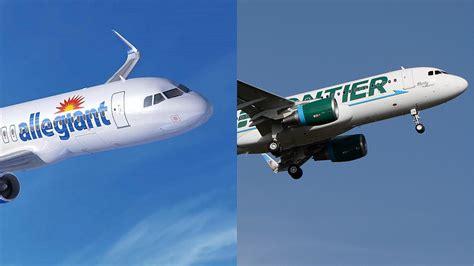
Among America’s ultra-low-cost carriers (ULCCs), Spirit Airlines, Frontier Airlines, and Allegiant Air stand out as the main contenders in the no-frills air travel market. These carriers operate hundreds of routes across the United States, often undercutting legacy airlines on price. But when it comes to fleet strength, one of the key indicators of a carrier’s scale and market penetration, which of these three budget airlines reigns supreme?
By mid-2025, Spirit Airlines leads the pack with a fleet of 176 aircraft, followed by Frontier with 114, and Allegiant with 112. While all three airlines are deeply embedded in the low-cost air travel model, their fleet compositions, aircraft strategies, and growth trajectories reveal key differences in how each carrier aims to dominate the American skies.
Spirit Airlines: A Veteran ULCC With a Modern Fleet
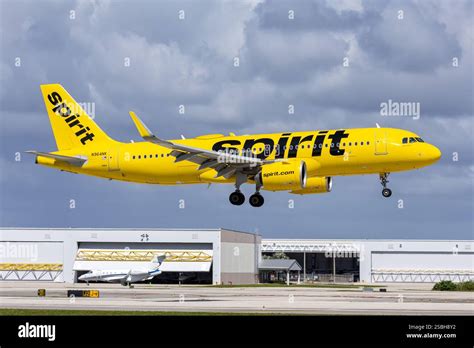
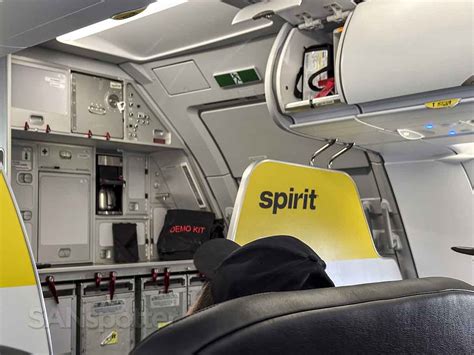
Founded in 1983, Spirit Airlines is not only the largest among the three but also the oldest. Originally a charter operator, Spirit evolved into a low-cost powerhouse with a reputation for minimalist service and rock-bottom fares. Spirit’s longevity has granted it a head start in fleet acquisition, giving it the time and structure to develop a massive operation.
Spirit’s fleet is exclusively Airbus, having fully transitioned from McDonnell Douglas MD-80s and other older models. It boasts a mix of A320ceo, A320neo, A321ceo, and the fuel-efficient A321neo (NX). The average fleet age is relatively low, indicating a commitment to modern, cost-effective jets.
| Aircraft Type | Active Units | Avg. Age (Years) | Total Capacity |
|---|---|---|---|
| A320-200 | 48 | 10.7 | 11,466 |
| A320-200neo | 55 | 4.0 | 21,112 |
| A321-200 | 21 | 8.4 | 6,612 |
| A321-200neo (NX) | 32 | 1.1 | 15,040 |
Spirit has overcome multiple hurdles in recent years, including a Chapter 11 bankruptcy filing, before re-emerging with a leaner, more resilient structure in 2025. It’s now focusing on expanding network connectivity while improving customer experience with features like extra-legroom seats and upgrades to its Free Spirit loyalty program.
Frontier Airlines: A Reborn Carrier with Sky-High Ambitions
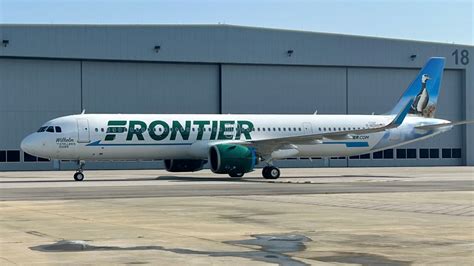
Frontier Airlines, headquartered in Denver, Colorado, is a product of aviation rebirth. The original Frontier launched in 1950 before being absorbed by Continental Airlines in the 1980s. The current Frontier emerged in 1994, and by 2001, it had committed to a full Airbus fleet strategy, shedding its Boeing and regional jet roots.
As of 2025, Frontier operates 114 aircraft, mostly Airbus A320neo family jets. The carrier has positioned itself as a more eco-friendly ULCC, promoting fuel efficiency and high-density seating.
| Aircraft Type | Active Units | Avg. Age (Years) | Total Capacity |
|---|---|---|---|
| A320-200 | 6 | 9.5 | 1,278 |
| A320-200neo | 78 | 5.8 | 20,088 |
| A321-200 | 18 | 8.6 | 4,830 |
| A321-200neo (NX) | 50 | 1.4 | 49,920 |
Frontier’s aggressive acquisition of A321neo jets, with their lower cost-per-seat-mile, is part of a larger strategy to boost margins without sacrificing the ULCC model. Like Spirit, Frontier has tied itself to Pratt & Whitney GTF engines, despite ongoing reliability challenges. The airline has already ordered hundreds more engines with improved ‘Hot Section Plus’ kits, signaling long-term commitment.
Allegiant Air: The Disruptor with a Boeing Twist
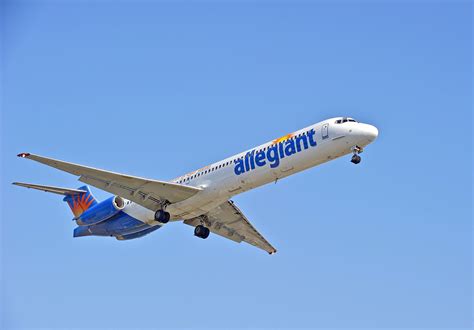
Allegiant Air, based in Las Vegas, is the youngest of the three, having been founded in 1997. Unlike Spirit and Frontier, Allegiant began operations with older jets like the McDonnell Douglas MD-80 and Boeing 757, gradually transitioning to a mix of Airbus and now Boeing 737 MAX aircraft.
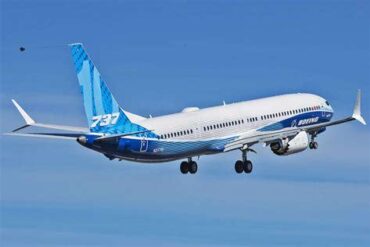
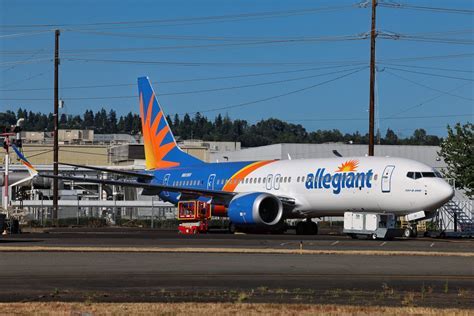
In a notable break from ULCC norms, Allegiant is the only one of the three flying Boeing jets. The addition of the 737 MAX 8-200 to its fleet has made Allegiant one of just a few global carriers operating the high-density variant, with capacity for 200 passengers.
| Aircraft Type | Active Units | Avg. Age (Years) | Total Capacity |
|---|---|---|---|
| A319-100 | 32 | 19.9 | 4,992 |
| A320-200 | 81 | 14.9 | 15,636 |
| Boeing 737 MAX 8-200 | 4 | 0.5 | 9,500 |
Allegiant’s strategy differs by focusing on underserved cities rather than major hubs. This niche approach has helped it avoid competition with legacy carriers and other LCCs. Allegiant is also leveraging its Boeing jets on high-demand seasonal routes, giving it operational flexibility not typically found in its peers.
Airbus Dominance Across the ULCC Landscape
Though Allegiant has introduced Boeings into its fleet, the three carriers are overwhelmingly Airbus-centric. Combined, over 95% of aircraft flown by Spirit, Frontier, and Allegiant are Airbus A320 or A321 series jets. This consolidation enables cost savings in maintenance, pilot training, and fleet operations—cornerstones of ULCC efficiency.
The Airbus A320neo and A321neo, with their superior fuel efficiency and lower emissions, are rapidly becoming the backbone of American ULCC operations. Spirit and Frontier, in particular, have ordered these jets in massive quantities. Allegiant, though a late adopter, still maintains a strong Airbus presence while diversifying with new MAX jets.
Comparing Growth Ambitions and Business Models
Spirit’s edge in fleet size is partly due to its age and early adoption of a unified aircraft model. It has long favored dense, low-cost configurations, often offering the lowest base fares in the industry, albeit with numerous ancillary fees. After financial turbulence and a bankruptcy filing, its renewed 2025 strategy is more stable and future-focused.
Frontier is gaining ground fast, especially with the surge of new A321neo deliveries. Its business strategy is centered on environmental efficiency, boasting one of the youngest fleets in the U.S. aviation market. Frontier’s ambitious engine procurement deals hint at long-term operational scaling.
Allegiant, meanwhile, is playing a different game. Instead of engaging in a fare war, it targets non-hub, secondary airports, and leans on seasonal demand spikes. The addition of 737 MAX 8-200s signals a hybrid evolution from a pure Airbus model, allowing Allegiant to expand route flexibility while preserving its ULCC identity.
The Bigger Picture: Southwest Still Towers Over All
Despite the considerable reach of Spirit, Frontier, and Allegiant, all three combined still fall short of Southwest Airlines, which commands a staggering 800+ aircraft. Southwest remains the largest LCC in the U.S. and the global leader in Boeing 737NG operations. It also benefits from deeper legacy infrastructure, a more diverse loyalty base, and decades of market dominance.
However, the ULCC trio is carving out a distinct space in the market. Their lean operations, young fleets, and aggressive pricing models cater to a growing demographic of price-sensitive travelers. While Southwest flirts with hybrid status, these three maintain a purist approach to low-cost flying.
Final Verdict: Spirit Has the Largest Fleet, But Frontier Is Catching Up
In terms of raw aircraft count, Spirit Airlines is clearly ahead with 176 jets as of 2025. Frontier, with its massive pipeline of new A321neo aircraft, is closing the gap and may soon challenge Spirit’s dominance if deliveries stay on pace. Allegiant, though smaller, is growing with a smart strategy centered around underutilized airports and selective Boeing orders.
Each carrier is following a unique playbook, and while Spirit dominates the skies numerically, Frontier and Allegiant are writing their own stories in scale, strategy, and survival.
The battle for America’s ULCC crown is far from over—and as all three push forward with next-generation fleets and refined business models, the landscape of budget aviation in the U.S. is being redrawn in real-time.