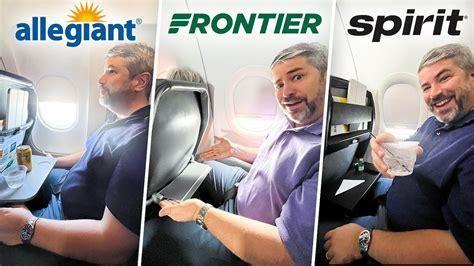
Flying ultra-low-cost in the United States has become a calculated exercise in trade-offs. We accept bare-bones fares, à la carte pricing, and limited perceived luxury in exchange for access to routes and prices that once seemed impossible. Yet as these carriers mature, cabin comfort—long dismissed as irrelevant—has quietly become a deciding factor for a growing segment of travelers. We find that the question is no longer whether ultra-low-cost carriers can be comfortable, but which one comes closest within the strict constraints of the ULCC model.
Across Allegiant Air, Spirit Airlines, and Frontier Airlines, the similarities are immediately visible. All three rely heavily on the Airbus A320 family, all strip their base fares to the essentials, and all monetize comfort as an upgrade rather than a guarantee. The differences, however, emerge once we look past pricing and into the physical reality of the cabin. Seat pitch, seat width, padding philosophy, cabin density, and even aircraft age begin to tell a more nuanced story—one that materially affects the passenger experience.
What follows is a detailed, data-informed evaluation of how these three airlines approach cabin comfort, where each one excels, and where compromises are most evident. We examine not only measurements and configurations, but also how those numbers translate into real-world comfort on short hops and longer domestic sectors alike.
By the time we reach a verdict, it becomes clear that comfort within the ULCC category is relative—but not imaginary. Some carriers do, in fact, give passengers a little more room to breathe.
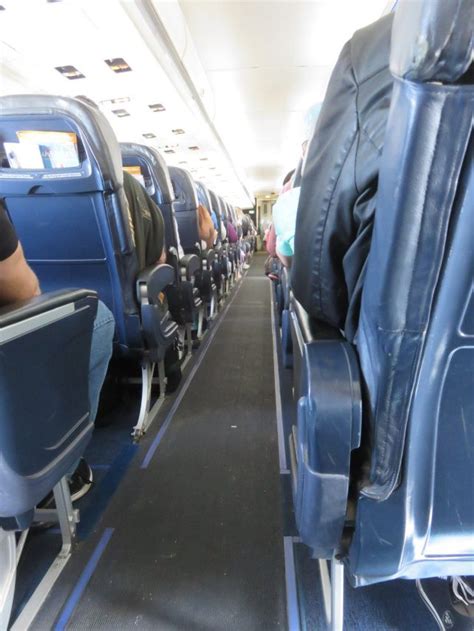
Setting the Baseline: What Cabin Comfort Really Means on a ULCC
Before drawing comparisons, we must establish what “comfort” means in the ultra-low-cost environment. Unlike legacy or hybrid carriers, ULCCs are not designed to offer bundled comfort. Instead, comfort is modular, optional, and monetized. The base fare buys transportation; anything else is discretionary.
Cabin comfort, therefore, is shaped by a small set of measurable factors. Seat pitch determines legroom and knee clearance. Seat width affects shoulder space and overall posture. Seat padding and contouring influence fatigue, particularly on flights exceeding two hours. Cabin density and layout impact the psychological sense of space, while premium or semi-premium seating options allow passengers to buy relief from the densest configurations.
Aircraft generation also plays a subtle but important role. Newer cabins often feature ultra-thin slimline seats that maximize capacity but reduce cushioning. Older cabins, while less visually modern, can paradoxically feel more forgiving thanks to thicker padding and less aggressive density targets.
Within these constraints, each airline has made strategic choices—some intentional, others inherited from fleet history—that define how comfortable their cabins feel in practice.
Allegiant Air: The Unexpected Comfort Leader
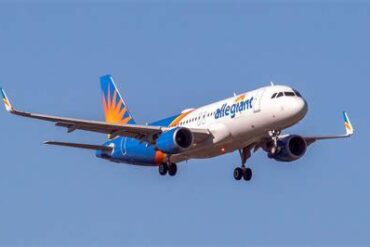
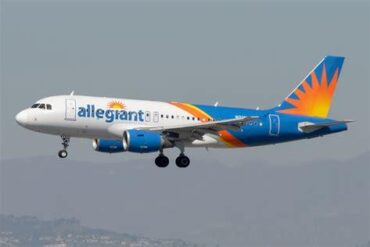
Allegiant Air rarely markets comfort as a headline feature, yet it quietly benefits from a fleet strategy that works in passengers’ favor. Operating primarily Airbus A319 and A320 aircraft acquired secondhand, Allegiant’s cabins reflect design philosophies from an earlier era—before maximum-density seating became the industry obsession it is today.
Standard seats on Allegiant aircraft generally offer approximately 30 inches of pitch, placing them ahead of Spirit and Frontier’s typical 28 to 29 inches. While two inches may sound insignificant on paper, in practice it noticeably reduces knee contact and allows for a more natural seated posture. Seat width, at roughly 17 inches, aligns with industry norms for narrowbody aircraft, but Allegiant’s advantage lies in seat padding density, which many passengers describe as firmer yet more supportive than ultra-thin slimline alternatives.
Allegiant also offers Legroom+ seating, typically located in the first few rows and exit rows. These seats provide additional pitch without dramatically increasing cost, making them one of the more cost-effective comfort upgrades in the ULCC space. The inclusion of full-size tray tables—large enough to accommodate a laptop—further enhances usability for travelers who work in-flight.
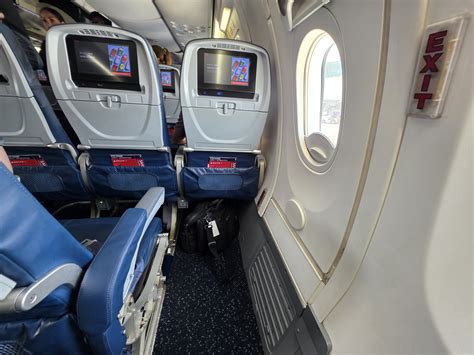
The trade-off, of course, is aircraft age. Allegiant’s cabins can feel dated, and cosmetic wear is more apparent than on newer jets. Yet from a purely ergonomic standpoint, we find that Allegiant delivers a surprisingly forgiving cabin experience, particularly on flights lasting two to four hours.
Spirit Airlines: Two Cabins in One Experience
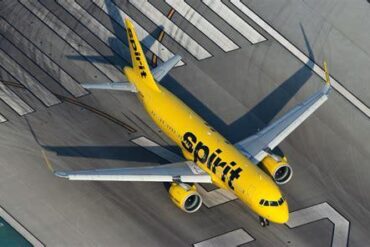
Spirit Airlines presents the most bifurcated comfort strategy of the three. In its standard economy seating, Spirit embraces the ULCC philosophy with remarkable discipline. Typical seat pitch hovers around 28 inches, and while seat width remains comparable to competitors, padding is minimal. These seats are designed for efficiency, not endurance.
Where Spirit truly differentiates itself is at the front of the aircraft. The Big Front Seat has become something of an industry anomaly: a seat that resembles domestic first class in dimensions but exists within an ultra-low-cost framework. Offering up to 36 inches of pitch and an impressive 22 inches of width, these seats provide genuine personal space, generous cushioning, and wide armrests. For many travelers, the Big Front Seat transforms Spirit from tolerable to genuinely comfortable.
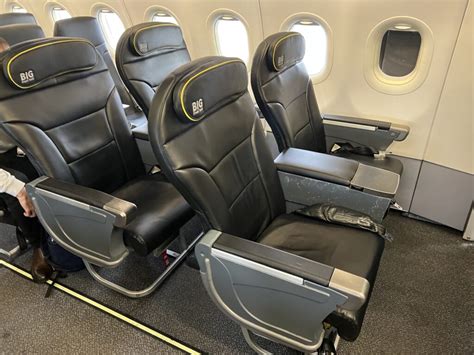
Importantly, Spirit does not label this product as first class. There is no complimentary service, no dedicated cabin crew, and no bundled amenities. Yet the physical comfort is undeniable, and on short- to medium-haul routes, the Big Front Seat compares favorably to premium offerings on larger carriers—often at a fraction of the price.
Spirit also distinguishes itself by being the only ULCC among the three to offer onboard Wi-Fi, albeit for an additional fee. For passengers who value connectivity, particularly business travelers flying point-to-point routes, this capability meaningfully enhances perceived comfort and productivity.
The challenge with Spirit is consistency. Passengers who do not upgrade experience one of the tightest standard cabins in the domestic market. Comfort on Spirit, more than on Allegiant or Frontier, is highly dependent on willingness to pay extra.
Frontier Airlines: Density Above All Else
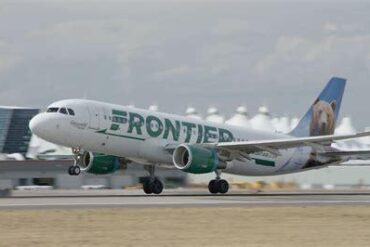
Frontier Airlines represents the most uncompromising interpretation of the ULCC model. Its cabin layouts are among the densest in North America, prioritizing seat count and cost efficiency above nearly all else. Standard seat pitch typically measures 28 inches, with very slim seatbacks and minimal padding.
Seat width, again around 17 inches, is not dramatically different from competitors, but Frontier’s ultra-slimline seat design creates a sensation of narrowness and rigidity. Tray tables are notably small—often unsuitable for laptop use—and recline is either extremely limited or absent altogether.
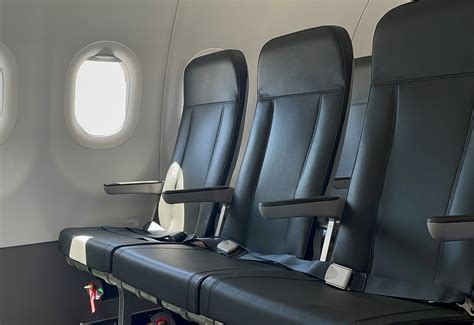
Frontier offers Stretch Seating, positioned in the first few rows and exit rows, which provides additional legroom. However, these seats do not match the scale or comfort of Spirit’s Big Front Seat, nor do they consistently offer the same usability benefits as Allegiant’s Legroom+ seats. They are best understood as incremental improvements, not transformative upgrades.
Frontier’s cabins are typically newer, often featuring A320neo aircraft with modern lighting and fresh interiors. This visual cleanliness can improve first impressions, yet the underlying ergonomics remain unforgiving—particularly on flights exceeding two hours.
For travelers whose primary goal is the lowest possible fare, Frontier delivers exactly what it promises. For those seeking even modest comfort, it demands careful seat selection and realistic expectations.
How Fleet Age and Design Philosophy Shape Comfort
One of the most counterintuitive findings in our analysis is that newer does not always mean more comfortable. Allegiant’s older aircraft, though less refined visually, often provide a softer ride thanks to thicker seat cushions and slightly more generous spacing. Spirit and Frontier’s newer fleets emphasize weight reduction and capacity maximization, sometimes at the expense of long-term seated comfort.
Cabin design philosophy also matters. Allegiant’s layouts feel utilitarian but less aggressive in density. Spirit’s split-cabin approach concentrates comfort where it can be monetized most effectively. Frontier’s design is optimized almost exclusively for cost control, reflecting a corporate philosophy summarized succinctly as “pay only for what you use.”
These philosophies manifest not just in measurements, but in how passengers feel after disembarking. Fatigue, stiffness, and general discomfort accumulate faster in tighter cabins with minimal padding—an effect magnified on longer sectors.
Comparing ULCC Comfort to Other Budget Carriers
When viewed against carriers like Southwest Airlines or JetBlue, all three ULCCs inevitably fall short in baseline comfort. Southwest’s standard pitch of approximately 31 inches, combined with open seating and inclusive policies, creates a more relaxed cabin environment. JetBlue’s reputation for 32-inch pitch, wider seats, and complimentary Wi-Fi places it in an entirely different comfort category.
Yet these comparisons, while informative, miss the point. Allegiant, Spirit, and Frontier are not competing with hybrid carriers on comfort. They compete on price elasticity and route economics. Once comfort upgrades are added, fares can approach those of higher-service airlines, at which point the value proposition becomes less compelling.
Within their own category, however, distinctions matter. A traveler deciding between these three airlines on a similar route may find that small differences in seat pitch or upgrade options significantly affect satisfaction—especially for taller passengers or those traveling for more than a brief hop.
Operational and Human Factors Beyond the Seat
Cabin comfort extends beyond hardware. Cleanliness, boarding efficiency, overhead bin availability, and cabin crew demeanor all influence how passengers perceive their experience. Allegiant’s older interiors sometimes show wear, while Spirit and Frontier benefit from newer finishes. Conversely, Allegiant’s simpler boarding processes and less aggressive upselling can feel less stressful to some travelers.
Flight duration also changes the equation. On a one-hour sector, seat pitch differences are barely noticeable. On a three-hour flight, they become defining. Passengers planning longer journeys should therefore weigh comfort more heavily than those hopping between nearby cities.
We also observe that expectation management plays a powerful role. Travelers who understand what they are buying—and why—tend to rate their experience more favorably, even in dense cabins.
The Final Verdict: Who Truly Offers the Most Comfortable Cabin?
After weighing measurements, design choices, and real-world usability, we conclude that Allegiant Air offers the most consistently comfortable standard cabin among America’s ultra-low-cost carriers. Its slightly greater seat pitch, better padding, and practical Legroom+ options give it an edge that is noticeable without requiring a major fare increase.
Spirit Airlines follows closely, and in one specific scenario—when flying in the Big Front Seat—it arguably delivers the single most comfortable seat available in the ULCC market. The caveat is cost and availability; without that upgrade, Spirit’s standard seats are among the tightest.
Frontier Airlines, while efficient and modern, prioritizes density to a degree that places it firmly last in terms of comfort. Its Stretch Seating improves legroom but does not fundamentally change the experience.
Ultimately, comfort in the ULCC world is about strategic choice. Passengers willing to research seat maps, understand fleet differences, and selectively pay for upgrades can extract surprising value—and even comfort—from these airlines. Those who do not may find the savings come at a physical cost.
As competition intensifies and passenger expectations continue to evolve, cabin comfort may yet become a more prominent battleground. For now, informed travelers hold the advantage.