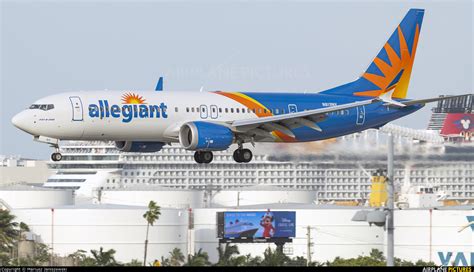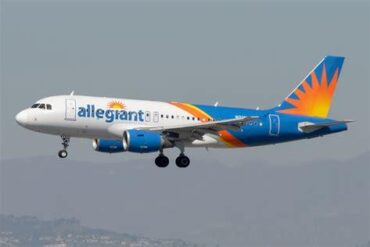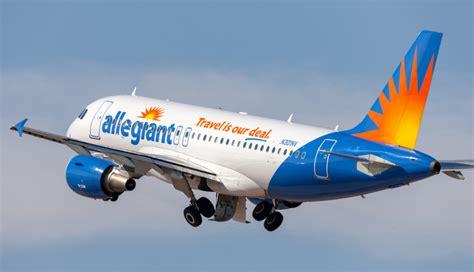
Allegiant Air is a prominent ultra-low-cost carrier (ULCC) based in Las Vegas, Nevada. Founded in January 1997 and commencing operations in June 1998, the airline is wholly owned by Allegiant Travel Company. It has carved a distinct position in the U.S. aviation market by focusing on leisure travelers from underserved small and medium-sized cities, offering direct flights to popular vacation destinations while maintaining a strict cost-control model. This approach has allowed Allegiant to thrive despite the highly competitive nature of the airline industry.
Foundation and Early Growth
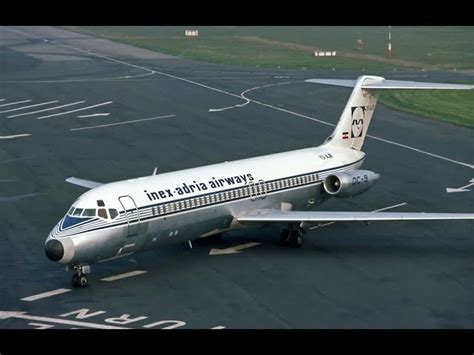
Allegiant Air’s journey began as WestJet Express, founded by Mitch Allee, Jim Patterson, and Capt. Dave Beadle. However, a trademark dispute prompted a quick rebranding to Allegiant Air, and the airline received certification for scheduled and charter operations on June 19, 1998. Its early fleet included DC-9-21 and DC-9-51 aircraft, initially operating routes between Las Vegas and Fresno, and soon expanding to other West Coast destinations like Burbank and Lake Tahoe. By the late 1990s, Allegiant had established itself as a niche player, focusing on point-to-point leisure travel, a strategy that set it apart from traditional hub-and-spoke carriers.
Restructuring and Rise as a Low-Cost Leader
The early 2000s marked a challenging period for Allegiant. Following financial difficulties, the airline filed for Chapter 11 bankruptcy in late 2000. This critical phase led to the entry of Maurice J. Gallagher Jr., a pivotal figure who acquired control in June 2001 and aggressively restructured the company around a pure low-cost, leisure-focused model. This transformation included shifting the business towards smaller, underserved airports and emphasizing direct sales through the airline’s website, reducing third-party booking fees. By 2002, Allegiant had successfully emerged from bankruptcy and began scaling rapidly, driven by a series of strategic decisions that included contracts with casino operators like Harrah’s for exclusive charter services.
Expansion and Fleet Modernization
Allegiant’s growth accelerated through the 2000s, supported by a blend of private equity and public market funding. In 2005, the airline raised $39.5 million in private equity, followed by a successful $94.5 million Initial Public Offering (IPO) in December 2006. This capital enabled Allegiant to expand its network, establishing bases at Phoenix-Mesa Gateway Airport and Fort Lauderdale-Hollywood International Airport in 2007, and Bellingham International Airport in 2008, catering primarily to U.S.-Canada cross-border traffic.
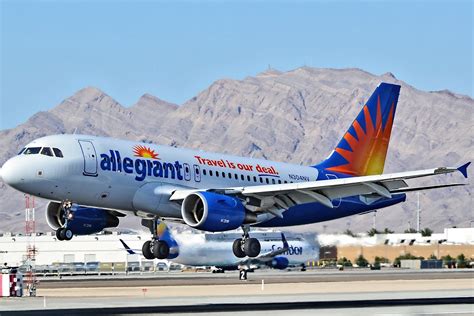
The airline’s fleet strategy evolved significantly during this period. Initially operating older, cost-effective MD-80 series aircraft, Allegiant began transitioning to the Airbus A320 family in the 2010s, a shift completed in November 2018 when the last MD-80 was retired. The addition of the Boeing 757-200 in 2010 briefly allowed Allegiant to offer long-haul services to destinations like Hawaii, though this fleet type was phased out by 2017. More recently, Allegiant placed a major order for 50 Boeing 737 MAX aircraft in January 2022, reflecting its ongoing commitment to fleet modernization.
Current Operations and Network
Today, Allegiant Air operates a fleet that includes 34 Airbus A319-100s, 75 A320-200s (set for retirement by the end of 2025), and 10 Boeing 737 MAX 200s, with 24 Boeing 737 MAX 7 aircraft on order through 2027. The airline’s network spans 133 destinations as of December 2021, with a focus on secondary airports that offer lower costs and less competition. Allegiant’s routes are typically tailored to meet seasonal demand, with an emphasis on vacation travel to warm-weather locations.
Business Model and Revenue Streams
Allegiant Air’s unique business model emphasizes ultra-low base fares supplemented by a range of ancillary services. This à la carte approach includes fees for seat selection, checked and carry-on luggage, priority boarding, and onboard refreshments, along with packaged vacation offerings through Allegiant Vacations. Ancillary revenue has become a significant component of the airline’s financial strategy, rising from $33.35 per passenger in 2009 to $75.34 in Q2 2024, reflecting its success in maximizing per-passenger profitability.
Corporate Culture and Community Engagement
Allegiant has invested heavily in brand building, including high-profile sponsorships. It is the official airline of Minor League Baseball and the Vegas Golden Knights (since 2018), as well as the Indianapolis Colts (since 2020). The airline also holds the naming rights to Allegiant Stadium in Las Vegas, a powerful branding move that reinforces its connection to the city. However, the airline has faced labor challenges, with both flight attendants and pilots unionizing in the 2010s, a trend that has sparked occasional friction between management and labor groups.
Safety and Operational Challenges
While Allegiant’s growth has been impressive, it has also faced scrutiny over safety practices. In June 2015, the airline experienced a series of midair breakdowns that triggered increased FAA oversight. The retirement of its aging MD-80 fleet and the transition to more modern Airbus aircraft have since improved reliability. Nevertheless, operational challenges remain a critical focus for the carrier as it seeks to balance rapid growth with a commitment to passenger safety.
Looking Ahead
As Allegiant Air continues to expand its network and modernize its fleet, it remains a unique force in the U.S. airline industry. Its success in navigating market challenges and capitalizing on the niche of underserved leisure travel positions it well for future growth, even as it faces the evolving dynamics of post-pandemic travel demand.