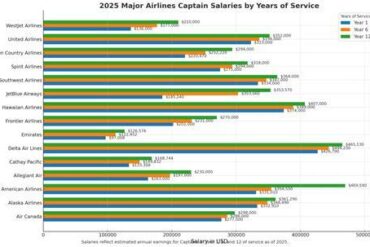
In 2026, the gap between American and European airline pilot salaries is one of the most striking differences in the global aviation labor market. Pilots on both sides of the Atlantic may fly the same Boeing 737, Airbus A320, Boeing 787, Airbus A350, or Boeing 777, yet their earning potential can be dramatically different. At the top of the US market, senior airline captains can earn several hundred thousand dollars annually, with some compensation packages climbing beyond $500,000 when overtime, premium flying, and profit-sharing are included. European pilots can also earn excellent salaries, particularly at major legacy carriers, but their maximum earning potential is generally lower.
That difference is not simply a matter of American airlines being more generous. Pilot compensation is shaped by a complicated combination of collective bargaining, seniority, aircraft type, labor shortages, airline profitability, working rules, taxation, retirement benefits, and employment protections. A US captain earning $400,000 may have a very different financial situation from a European captain with a gross salary of €250,000, even before differences in housing, healthcare, pensions, and taxation are considered.
The comparison is also complicated because Europe does not have one standardized pilot-pay system. Salaries vary enormously between countries and airlines. A captain at Lufthansa operates under a very different compensation structure from a pilot at Ryanair, while a British Airways long-haul captain may have a substantially different package from an easyJet captain. The United States has similar differences between regional airlines and major carriers, but publicly available collective bargaining agreements make American pilot compensation easier to analyze in detail.

How Much Do American Pilots Make in 2026?
The highest-paid airline pilots in the United States occupy an unusually lucrative position within the global aviation industry. At major carriers such as Delta Air Lines, United Airlines, and American Airlines, experienced captains can command base compensation of well above $300,000 per year, depending on aircraft, seniority, and the applicable contract.
The distinction between base pay and total compensation is crucial. A published pilot salary may represent contractual flight pay rather than the amount ultimately appearing on a pilot’s annual earnings statement. A senior captain who accepts premium trips, works additional flying, receives international allowances, or participates in profit-sharing can earn considerably more than the headline base figure suggests.
Based on the reference salary data, US First Officer compensation in the analyzed range runs from approximately $105,930 to $119,210, while captain salaries range from approximately $300,240 to $324,598. These figures should be regarded as representative salary ranges rather than universal salaries because actual compensation changes according to airline, fleet, seniority, and contract.
The wider American market is even more diverse. Regional airline First Officers can enter the profession at considerably lower salaries, although compensation has risen sharply as airlines compete for qualified pilots. Some regional carriers have offered extremely large recruitment and retention incentives, demonstrating how severe the pilot supply problem became during the industry’s recovery from the pandemic.
At the major-airline level, however, the career economics become much more attractive. A pilot who progresses from First Officer to Captain at a large US carrier can experience a dramatic increase in earnings. The combination of seniority-based progression and aircraft-specific pay rates means that an experienced widebody captain can sit near the top of the airline’s compensation ladder.
How Much Do European Pilots Make in 2026?
European pilot salaries are considerably harder to summarize because the continent contains numerous national aviation markets, tax systems, labor laws, and airline business models. A pilot employed by a major network carrier in Western Europe may earn several times more than a pilot working for a low-cost airline or smaller regional operator.
The reference data places European First Officer salaries across a broad range of approximately $65,004 to $126,400, while captain salaries range from roughly $154,580 to $206,990 in the comparison dataset. Long-haul captains at major European airlines can earn more than these representative figures, particularly when seniority, aircraft type, allowances, and additional payments are included.
Airlines such as Lufthansa, British Airways, and Air France occupy a very different part of the market from European low-cost carriers. Senior captains operating long-haul aircraft can receive compensation approaching or exceeding €200,000, depending on their contract and position.
At the same time, a European First Officer beginning a career at a low-cost or regional airline may earn substantially less than a US major-airline pilot. Career progression can also take different forms because European airlines often operate under national employment structures and labor agreements rather than one common continental model.
This makes the phrase “European pilot salary” somewhat misleading. A Swiss captain, a British captain, a German captain, and a Spanish First Officer can face completely different economic circumstances. Currency conversion into US dollars makes international comparisons easier, but it does not eliminate those underlying differences.
The 2026 Pilot Salary Gap at a Glance
The reference data provides a useful snapshot of the difference between the two markets:
| Region | First Officer — Low | First Officer — High | Captain — Low | Captain — High |
|---|---|---|---|---|
| United States | $105,930 | $119,210 | $300,240 | $324,598 |
| Europe | $65,004 | $126,400 | $154,580 | $206,990 |
The table immediately reveals something important. The biggest difference appears at the captain level. First Officer salaries overlap considerably, particularly because European airlines can offer competitive compensation at the upper end of the First Officer market. Once pilots reach senior command positions, however, the American compensation structure becomes substantially more lucrative.
The upper end of the US captain range in the dataset is more than $117,000 higher than the European upper-end figure. In percentage terms, that represents a very substantial premium. The difference can become even larger when US pilots receive overtime, profit-sharing, premium-pay assignments, and other contractual compensation.
That is why comparing a newly hired First Officer with a senior widebody captain can produce misleading conclusions. Pilot salaries do not increase in a straight line. Seniority is one of the most important financial assets in an airline cockpit, and the value of that seniority can become particularly large at major US carriers.
Why American Airline Pilots Earn More
One of the most important reasons for the US pay advantage is the strength of pilot collective bargaining. Around 98% of US airline pilots are represented by a union, according to the reference material, creating a highly organized labor environment in which pilot groups can negotiate compensation, retirement provisions, work rules, scheduling protections, and premium-pay mechanisms.
Organizations including the Air Line Pilots Association, Allied Pilots Association, and Southwest Airlines Pilots Association have played major roles in negotiating airline pilot contracts. These agreements can be extraordinarily detailed, covering everything from hourly rates and reserve rules to vacation, deadheading, minimum daily guarantees, and retirement contributions.
The bargaining system has become particularly powerful during periods of pilot shortages. Airlines cannot simply replace experienced airline pilots overnight. A qualified captain represents years of training, line experience, aircraft-specific qualifications, and regulatory requirements. When demand for pilots exceeds supply, that scarcity gives labor groups additional leverage.
US airlines have also experienced strong demand for air travel and substantial fleet growth. As carriers compete for pilots while simultaneously replacing retiring crews, they have had strong incentives to improve compensation. The result has been a succession of major contract improvements that pushed pilot pay to historically high levels.
Aircraft Type Has a Major Impact on Pilot Pay
Not every pilot at the same airline earns the same amount. Aircraft type is one of the major determinants of compensation, particularly at large airlines.
A First Officer flying a narrowbody aircraft such as the Airbus A320 or Boeing 737 may earn considerably less than a senior captain operating an Airbus A350, Boeing 777, or Boeing 787. Widebody aircraft involve larger crews, longer international missions, greater aircraft values, and more complex operations, and contracts frequently reflect those responsibilities.
Seniority interacts with aircraft type as well. A newly upgraded captain on a narrowbody fleet may not immediately earn what a highly senior widebody captain makes. Conversely, a pilot who spends many years accumulating seniority can eventually move into increasingly desirable equipment and command positions.
This is one reason airline pilot compensation should never be judged purely by job title. “Captain” is not a single salary category. A senior long-haul captain at a major international airline and a relatively junior captain at a smaller operator may have completely different compensation structures.
How Flight Hours and Overtime Increase Pilot Earnings
Airline pilots are not generally paid like traditional salaried office workers. Compensation frequently incorporates negotiated hourly rates and contractual guarantees. That means the amount a pilot actually earns can depend on the amount and type of flying performed.
US regulations also limit airline pilots to a maximum of 1,000 flight hours per year, meaning airlines cannot simply increase earnings by scheduling unlimited additional flight time. Instead, compensation systems use higher hourly rates, minimum guarantees, premium overtime, and special payments to reward additional work within regulatory and contractual limits.
A pilot who works on a scheduled day off, accepts premium flying, or performs additional assignments may therefore generate significantly more annual income than someone who flies only the minimum contractual schedule. This creates an important distinction between base compensation and total earnings.
Profit-sharing can further widen the gap. When an airline performs exceptionally well financially, pilots at some US carriers may receive substantial additional payments. These payments can turn an already high base salary into a much larger annual compensation package.
Taxes Change the Real Value of a Pilot Salary
Gross salary is only one part of the financial equation. Taxes can dramatically change take-home pay, and this is especially important when comparing the United States with Europe.
A US pilot earning $400,000 does not necessarily keep the same percentage of that salary as another pilot earning $400,000 in a different state. State taxation varies considerably. A pilot based in a state without individual state income tax can face a different tax burden from a colleague based in California or New York.
Europe introduces even greater variation. Countries have different income-tax rates, social-security systems, pension contributions, healthcare arrangements, and employment taxes. A pilot’s gross salary therefore cannot be translated directly into disposable income without considering where that pilot lives and works.
This is one reason the highest salary does not automatically represent the best financial outcome. A lower gross salary combined with lower housing costs, comprehensive healthcare, strong pension benefits, and greater statutory leave could potentially deliver a different quality of life from a much higher gross salary accompanied by substantial private expenses.

American Pilots Often Trade Higher Pay for Different Benefits
The US advantage is strongest when looking at cash compensation, but European employment packages have their own strengths. European workers generally operate within systems that provide stronger statutory employment protections, longer mandated annual leave, and broader publicly supported healthcare arrangements.
These benefits are not free. They are financed partly through taxation and social contributions, which can reduce take-home pay. From a pilot’s perspective, however, compensation should be evaluated as an entire package rather than simply as the number printed next to “annual salary.”
Retirement benefits are another major consideration. Airline-specific pension arrangements, employer contributions, and personal retirement savings can have enormous long-term value. A pilot choosing between two airlines should therefore examine the entire employment contract rather than selecting whichever company advertises the largest salary.
For younger pilots, this distinction can be easy to overlook. A $20,000 difference in starting pay may look enormous at age 25, but retirement contributions, healthcare costs, vacation, commuting requirements, and progression to captain can have a much greater financial impact over a 30-year career.
Which Countries Pay Pilots the Most?
The United States remains one of the strongest markets for airline pilot compensation. The reference material cites US Bureau of Labor Statistics data showing Kentucky with an average airline pilot salary of $413,070, followed by states including Washington, Georgia, California, and Michigan.
The European market has several high-paying countries of its own. Switzerland, Belgium, and Ireland are among the countries associated with stronger pilot compensation, although average gross salaries remain below the highest levels available at major US airlines.
The reason location matters so much is that an airline pilot’s economic life extends beyond the airport. Housing, commuting, taxes, healthcare, education, transportation, and retirement costs can vary enormously between locations. A pilot earning slightly less in a lower-cost region may ultimately have greater disposable income than a pilot with a higher nominal salary in an expensive metropolitan area.
This also explains why experienced pilots sometimes make career decisions based on base location rather than salary alone. Spending less time commuting, living closer to the airport, and maintaining a predictable schedule can have substantial value even when the annual paycheck is smaller.
Delta, United and American vs. Europe’s Major Airlines
At the upper end of the market, US major airlines currently set an extremely high benchmark. The reference material indicates that Delta senior captains can earn more than $465,000 annually under applicable pay scales, while American Airlines and United Airlines can offer captain compensation above $350,000 before additional earnings.
European network carriers remain highly competitive within their own market. Lufthansa, Air France, and British Airways can offer experienced long-haul captains compensation reaching approximately €190,000 to €300,000, depending on fleet, seniority, and collective bargaining arrangements.
The important distinction is not that European pilots are poorly paid. They are not. Rather, the ceiling of the American market is unusually high. A senior captain at a successful US major airline can potentially earn far more than a similarly experienced pilot at a European legacy carrier.

Will European Pilot Salaries Catch Up?
There are reasons to believe European pilot salaries will continue rising, but there is little evidence that the transatlantic gap will disappear quickly. Airlines on both continents need pilots, and manufacturers are expected to continue delivering large numbers of new aircraft over the coming decade.
The US market also faces a structural retirement challenge. Large numbers of experienced pilots are approaching mandatory retirement ages, while airlines continue expanding their fleets and networks. This creates a powerful incentive for carriers to retain experienced crews and attract new pilots.
Europe faces many of the same pressures, but its airline industry operates under different economic conditions. Competition from low-cost carriers, fragmented national labor markets, taxation, and varying employment structures can make rapid industry-wide salary increases more difficult.
The aviation labor market can also change surprisingly quickly. The COVID-19 pandemic demonstrated how rapidly demand can collapse, with pilots furloughed or laid off before the subsequent recovery produced another period of intense recruitment. Today’s extraordinary compensation environment should therefore not be treated as a permanent guarantee.
What the US-Europe Pilot Salary Gap Really Means
The headline answer is straightforward: American airline pilots generally earn more than European pilots in 2026, particularly at the captain level. The difference is relatively narrow in some First Officer comparisons but becomes much more pronounced as pilots accumulate seniority and move into high-paying command positions at major US airlines.
The underlying explanation is much more interesting. American pilot pay reflects strong union representation, intense competition for experienced crews, airline profitability, fleet expansion, seniority-based progression, and contracts that provide substantial opportunities for overtime and premium compensation. European pilots operate under different systems that often provide stronger statutory protections and broader social benefits but generally produce lower maximum cash earnings.
For anyone considering an airline pilot career, the best question is therefore not simply “Which country pays pilots the most?” A more useful question is: where can a pilot build the strongest combination of salary, seniority progression, retirement security, quality of life, job stability, and working conditions?
In pure earning potential, the answer in 2026 is clearly the United States. Senior pilots at major American airlines can reach compensation levels that are difficult for most European carriers to match. But a pilot’s career is measured over decades, not one pay statement. The highest salary is only one part of the cockpit economics, and the smartest career decision depends on how that salary interacts with taxes, benefits, lifestyle, seniority, and long-term security.
For now, however, the numbers tell a compelling story. The United States remains the global benchmark for airline pilot pay in 2026, particularly for experienced captains flying for major network carriers. Europe continues to offer attractive professional careers and strong employment benefits, but unless its airlines experience sustained labor shortages, stronger profitability, or significantly more aggressive collective bargaining outcomes, the American pay advantage is likely to remain one of the defining features of the global pilot labor market.