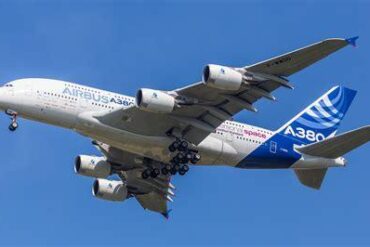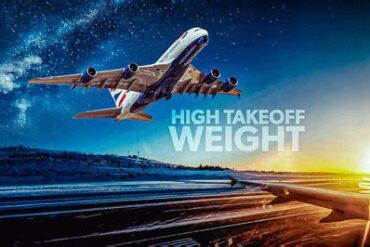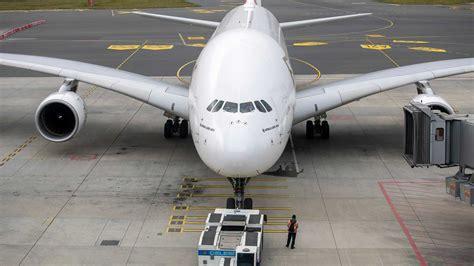
The Airbus A380 did not merely arrive at the world’s airports; it arrived at them sideways, at 79.8 meters wide, and weighing as much as a fully loaded cargo ship. For nearly four decades, the Boeing 747-400 had served as the invisible architect of global civil aviation, quietly fixing the maximum wingspan, wheel track, gate spacing, and terminal footprint that engineers baked into concrete from Singapore to São Paulo. Every taxiway centerline, every apron slab, and every passenger boarding bridge was dimensioned around an aircraft that topped out at roughly 396 tonnes. When the Superjumbo entered service carrying a maximum takeoff weight of 1,268,000 lbs (575 tonnes), it did not fit neatly into that inheritance. It fractured it, and the multi-billion-dollar reconstruction campaign that followed became one of the most consequential engineering stories in commercial aviation history.
The 65-Meter Design Envelope That Every Hub Trusted
The friction begins with geometry, not mass. ICAO Code E and FAA Design Group V defined the regulatory boxes into which the 747-400 fit snugly: a maximum wingspan of 213 feet (65 meters) and an outer main gear wheel span that let airport planners lay parallel taxiways and gates with ruthless spatial efficiency. Airports were not built to accommodate “large aircraft” in the abstract; they were built to accommodate the largest aircraft that existed at the time, and that aircraft was the Queen of the Skies. The A380 broke the envelope with a 262-foot (79.8-meter) wingspan, forcing regulators at the Federal Aviation Administration and the International Civil Aviation Organization to draft the entirely new Code F and Design Group VI categories in response. That regulatory paper trail was the easy part. Rewriting the physical layout of landlocked, century-old gateways was not.
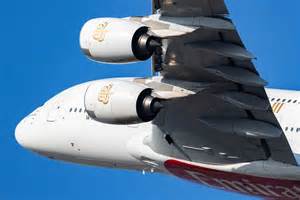
Where Parallel Taxiways Became One-Lane Roads
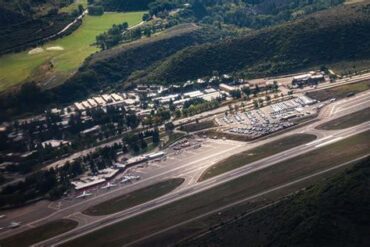
At hubs with adjacent parallel taxiways separated by slim legacy margins, the A380’s wingspan meant two aircraft could no longer move past each other safely. Ground controllers at constrained facilities such as New York JFK and Tokyo Narita had to impose strict separation buffers, often shadowing an adjacent lane entirely so a single Superjumbo could pass. Smaller twin-engine aircraft came to complete standstills while the giant crept through, turning routine taxi maneuvers into intricate choreography that diminished overall airport throughput. To cure the problem permanently, airports needed substantially widened centerline separations, and for older urban hubs hemmed in by terminals, highways, and cargo warehouses, achieving those clearances meant demolition, land acquisition, and years of construction. The cost was not measured in taxiway asphalt alone but in the terminal facilities that had to disappear to make room for a plane nobody had anticipated in the 1970s master plans.
Sinking Into the Apron: Foundations Under a 575-Tonne Load
Beneath the visible tarmac, the 575-tonne maximum takeoff weight imposed structural demands that legacy foundations never contemplated. Airbus designed a complex 22-wheel main landing gear arrangement to spread the load, and on flat pavement the resulting surface pressure proved comparable to a heavy 747. The danger concentrated in specialized structures: taxiway bridges, underground culverts, and fuel pipeline tunnels, all of which faced catastrophic bending moments when the distributed footprint passed overhead or sat stationary at a gate. Civil engineers use the Aircraft Classification Number against the Pavement Classification Number to certify that a runway can withstand an airframe, and airports discovered that rolling landings were survivable while slow-moving or parked Superjumbos generated deep localized stress points that produced asphalt rutting and foundation fatigue over time. The remedy was invisible but expensive: specialized concrete blends injected deep beneath taxiway overpasses, priced in the tens of millions of dollars per airport, often without a single passenger ever noticing the work.
Too Dangerous to Taxi: Turning Radii and Jet Blast
The Superjumbo’s wheel track demands sweeping turning radii that legacy airfield geometry simply does not provide. When an airplane built for wide expanses swings through a tight corner, its outer tires can slip off the paved surface and onto grass shoulders, risking bogging, soil collapse, or structural damage to the gear. The FAA initially proposed widening runways from the traditional 150 feet (45.7 meters) to 200 feet (61 meters) before amending the rule to preserve the original width and mandate constructed runway and taxiway shoulders instead. Those shoulders exist for a second reason: the jet blast from four enormous turbofans can strip loose asphalt, shatter ground lighting, and launch stones from unpaved edges straight into trailing engine intakes. Airports that could not afford to re-engineer their taxiway architecture exempted themselves by implementing restrictive protocols that confined superjumbo movements to certified corridors, and in the tightest terminal transitions, tow tugs replaced engine-powered taxiing altogether.
800 Passengers From Gate to Seat
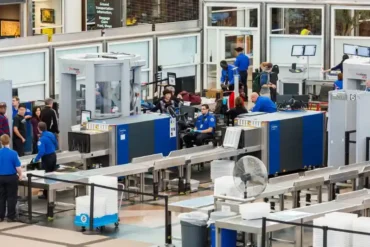
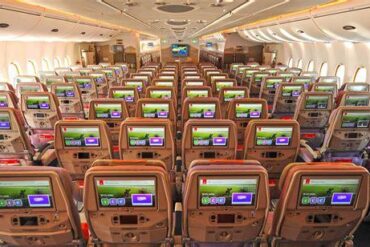
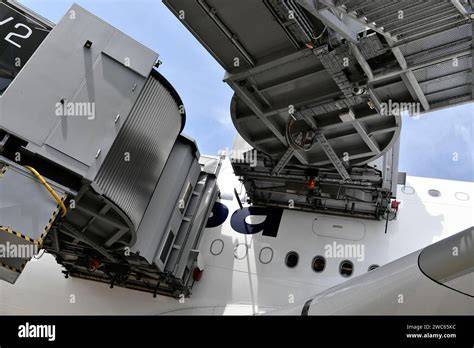
Once the aircraft clears the airside taxiways, the bottleneck migrates to the terminal gate, where the simultaneous processing of up to 500 or 800 passengers overwhelms holding areas designed for a 747’s single-deck flow. Security, passport control, and boarding queues gridlock almost instantly unless the terminal floor plan is rebuilt around the Superjumbo. The signature fix was the multi-headed jet bridge: cantilevered walkways that reach upward to latch onto the upper deck doors while the lower deck boards separately. These systems cost millions, need independent hydraulic controls and alignment sensors to avoid crushing the fuselage as it settles under fuel and passenger load, and require reinforced terminal walls to bear the cantilevered weight. Catering trucks and baggage loaders lacked the vertical reach to service upper-deck galleys, forcing parallel investments in ground support equipment. The result was dedicated single-purpose gates, permanent zones that stripped airports of the flexibility to swap in smaller aircraft when demand softened.
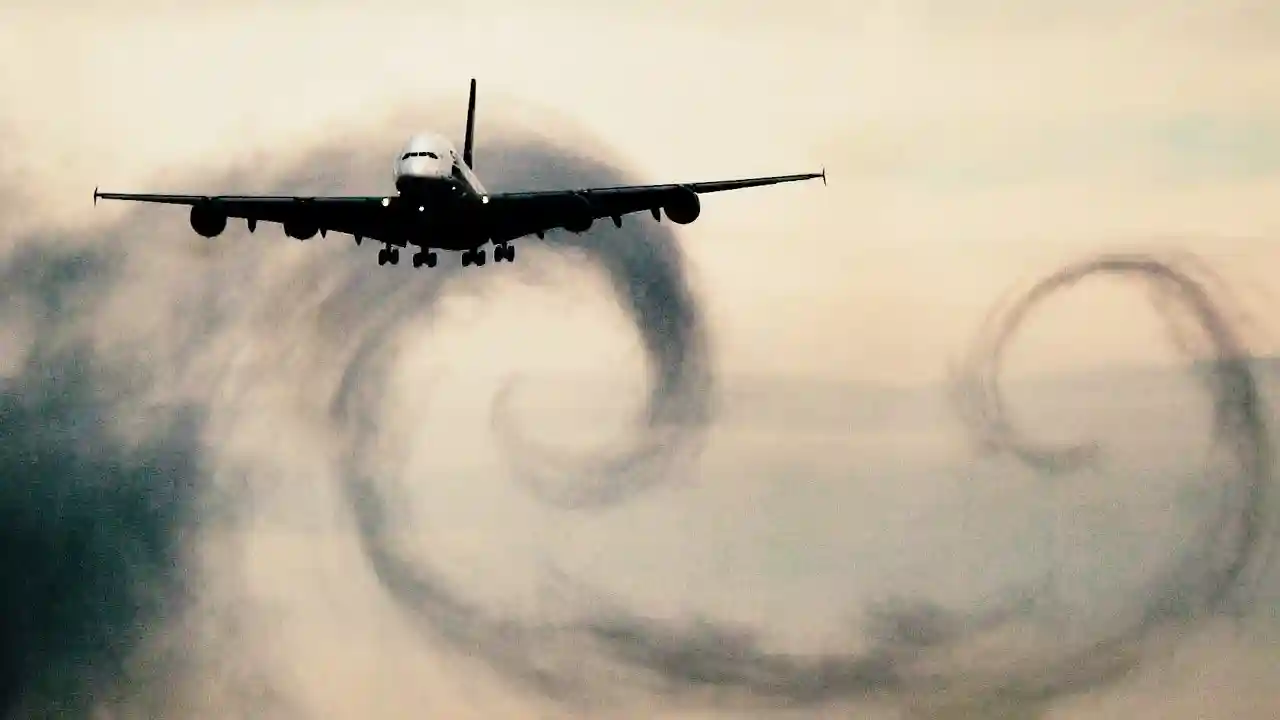
Make Space, the Giant Is Coming: The Wake Separation Paradox
The A380 existed to solve capacity constraints by packing more travelers into a single takeoff and landing slot, but its economics collided with fluid dynamics the moment it rotated. The immense wing area required to lift 575 tonnes generates violent tornadic air currents, known as wake vortices, that demanded an entirely new regulatory weight class designated Super by ICAO. Heavy aircraft including the 747 must trail at five nautical miles (9.3 kilometers), while standard twin-jets must hold six nautical miles (11.1 kilometers), a buffer far wider than ordinary heavy separation. That created a cruel operational paradox: an aircraft carrying twice as many passengers as a narrowbody consumes so much airspace in the arrival sequence that it can choke a single-runway hub’s hourly landing cadence. Inserting a Superjumbo into a peak approach stream slowed landings overall, a knock-on effect that thinned the very congestion the aircraft was designed to relieve.
What the 575-Tonne Upgrade Left Behind
The industry has since pivoted to efficient twin-engine widebodies, yet the infrastructure forged in the Superjumbo era remains permanently embedded in global airport design. The reinforced overpasses, widened safety margins, and Code F corridors built over two decades now serve a newer generation almost by accident. The Boeing 777X and Airbus A350-1000 inherit that spatial architecture directly, and the 777X’s folding wingtips express the compromise perfectly: a high-efficiency Code F wingspan in flight, folding dockside to fit Code E gates originally built for the 747. As carriers retire their double-decker fleets, the towering multi-deck jet bridges and deep concrete pours stand as monuments to an era of structural ambition, proof that accommodating 575 tonnes of aluminum and composite rewrote the physical limits of international aviation for a generation of aircraft that have not yet been designed.
Airbus A380 Infrastructure FAQ
Why did the A380 force airports to rebuild when it entered service?
It exceeded the Code E wingspan ceiling that had defined every major hub since the 747-400, breaching the 213-foot limit with a 262-foot wingspan and demanding new 575-tonne pavement load ratings.
Can a Boeing 747-400’s runway handle an Airbus A380?
A certified runway usually can, but simultaneous parallel taxiing, taxiway bridge loads, and turning radii at legacy facilities generally cannot without reinforcement.
Why does the A380 follow wider separation rules than the 747?
Its Super wake turbulence category requires up to six nautical miles of trailing distance for smaller jets, which alters arrival sequencing at every hub it serves.