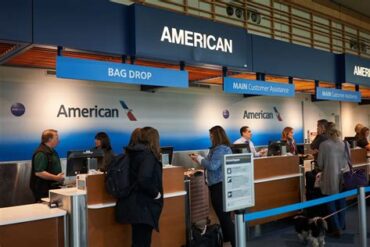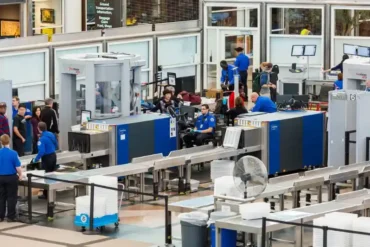
The modern airport no longer treats luggage as anonymous cargo. In 2026, every suitcase rolling through a terminal is becoming a traceable digital identity, mapped by artificial intelligence systems capable of recognizing scratches, dents, stitching patterns, wheel wear, and even the slight deformation of overpacked fabric. What began as an emergency technological response to a global baggage crisis has rapidly evolved into something much larger: a fully automated surveillance and enforcement ecosystem that is fundamentally changing the relationship between airlines and passengers.
Airlines initially sold AI baggage systems as a customer-service revolution. The pitch was simple and attractive. Fewer lost bags. Faster transfers. Real-time tracking. Reduced delays. Yet behind the scenes, the same technology designed to rescue millions of mishandled suitcases has quietly handed carriers something they have never possessed before — near-perfect visibility into every bag a traveler carries.
For decades, the airport experience relied heavily on human flexibility. A gate agent might ignore a carry-on that exceeded size limits by an inch. A check-in employee might allow an overweight suitcase to pass during a busy morning rush. Those informal compromises became part of the unwritten social contract of flying. AI systems are now erasing that gray area entirely.
The result is a growing friction point across the aviation industry. Passengers increasingly feel they are being monitored, measured, and monetized by machines that operate with mathematical precision but zero discretion.
After years of experimentation, airlines are discovering that the greatest challenge of AI baggage scanning is not technical failure. It is the backlash created when travelers realize the system sees absolutely everything.
Why Airlines Became Obsessed With AI Baggage Tracking
The airline industry did not embrace baggage automation out of technological curiosity alone. It was driven by operational desperation.
Following the global travel rebound after the pandemic era, airports became overwhelmed by passenger volumes that recovered faster than staffing levels. Ground crews disappeared during the aviation downturn, and many never returned. Airlines suddenly faced an impossible equation: more travelers, fewer workers, tighter turnaround times, and rising passenger expectations.
At the same time, mishandled baggage rates surged dramatically. Millions of bags were delayed, misplaced, or loaded onto incorrect aircraft. Every missing suitcase represented compensation costs, logistical expenses, reputational damage, and customer frustration.
Traditional baggage handling methods simply could not scale to the new reality of air travel.
The solution emerged through AI-powered computer vision systems, autonomous baggage vehicles, robotics, and digital tracking networks. Airlines transformed luggage operations into a data-driven ecosystem where every suitcase could be monitored continuously from check-in to arrival.
Major carriers began investing aggressively in predictive baggage systems capable of identifying routing problems before they occurred. Airports installed advanced camera arrays that captured ultra-detailed images of every checked item moving through conveyor networks. Autonomous carts started transporting containers across ramps with minimal human intervention.
This technological overhaul dramatically improved efficiency. Bags moved faster. Transfer accuracy increased. Delays decreased. Airlines regained operational stability during periods of labor shortages.
But efficiency came with an unexpected side effect.
Once airlines possessed the capability to digitally analyze every bag in microscopic detail, they also gained the ability to enforce baggage policies with unprecedented strictness.
The Rise of Baggage Biometrics
The phrase “baggage biometrics” sounded futuristic when it first appeared in aviation technology discussions. By 2026, it has become a core pillar of airport operations.
Unlike traditional barcode systems that rely entirely on paper tags, baggage biometrics create a unique digital fingerprint for each suitcase. AI software studies physical characteristics including:
- Surface scratches
- Fabric texture
- Wheel placement
- Handle shape
- Dent locations
- Zipper alignment
- Color fading
- Sticker residue
- Structural wear patterns
These details are combined into a persistent identity profile that allows the system to recognize luggage even if the physical tag is damaged or detached.
The implications are enormous.
A suitcase no longer disappears into the airport system as generic cargo. It becomes a continuously monitored object with a permanent visual record. High-resolution cameras photograph the bag multiple times throughout its journey, generating a timeline that tracks its movement and condition.
If damage occurs during transport, airlines can identify the exact location where the incident happened. If a bag is misplaced, AI systems can locate it using visual recognition instead of depending solely on barcode scans.
Passengers benefit from improved reliability, but the tradeoff is significant. The airport now collects and stores far more visual information than travelers realize.
A carry-on bag passing through modern AI checkpoints may undergo dozens of measurements and image captures before boarding even begins.
The End of Human Flexibility at Airport Gates
For travelers, the most visible impact of AI baggage scanning is appearing at boarding gates.
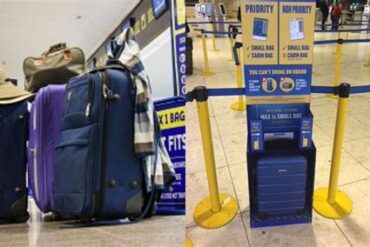
Historically, carry-on enforcement depended largely on human judgment. Airline staff visually estimated dimensions, occasionally used metal sizers, and often applied rules inconsistently depending on workload, crowd pressure, or simple empathy.
That inconsistency frustrated airlines because it reduced ancillary revenue and complicated aircraft weight management. AI systems promised total standardization.
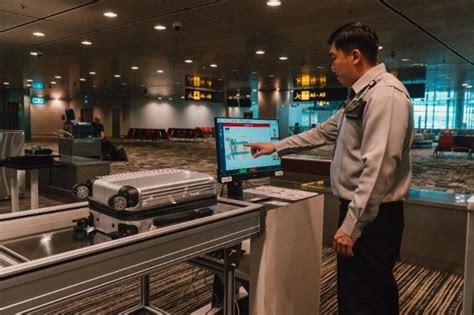
Now, advanced computer vision systems can measure luggage dimensions with sub-millimeter precision while passengers walk through boarding lanes. The process often occurs silently, without requiring travelers to stop.
A soft-sided bag that bulges slightly beyond airline limits can instantly trigger an automated alert. The system may automatically flag the passenger account, issue a digital surcharge, or require mandatory gate-checking before boarding authorization is completed.
This transformation fundamentally changes the emotional dynamics of flying.
Human agents once had discretion. AI does not.
A stressed parent carrying medical supplies for a child receives the same enforcement response as a business traveler intentionally gaming baggage rules. The system recognizes dimensions and weight, not circumstances.
Frequent flyers are increasingly encountering situations where bags that previously passed unnoticed are suddenly classified as oversized by automated scanners. Travelers accustomed to squeezing oversized backpacks into overhead bins are finding themselves targeted by systems designed specifically to eliminate ambiguity.
Airlines view this as fairness and consistency.
Passengers often view it as automated punishment.
How Silent AI Enforcement Became a Revenue Machine
The financial incentives behind baggage automation are impossible to ignore.
Ancillary fees have become one of the airline industry’s most important revenue streams. Charges for checked baggage, overweight luggage, seat selection, and carry-on violations generate billions of dollars annually.
Under older manual systems, enforcement varied wildly. Some gate agents applied rules aggressively while others ignored minor violations to avoid slowing boarding.
AI eliminates that inconsistency entirely.
Every passenger is measured equally. Every bag is scanned identically. Every violation becomes detectable.
From a corporate perspective, this creates an extraordinarily efficient revenue environment. Airlines no longer depend on employee attentiveness or confrontation willingness. Automated systems enforce policies continuously without fatigue or negotiation.
What makes the situation controversial is the invisible nature of the process.
Many passengers do not realize their luggage is being dimensionally analyzed in real time. Modern airport camera systems can assess bag size, shape, and weight distribution without requiring explicit interaction from travelers.
This “silent enforcement” has created growing discomfort among privacy advocates and consumer rights groups. Critics argue airlines are quietly transforming operational infrastructure into behavioral surveillance systems designed to maximize fee extraction.
The technology itself is not inherently malicious. In fact, many travelers appreciate more reliable baggage handling. The problem emerges when operational AI tools become deeply intertwined with revenue optimization strategies.
Passengers increasingly suspect that baggage automation is not solely about reducing lost luggage anymore.
It is also about ensuring nobody escapes a surcharge.
Automation Is Reshaping the Entire Airport Ramp
The AI baggage revolution extends far beyond terminal checkpoints.
Airport ramps — historically chaotic environments filled with diesel tugs, luggage carts, and overworked ground crews — are undergoing massive automation upgrades. Autonomous baggage vehicles now navigate complex service roads using lidar sensors, machine learning models, and computer vision systems.
These robotic platforms transport containers between aircraft and sorting facilities with remarkable precision. They reduce labor demands while improving timing consistency during tight aircraft turnarounds.
At the same time, robotic loading systems are helping workers move heavy luggage into aircraft cargo holds. These machines optimize weight distribution inside containers while minimizing injury risks for employees.
This shift matters because baggage handling has long been one of aviation’s most physically demanding jobs. Airlines faced chronic staffing shortages even before global travel demand surged again. Automation became the only scalable solution.
AI systems also excel at dynamic problem-solving.
If a connecting passenger changes gates unexpectedly, baggage routing software recalculates the fastest transport path instantly. Autonomous vehicles reroute themselves in real time. Conveyor priorities shift automatically. What once required radio calls and manual coordination now happens algorithmically within seconds.
Operationally, the results are impressive.
But the increased efficiency depends entirely on constant surveillance, measurement, and digital tracking of every object inside the airport ecosystem.
Suitcases are no longer passive items moving through infrastructure. They are active data nodes inside an intelligent logistics network.
Passengers Are Losing the Ability to Bend the Rules
One of the least discussed consequences of AI baggage enforcement is psychological.
For decades, air travel operated with flexible boundaries. Travelers learned informal airport behavior patterns. People knew which airlines were stricter. They understood when slightly overweight luggage might slide through unnoticed.
That flexibility created breathing room inside an otherwise stressful environment.
AI removes it.
The system does not care whether a bag can physically fit under the seat despite technically exceeding dimensions. It does not care whether a passenger is rushing to a funeral or carrying expensive camera equipment. It recognizes measurable conditions and executes policy responses accordingly.
This creates a colder passenger experience.
Many travelers are discovering that even premium airline status provides less protection against automated enforcement. Elite loyalty members who once relied on staff familiarity are increasingly subjected to the same algorithmic scrutiny as occasional flyers.
The shift reflects a broader transformation happening across modern transportation systems. Airports are becoming frictionless in some ways while simultaneously becoming more restrictive in others.
Passengers move faster through security and boarding, but they are also monitored more intensively than ever before.
Convenience and surveillance are advancing together.
Privacy Concerns Are Finally Catching Up to Airports
The aviation industry spent years promoting facial recognition boarding systems, biometric passports, and contactless airport experiences as seamless technological upgrades.
Most travelers accepted these changes because they reduced wait times and simplified movement through terminals.
Baggage biometrics introduce a more complicated debate.
Unlike facial recognition, luggage scanning initially feels less personal. Many passengers assume their suitcase contains no meaningful privacy concerns. Yet the sheer amount of information collected through modern baggage imaging systems raises serious questions about long-term data use.
AI baggage platforms may store:
- Detailed visual records of luggage
- Travel frequency patterns
- Packing behavior indicators
- Historical baggage violations
- Damage histories
- Carry-on sizing trends
- Weight fluctuation data
Combined together, these datasets can reveal surprisingly detailed behavioral profiles.
Privacy advocates worry airlines may eventually use this information for predictive pricing models, traveler risk scoring, or targeted enforcement campaigns. Frequent passengers who consistently exceed baggage allowances could theoretically become algorithmically flagged before arriving at the airport.
The industry insists these systems exist primarily for operational efficiency and security.
Still, concerns continue growing because travelers rarely receive transparent explanations about exactly how much baggage-related data is being captured and retained.

The Future of Flying Will Be Hyper-Precise
The airport of the future is becoming increasingly visible.
Passengers will likely walk through fully automated checkpoints where boarding passes, passports, facial recognition, and baggage scanning occur simultaneously in motion. AI systems will continuously evaluate luggage dimensions, passenger identity, security risks, and boarding eligibility without requiring manual interaction.
For airlines, this future promises extraordinary efficiency.
Lost bags could become exceptionally rare. Aircraft loading times may shrink dramatically. Staffing shortages could become manageable through robotics and automation. Real-time baggage tracking may eventually reach near-perfect reliability.
But precision has consequences.
The more accurate airline systems become, the less room exists for human flexibility. Travelers who grew accustomed to exploiting small loopholes in baggage policies are entering an era where every centimeter is measurable and every rule enforceable.
AI will likely become even more predictive in coming years. Systems are already being developed to identify damaged wheels, weak handles, and structural defects before luggage enters conveyor networks. Airlines envision maintenance-style predictive analytics for suitcases themselves.
In theory, that could improve passenger experiences further by preventing baggage failures before they occur.
Yet every advancement deepens the same underlying reality: airports are evolving into highly intelligent surveillance environments where operational efficiency depends on constant data extraction.
The airline industry solved the lost baggage crisis by teaching machines to see every bag perfectly.
Now passengers are discovering that the machines never stop watching.