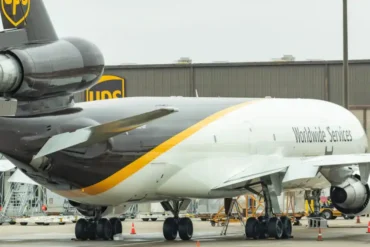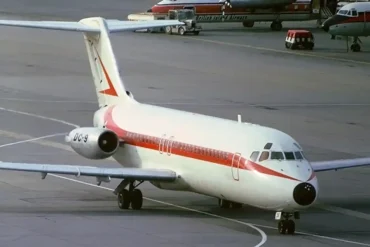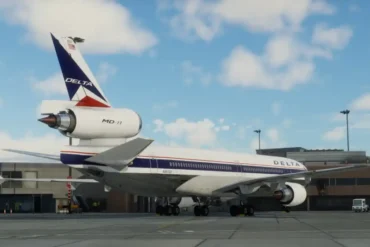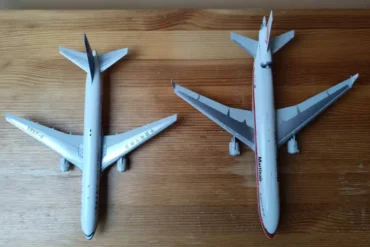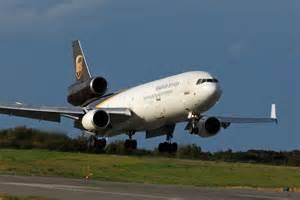
When the McDonnell Douglas MD-11 entered service in 1990, it arrived with ambitious promises. The aircraft represented the next chapter in the evolution of the DC-10, one of the most recognizable widebody airliners of the previous generation. Engineers sought to create a more capable and efficient aircraft without starting from a clean-sheet design. By stretching the fuselage, improving the wing, introducing advanced avionics, and reducing cockpit crew requirements from three people to two, McDonnell Douglas believed it had created an airliner that could challenge Boeing and Airbus for decades.
On paper, the formula seemed compelling. Airlines wanted greater range and lower operating costs, and the MD-11 appeared ready to deliver both. Its sleek winglets, extended fuel capacity, and sophisticated flight management systems gave the impression of a thoroughly modern aircraft. Early customer enthusiasm translated into numerous orders, and many carriers envisioned the trijet becoming a backbone of international networks.
Yet the aircraft’s story would unfold differently. While economics and changing market conditions played important roles, one of the most discussed aspects of the MD-11 became its handling characteristics. In particular, pilots discovered that the aircraft demanded exceptional precision during takeoff and landing. What engineers had achieved in cruise efficiency came at the expense of natural aerodynamic stability, producing an airplane that was far less forgiving than many competitors.
The MD-11 Was Conceived As A More Efficient Evolution Of The DC-10
By the late 1980s, commercial aviation was changing rapidly. Airlines demanded aircraft capable of flying farther while consuming less fuel. Rather than investing billions in a completely new airframe, McDonnell Douglas chose to improve the proven DC-10 platform. The result was the MD-11, a stretched derivative equipped with aerodynamic refinements and state-of-the-art electronics.
Among the most visible improvements were the distinctive winglets that reduced drag and improved fuel economy. The cockpit underwent a dramatic transformation as digital systems replaced the traditional flight engineer station. These changes enabled a two-pilot crew, reducing operating costs and aligning the aircraft with newer competitors.
More significant, however, were the aerodynamic changes hidden beneath the skin. Engineers wanted the aircraft to cruise more efficiently and consume less fuel on long-haul routes. To achieve this, they reduced the size of the horizontal stabilizer and allowed the aircraft to operate with a more aft center of gravity. This reduced the downward force required from the tailplane, lowering drag and improving cruise performance.
The strategy worked from an efficiency perspective. Unfortunately, reducing drag also reduced the aircraft’s inherent pitch stability. Earlier airliners possessed stronger natural tendencies to maintain equilibrium. The MD-11 relied more heavily on computerized systems to achieve desired handling qualities, creating an aircraft that felt very different from its predecessor.
NASA studies examining the airplane’s stability characteristics noted that the aircraft possessed lower longitudinal stability than older widebody designs. Although fully safe and compliant with certification requirements, it demanded greater pilot attention and more precise control inputs during manual flight.
Why The Three-Engine Configuration Became A Complicated Compromise
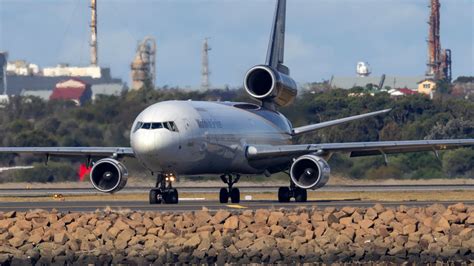
The MD-11 inherited one of the DC-10’s defining characteristics: its trijet layout. Two engines hung beneath the wings, while the third sat at the base of the vertical stabilizer. During the 1970s and early 1980s, such configurations offered important advantages because engine reliability limitations restricted the routes available to twin-engine aircraft.
A third engine allowed long overwater operations without concerns associated with early ETOPS restrictions. For years, trijets represented an ideal balance between capability and efficiency.
However, aviation technology evolved rapidly. High-bypass turbofan engines became dramatically more reliable. Regulators expanded ETOPS approvals, allowing twin-engine aircraft to operate routes once reserved for three-engine and four-engine designs. Suddenly, the advantages that justified the MD-11’s configuration began disappearing.
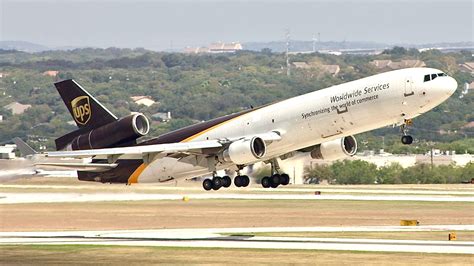
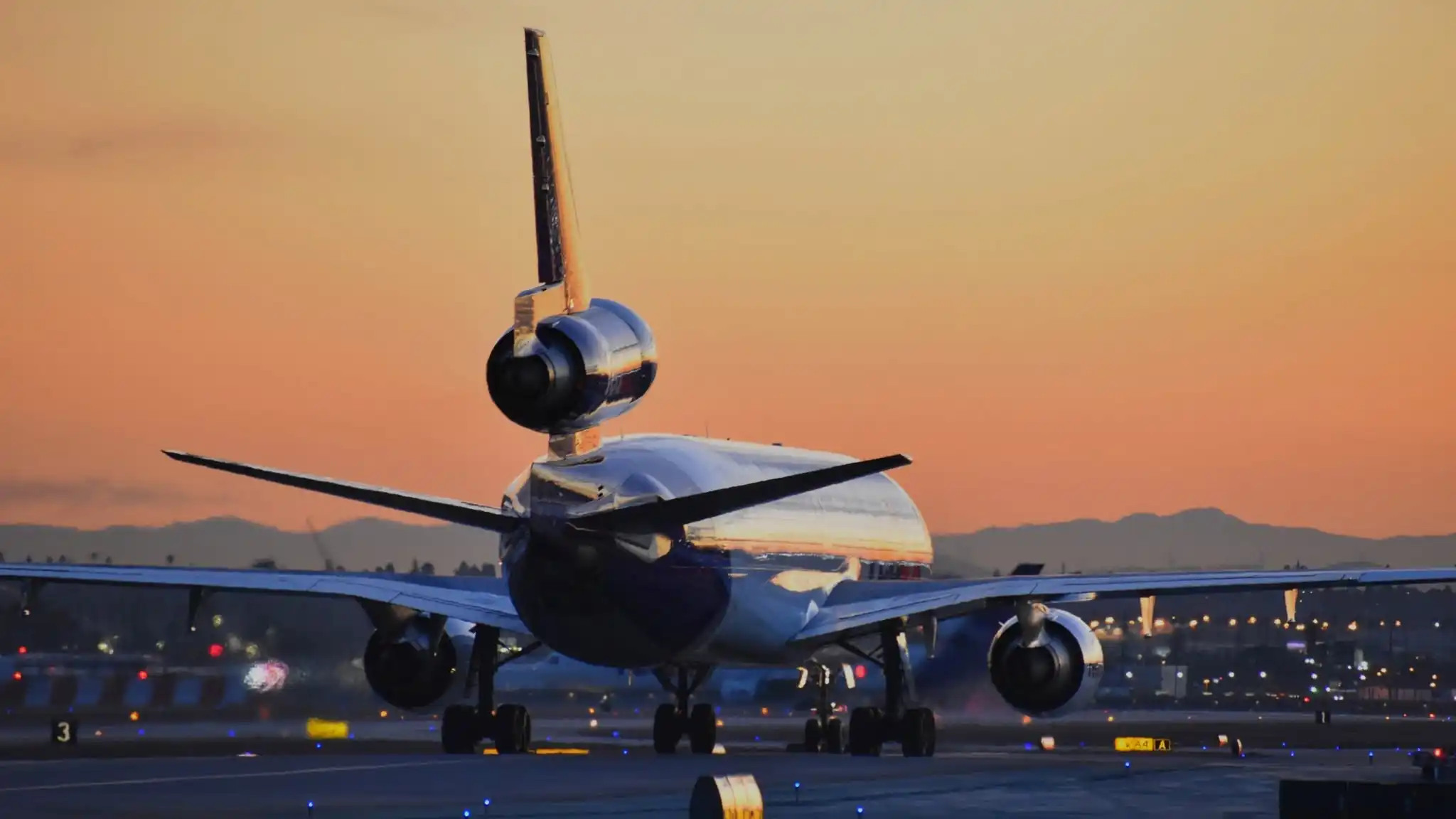
The tail-mounted engine also introduced aerodynamic and structural challenges. Significant weight existed high above the centerline, influencing stability and affecting airflow around the vertical stabilizer. Engineers had to balance forces generated by the fuselage, wing, tail surfaces, and rear engine installation while simultaneously pursuing ambitious efficiency goals.
The trijet arrangement itself was not problematic. Aircraft such as the Lockheed L-1011 TriStar and DC-10 enjoyed successful careers. What made the MD-11 unique was the combination of trijet architecture with aggressive aerodynamic optimization. This mixture produced handling characteristics that many pilots described as less forgiving.
Former DC-10 pilots frequently noted that the MD-11 demanded substantially more attention. Whereas the older aircraft tolerated minor deviations with little drama, the newer model responded more quickly and required greater finesse.
Reduced Stability Produced Unique Flying Qualities
Modern aircraft often sacrifice natural stability in pursuit of performance. Designers compensate with increasingly sophisticated flight control systems. The MD-11 represented an early example of this philosophy.
Operating with an aft center of gravity reduced trim drag and improved fuel consumption. However, the tradeoff manifested itself through greater pitch sensitivity. Small changes in control input produced larger-than-expected attitude changes.
Pilots transitioning from the DC-10 sometimes described the aircraft as requiring continuous precision. Unlike highly stable aircraft that naturally dampened disturbances, the MD-11 relied more heavily on active systems and pilot technique to maintain smooth handling.
During cruise, these characteristics posed little difficulty. The aircraft performed admirably at altitude and offered impressive range capabilities. Problems became more noticeable during low-speed operations, especially when manual flying increased and margins became smaller.
Because the airplane was less naturally stable, pilots had less aerodynamic feedback. Tiny corrections during the landing flare could generate significant pitch responses, complicating an already demanding phase of flight.
Why Landing The MD-11 Became Its Most Notorious Challenge
Among pilots, the MD-11 developed a reputation that followed it throughout its career: it was difficult to land smoothly.
The issue did not stem from instability or dangerous behavior. Rather, the airplane demanded precision that exceeded what many crews had become accustomed to in other widebody aircraft. The flare phase required exact timing and carefully measured control inputs.
FAA operational studies documented pilot observations that frequently highlighted pitch sensitivity during landing. Minor control movements could produce larger-than-anticipated attitude changes. A flare initiated slightly too aggressively could rapidly alter the touchdown profile.
Another characteristic that complicated landings involved bounce recovery. Any aircraft can bounce if vertical speed at touchdown is excessive, but the MD-11’s response created additional challenges. Once airborne again after an initial bounce, pilots faced rapidly changing attitudes and energy states.
Aggressive corrections occasionally worsened the situation. Excessive pitch inputs could increase descent rates or induce secondary bounces, creating sequences that became increasingly difficult to recover.
Flight Safety Foundation analyses noted that proper energy management was critical. Crews needed disciplined techniques and restrained control inputs to avoid overcorrecting. In essence, the airplane rewarded precision but punished abrupt responses.
As experience accumulated, airlines modified training programs to address these characteristics. Standard operating procedures evolved, emphasizing stabilized approaches and careful flare techniques. Nevertheless, the reputation persisted.
High-Profile Accidents Intensified Scrutiny
Several major accidents focused worldwide attention on the MD-11’s landing behavior and contributed to perceptions that the aircraft was unusually demanding.
In 1997, a FedEx MD-11 arriving at Newark experienced a bounced landing that escalated dramatically. The aircraft rolled and overturned before coming to rest. Investigators examined pilot actions and aircraft responses throughout the sequence. The event highlighted how quickly bounce recoveries could become complicated.
Two years later, China Airlines Flight 642 crashed while landing in Hong Kong amid severe weather conditions. A hard touchdown and subsequent loss of control resulted in another tragic accident involving the type.
In 2009, FedEx Flight 80 crashed during landing at Tokyo Narita Airport after a violent bounce sequence. Investigators again studied the interaction between pilot inputs and the aircraft’s pitch response characteristics.
Importantly, investigators never concluded that the aircraft itself was fundamentally unsafe. Reports consistently pointed toward combinations of environmental conditions, operational factors, and aircraft characteristics. The airplane remained fully certificated and statistically comparable to many other types.
However, perception matters greatly in commercial aviation. Repeated headlines involving difficult landings created a reputation that proved difficult to overcome. Airlines and pilots increasingly recognized that the aircraft required greater precision and specialized training than some competing designs.
Competition From Twinjets Changed Everything
Handling concerns alone did not doom the MD-11. Economics ultimately delivered the decisive blow.
While McDonnell Douglas worked to optimize the trijet, Boeing and Airbus introduced highly efficient twin-engine alternatives. The Boeing 777 and Airbus A330 delivered comparable range with lower fuel burn and simpler maintenance requirements.
Engine reliability improvements eliminated many advantages once associated with three engines. Airlines no longer needed an extra powerplant to fly long oceanic routes. Instead, the third engine became an expensive liability.
Maintaining three engines required additional inspections and increased operating costs. Fuel consumption exceeded expectations, and range performance initially failed to meet promised targets. Combined with specialized training requirements stemming from the aircraft’s handling characteristics, the business case became increasingly difficult to justify.
Passenger airlines gradually retired their fleets. American Airlines, Delta Air Lines, Swissair, Finnair, KLM, and Japan Airlines all eventually moved on to more efficient twin-engine aircraft.
The MD-11 Found Success In Cargo Operations
Ironically, the aircraft enjoyed remarkable success after leaving passenger service.
Freight operators valued characteristics that passenger airlines no longer prioritized. The MD-11 offered exceptional payload capability, large cargo volume, and impressive range. Since used airframes could be acquired relatively cheaply, the economics became attractive.
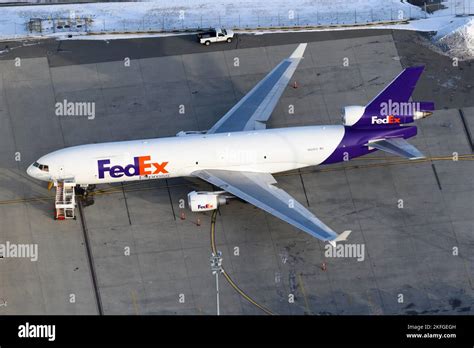
FedEx and UPS emerged as major operators. Cargo carriers proved less sensitive to fuel burn disadvantages because acquisition costs remained low and operational flexibility remained high.
The aircraft’s strengths suddenly became more valuable than its weaknesses. Cargo operations also benefited from highly experienced crews and mature training programs developed over decades of service.
As a result, the MD-11 became one of the most successful freighters of its generation. Even after disappearing from passenger cabins, it continued transporting millions of tons of cargo around the world.
The MD-11 Became A Victim Of Timing And Ambition
The MD-11 represented an ambitious attempt to modernize the trijet concept during a period of enormous technological change. Engineers pursued efficiency with remarkable determination, introducing aerodynamic refinements that reduced drag and improved cruise performance.
Those improvements came with consequences. Reduced longitudinal stability and greater pitch sensitivity created an airplane that demanded exceptional precision, particularly during landings. Although entirely manageable with proper technique, these characteristics distinguished the MD-11 from more forgiving competitors.
At the same time, the rise of highly reliable twin-engine airliners removed the economic justification for three engines. Fuel efficiency, maintenance costs, and operational simplicity increasingly favored aircraft like the Boeing 777 and Airbus A330.
The result was not the failure of an unsafe airplane but the gradual decline of an aircraft whose strengths no longer matched the market. The MD-11 achieved many of its technical objectives and proved immensely valuable as a freighter, yet it never fulfilled the passenger airline ambitions envisioned by McDonnell Douglas.
Today, the distinctive silhouette of the MD-11 still appears in skies around the world carrying cargo rather than travelers. Its legacy remains a fascinating reminder that engineering excellence and commercial success do not always arrive together. Sometimes, the pursuit of efficiency creates compromises that only become fully understood after thousands of flights and decades of experience.