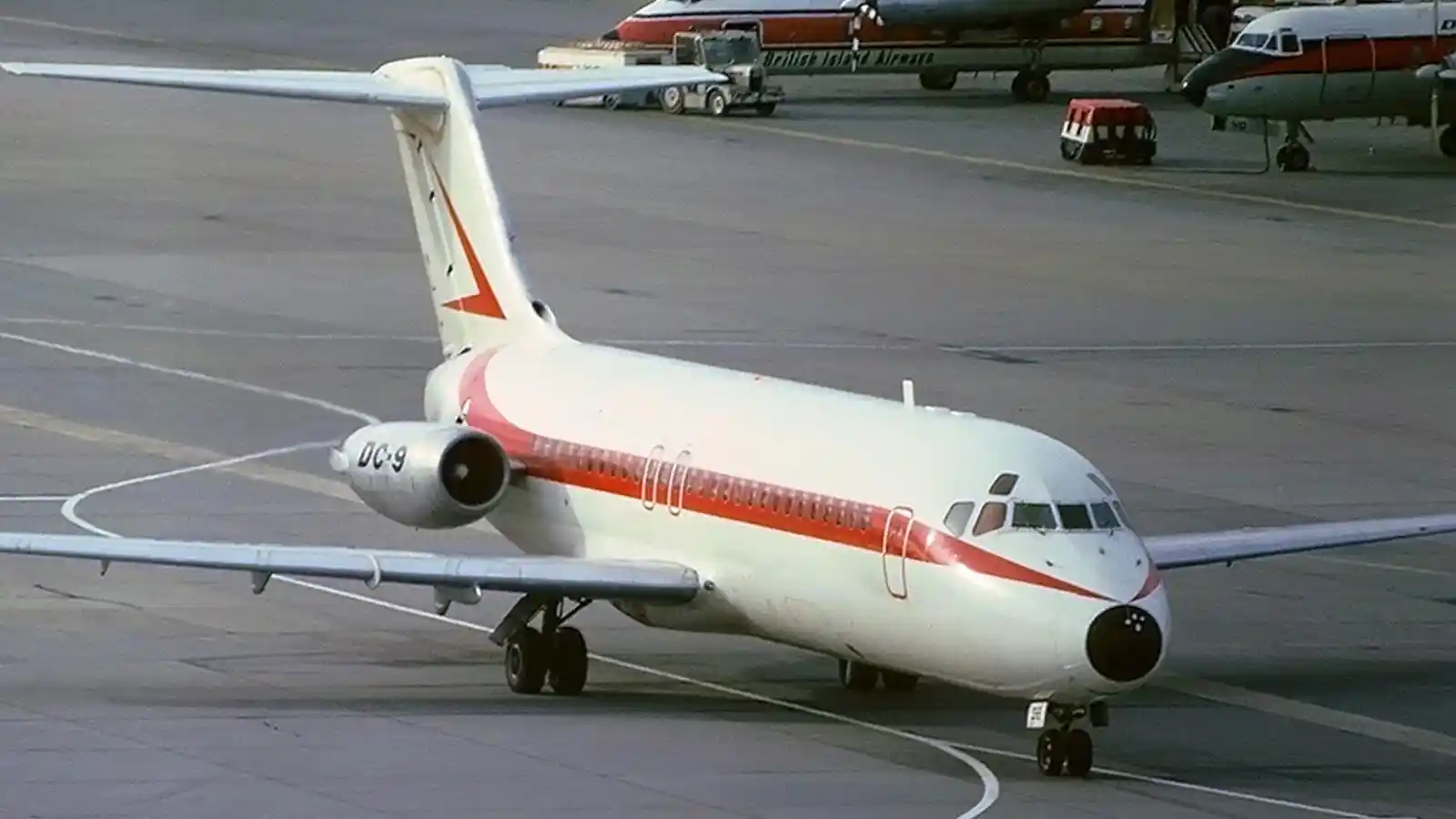
The aviation industry has always been driven by one fundamental assumption: every new generation of aircraft will inevitably replace the one before it. Better fuel efficiency, quieter engines, digital avionics, and lower operating costs are expected to make older airliners economically obsolete. Yet aviation history occasionally produces extraordinary exceptions that challenge conventional wisdom. Few examples illustrate this better than the McDonnell Douglas DC-9, an aircraft introduced in the mid-1960s that ultimately outlasted the very airplane designed to replace it—the McDonnell Douglas MD-90.
Rather than quietly disappearing after the arrival of a more advanced successor, the DC-9 continued flying passengers and cargo around the world while many considerably younger MD-90s were already heading for retirement. The contrast appears almost contradictory. How could an aircraft built using slide rules and conservative engineering principles survive longer than a technologically superior replacement created three decades later?
The answer lies not in a single technological advantage but in a fascinating combination of structural engineering, maintenance economics, supply chain realities, engine availability, and airline financial strategy. In many respects, the DC-9 became proof that durability and simplicity can sometimes outweigh innovation, particularly in an industry where operational reliability determines profitability every single day.
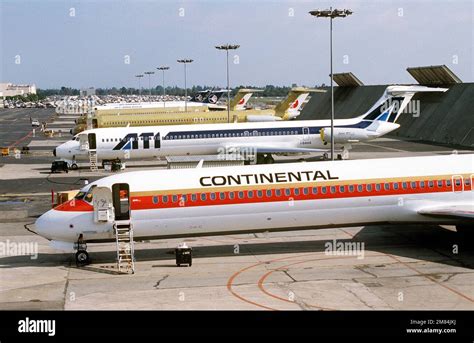
Built During An Era When Aircraft Were Designed To Last
When Douglas Aircraft engineers began developing the DC-9 during the early 1960s, commercial aviation was still relatively young. Computer-aided structural analysis did not exist in the sophisticated form available today, forcing engineers to adopt highly conservative safety margins throughout the design process.
Instead of shaving every unnecessary kilogram from the airframe, designers intentionally used thicker aluminum skins, stronger structural members, and an exceptionally robust wing box capable of enduring decades of intensive airline operations. The result was an airplane that weighed slightly more than absolute optimization might have allowed, but one that possessed extraordinary structural resilience.
This philosophy proved particularly valuable because the DC-9 was specifically intended for short-haul operations. Unlike long-range aircraft that spend most of their time cruising at altitude, regional jets repeatedly climb, descend, pressurize, depressurize, land, and take off several times every day. Every cycle places stress on the fuselage, doors, windows, and wing structure.
Repeated pressurization is one of the primary causes of metal fatigue in commercial aircraft. The DC-9’s heavily reinforced construction enabled it to absorb these stresses remarkably well, allowing numerous airframes to exceed 60,000 flight cycles while remaining structurally sound long after their original design expectations.
Many later aircraft incorporated more sophisticated materials and lighter structures to improve fuel economy. Although these designs were highly efficient, they often possessed less structural margin than the rugged DC-9, making them more sensitive to fatigue over extremely long service lives.
A Replacement That Arrived At The Worst Possible Time
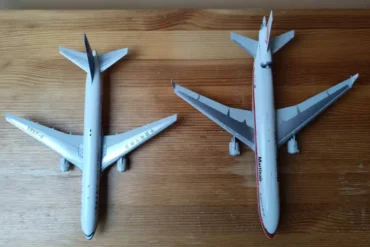
The MD-90 entered airline service in 1995 as the newest member of the long-running McDonnell Douglas T-tail family. Building upon the successful MD-80 series, it featured a significantly stretched fuselage, quieter engines, modern electronic flight displays, and improved fuel efficiency.
On paper, it appeared to be the natural successor.
Its larger passenger capacity allowed airlines to increase revenue on busy routes while advanced avionics reduced pilot workload. The new high-bypass engines also dramatically lowered external noise, making the aircraft especially attractive at airports with strict environmental restrictions.
However, the MD-90 suffered from circumstances that had little to do with its engineering.
Only two years after the aircraft entered service, Boeing acquired McDonnell Douglas, fundamentally changing the future of the program. Boeing already possessed its own highly successful narrowbody family—the 737—and had little commercial incentive to continue aggressively developing a competing aircraft inherited through acquisition.
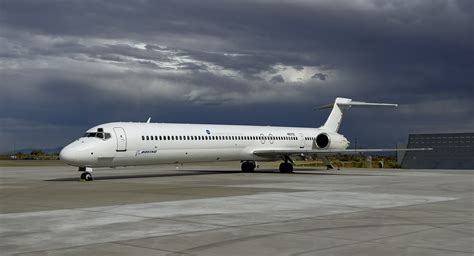
Production of the MD-90 ended after just 116 aircraft, an extraordinarily small fleet compared with earlier Douglas products.
The production numbers tell the story:
- DC-9: 976 aircraft
- MD-80: 1,191 aircraft
- MD-90: 116 aircraft
Such a limited production run prevented the MD-90 from achieving the global fleet size necessary to create a healthy aftermarket for spare parts, maintenance providers, and component suppliers. From the beginning, operators found themselves supporting what effectively became an orphan aircraft.
Why Fleet Size Matters More Than Technology
Commercial aviation depends upon economies of scale. Airlines do not simply purchase aircraft—they invest in entire ecosystems consisting of maintenance organizations, spare parts inventories, pilot training, engineering support, and repair networks.
The larger a fleet becomes worldwide, the cheaper every aspect of ownership generally becomes.
The DC-9 benefited enormously from this phenomenon. Nearly one thousand aircraft entered service across dozens of airlines on multiple continents. As fleets aged, retired airplanes became valuable sources of inexpensive replacement components.
Landing gear assemblies, hydraulic pumps, cockpit instruments, cabin equipment, flight controls, and structural sections all became readily available through dismantled aircraft.
Independent maintenance organizations also flourished because enough DC-9s existed to justify specialized expertise.
The MD-90 never reached this critical mass.
Instead, airlines frequently faced situations where replacement parts had to be ordered directly from original manufacturers or produced in limited quantities, dramatically increasing costs. Even relatively ordinary maintenance events could become expensive logistical exercises involving long delivery times and high procurement prices.
Consequently, some operators discovered that maintaining an aging MD-90 could cost substantially more than keeping an even older DC-9 flying.
The JT8D Engine Became One Of Aviation’s Greatest Economic Assets
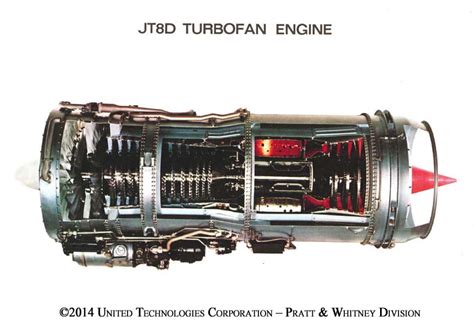
Perhaps no single component contributed more to the DC-9’s longevity than the Pratt & Whitney JT8D engine.
Modern aviation enthusiasts often criticize the JT8D for its high fuel consumption and significant noise output. Those criticisms are entirely valid when compared with contemporary turbofans.
Yet airlines evaluate engines using far more than fuel burn alone.
The JT8D became one of the most successful commercial jet engines ever produced. Thousands powered not only DC-9s but also early Boeing 727s, Boeing 737s, and numerous other aircraft worldwide.
This enormous installed base created an unmatched maintenance ecosystem.
Independent overhaul facilities specialized in JT8D repairs, technicians accumulated decades of experience, and replacement parts circulated continuously through the global aviation marketplace.
Instead of depending upon a limited number of factory-authorized facilities, airlines could choose among numerous maintenance providers competing for business, helping keep overhaul prices relatively affordable.
The abundance of used engines further strengthened the economic case. Airlines retiring older aircraft effectively supplied affordable replacement powerplants for operators wishing to continue flying their DC-9 fleets.
The MD-90’s Engines Became An Unexpected Weakness
Ironically, the MD-90’s advanced engines became one of its greatest long-term disadvantages.
The aircraft relied on the IAE V2500-D5, a specialized version of the successful V2500 family. While the broader V2500 series powered several Airbus aircraft in large numbers, the D5 variant used on the MD-90 remained comparatively rare.
That distinction proved important.
Unlike the JT8D, operators could not easily source inexpensive surplus engines or abundant replacement components. Specialized maintenance facilities were fewer, spare parts cost more, and overhauls often represented a substantial percentage of the aircraft’s remaining market value.
For some operators, major engine maintenance became financially unjustifiable.
An airline could face repair costs approaching or even exceeding the value of the aircraft itself, leading many companies to retire otherwise serviceable MD-90s well before reaching their structural limits.
The engines were technologically superior, quieter, and significantly more fuel-efficient—but economics ultimately outweighed engineering.
Japan Became A Real-World Test Of Durability
Few airline environments stress aircraft more intensely than Japan’s domestic aviation network.
Many routes measure less than 400 miles, requiring frequent departures, rapid turnarounds, and constant pressurization cycles throughout every operating day.
These demanding schedules provided an excellent comparison between classic DC-9 derivatives and the newer MD-90.
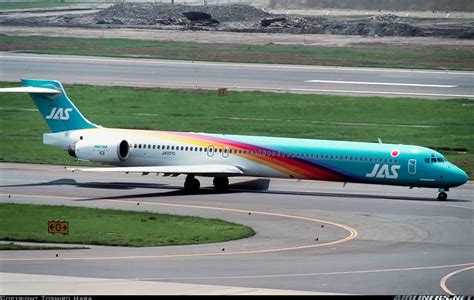
Japanese airlines appreciated the MD-90’s quieter cabin and reduced airport noise, particularly at busy airports with strict operating limitations.
Nevertheless, the aircraft’s more complex maintenance requirements occasionally complicated fleet operations. Specialized diagnostic equipment and less common replacement parts sometimes extended maintenance events beyond scheduled turnaround windows.
Older DC-9 family aircraft, by comparison, relied on comparatively straightforward mechanical systems familiar to technicians across the industry.
Their simplicity often translated into exceptional dispatch reliability despite consuming more fuel.
For airlines operating dense schedules where every delayed departure affected hundreds of passengers, reliability frequently proved more valuable than incremental improvements in fuel efficiency.
Paid-Off Aircraft Often Generate Better Profits Than New Ones
Fuel efficiency dominates many discussions surrounding airline economics, but it represents only one element of a much larger financial equation.
Aircraft ownership costs frequently determine profitability just as much as fuel consumption.
Once an airplane has been completely paid off, its financial profile changes dramatically.
Instead of generating monthly lease obligations or financing payments, it becomes a capital asset that can be deployed whenever market demand justifies operation.
This flexibility allowed many DC-9 operators to adjust capacity according to seasonal travel patterns.
During slower periods, aircraft could remain parked without imposing significant ownership costs. During peak demand, they could quickly return to service and generate revenue using infrastructure that had already been fully amortized decades earlier.
By contrast, newer aircraft with substantial financing obligations continue generating expenses even when parked.
Consequently, an older airplane with higher fuel consumption can still produce superior overall economics if acquisition costs have effectively disappeared.
This financial reality explains why many airlines continued operating DC-9s despite having access to newer alternatives.
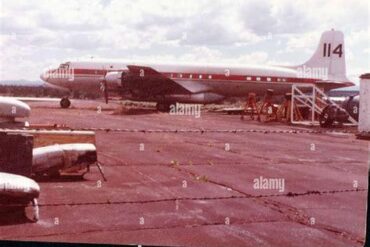
Cargo Conversion Extended The DC-9’s Life Even Further
Retirement from passenger service rarely represents the end of an aircraft’s useful life.
Many aging airliners begin successful second careers transporting freight, where operational priorities differ considerably from passenger airlines.
Cargo operators emphasize durability, acquisition cost, structural strength, and maintenance affordability rather than passenger comfort or cabin technology.
The DC-9 proved exceptionally well suited for conversion.
Its rugged fuselage easily accommodated large cargo door installations without requiring extensive structural reinforcement. The aircraft’s strong floor structure also supported substantial payloads during intensive overnight freight operations.
Converted freighters routinely transported approximately 25,000 pounds of cargo across regional logistics networks, often operating several flights each night.
Meanwhile, converting the much smaller MD-90 fleet proved significantly less attractive.
Limited aircraft availability, expensive parts, specialized engines, and comparatively higher modification costs reduced the business case for widespread cargo conversions.
As a result, relatively few MD-90s found extensive second careers, while converted DC-9 freighters continued flying years after many passenger versions had disappeared.
Simplicity Ultimately Won The Long Game
The remarkable longevity of the McDonnell Douglas DC-9 demonstrates that aviation success cannot be measured solely through technological advancement.
The MD-90 unquestionably represented the more modern aircraft. It burned less fuel, produced less noise, offered improved passenger comfort, and incorporated sophisticated cockpit systems that reflected three decades of aerospace progress.
Yet commercial aviation is ultimately governed by economics rather than engineering elegance.
The DC-9 succeeded because every aspect of its existence became inexpensive over time. Its rugged airframe resisted fatigue, its engines enjoyed unmatched global support, independent maintenance facilities flourished, spare parts remained plentiful, and fully depreciated ownership costs allowed airlines to operate the aircraft profitably under conditions that challenged newer models.
The MD-90, despite its impressive technological improvements, never developed the production scale required to sustain those same economic advantages. A limited fleet translated into scarce parts, expensive maintenance, specialized support networks, and declining residual values that encouraged early retirement.
More than sixty years after its first flight, the DC-9 remains one of aviation’s greatest examples of how conservative engineering and operational practicality can triumph over technological sophistication. Its extraordinary career serves as a reminder that the most advanced aircraft is not always the one that survives the longest. Sometimes the airplane that endures is simply the one built strong enough, simple enough, and widespread enough to keep flying long after everyone expected it to disappear.