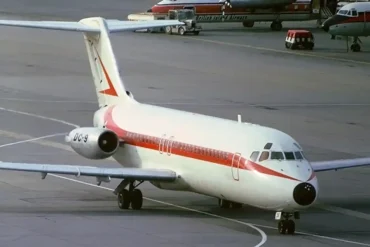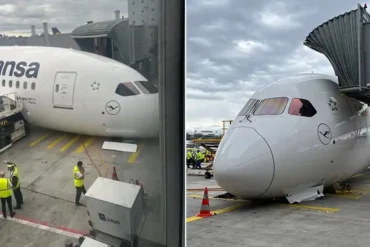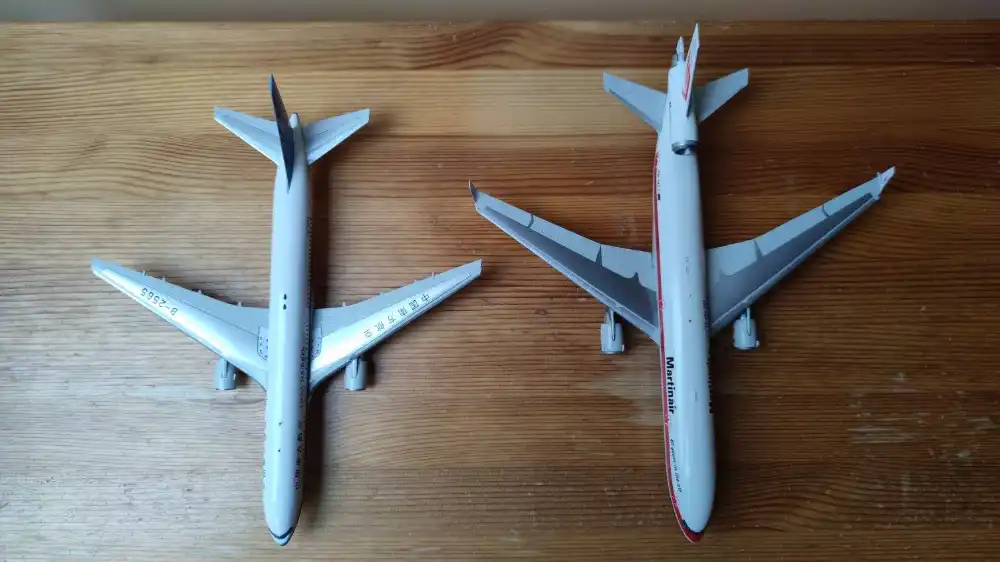
At first glance, the Boeing 767 and the McDonnell Douglas MD-11 appear to belong to entirely different design philosophies. One is a highly efficient twin-engine widebody that helped redefine long-haul economics. The other is a powerful three-engine trijet, representing the final and most advanced evolution of the DC-10 lineage. Yet beneath their structural differences lies a fascinating common thread: both aircraft are powered by closely related versions of the General Electric CF6 engine family—one of the most successful turbofan programs in aviation history.
Understanding why these two distinct aircraft share such similar engines requires examining the economic, technical, and regulatory forces that shaped commercial aviation during the late 20th century. The story is not simply about engineering convenience. It is about performance optimization, fleet commonality, and the rise of high-bypass turbofan dominance.
The MD-11: A Trijet Designed for Long-Haul Power
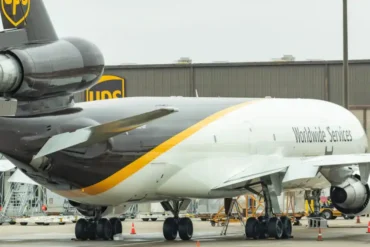
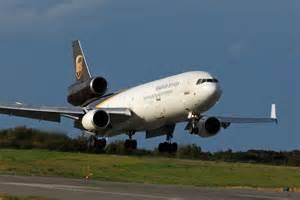
The McDonnell Douglas MD-11, introduced in the late 1980s, was conceived as a long-range successor to the DC-10. Stretching approximately 200 feet in length with a wingspan exceeding 167 feet, it was built for intercontinental missions and heavy payloads. In passenger configuration, it typically seated around 285 passengers, although today it is best known in its freighter role.
The defining feature of the MD-11 is its trijet configuration. Two engines sit beneath the wings, while a third is mounted at the base of the vertical stabilizer. This tail-mounted engine required unique structural reinforcement and airflow engineering, distinguishing it from twin-engine competitors.
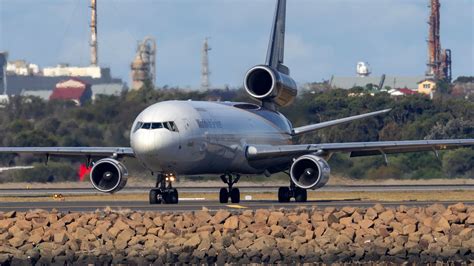
With a maximum takeoff weight of approximately 631,000 pounds, the MD-11 demanded substantial thrust. Its operational range approached 6,800 nautical miles, making it competitive for long-haul international routes during its prime. Today, operators such as FedEx continue to rely on the MD-11 freighter for its payload capabilities and favorable economics as a depreciated asset.
But such performance required a reliable and powerful engine platform. Enter the CF6.
The Boeing 767: The Rise of the Efficient Twin
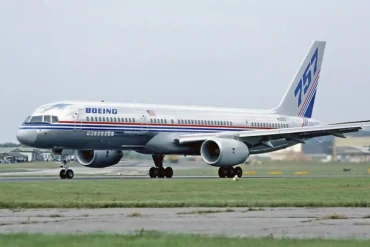
The Boeing 767, launched as the 7X7 program in 1978, represented a shift toward efficient twin-engine widebody operations. Entering service in 1982 with United Airlines, the aircraft quickly earned a reputation for versatility. The popular 767-300ER variant measures just over 180 feet in length and typically carries around 218 passengers in a 2-3-2 configuration.
With a range exceeding 6,000 nautical miles and a maximum takeoff weight of about 412,000 pounds, the 767 demonstrated that two engines—if sufficiently powerful and reliable—could handle transoceanic missions once dominated by three- and four-engine aircraft.
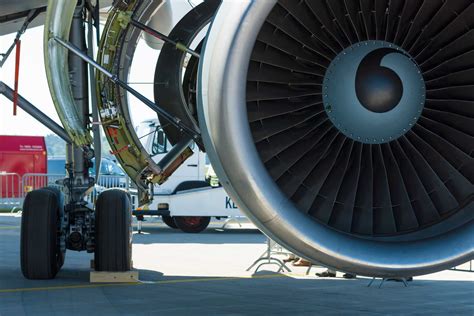
The 767’s adaptability has been remarkable. It serves in passenger, cargo, and military roles, including the KC-46 Pegasus aerial tanker and surveillance platforms such as the E-767. Notably, the 767 Freighter remains in production today, a rare achievement for an aircraft of its generation.
Powering this versatility required engines that balanced fuel efficiency, reliability, and sufficient thrust for ETOPS-certified operations. Once again, the CF6 emerged as a central solution.
The General Electric CF6: A High-Bypass Revolution
The General Electric CF6 traces its lineage to the military TF39 engine developed in the 1960s. When introduced commercially in 1971 on the DC-10, it represented a significant advancement in high-bypass turbofan technology.
A high-bypass turbofan routes a large volume of air around the engine core rather than through it. This design increases fuel efficiency, reduces noise, and improves long-haul performance compared to earlier low-bypass turbofans and turbojets. In practical terms, more of the thrust comes from moving a large mass of air at lower velocity rather than blasting a smaller amount at extreme speed.
Over more than four decades, the CF6 evolved into multiple variants, with more than 5,600 units delivered and nearly half a billion flight hours accumulated. It became one of the most widely installed widebody engines in aviation history.
For both the MD-11 and the 767, the relevant versions were the CF6-80C2 series, albeit in slightly different configurations.
Variant Differences: CF6-80C2B vs CF6-80C2D
While the engines on the MD-11 and 767 share the same family DNA, they are not identical. The CF6-80C2B typically powers the 767, whereas the CF6-80C2D was selected for the MD-11.
The key difference lies in thrust rating and integration requirements.
The MD-11, with its higher maximum takeoff weight, required engines capable of delivering more than 60,000 pounds of thrust each. With three engines installed, the total available thrust exceeded 180,000 pounds. This was essential for meeting performance margins during heavy long-haul departures.
The 767, being lighter, required less total thrust. Two CF6-80C2B engines provided sufficient power for efficient operations. However, because the 767 relied on only two engines, reliability and ETOPS certification became paramount.
Beyond thrust differences, the engine control systems also diverged. Earlier 767 variants used a Power Management Computer (PMC), while more modern CF6 versions incorporate Full-Authority Digital Engine Control (FADEC) systems. FADEC allows complete digital management of engine performance parameters, improving efficiency and reducing pilot workload.
Additionally, the MD-11’s tail-mounted engine required specialized mounting structures and airflow ducting. The center engine’s straight-through duct configuration differs substantially from the underwing pylon mounts used on the 767. While the engine core architecture remains similar, structural and systems integration prevent simple interchangeability.
Why Both Manufacturers Chose the CF6
The shared engine choice was not accidental. Several factors made the CF6 highly attractive to both Boeing and McDonnell Douglas.
First, the engine offered proven performance. By the time the MD-11 and advanced 767 variants were developed, the CF6 had already demonstrated durability across multiple aircraft types.
Second, fleet commonality reduced costs. Airlines operating both the 767 and MD-11—such as FedEx and previously UPS—benefited from standardized maintenance training, spare parts inventories, and technical expertise. In an industry where margins are tight, reducing complexity yields measurable financial advantages.
Third, the CF6 supported regulatory advancements such as ETOPS (Extended-range Twin-engine Operational Performance Standards). ETOPS allowed twin-engine aircraft like the 767 to operate long transoceanic routes previously restricted to aircraft with three or four engines. The CF6’s reliability was instrumental in securing 180-minute ETOPS approval for the 767.
The MD-11 did not require ETOPS due to its three-engine layout, but the same engine family provided operational consistency across fleets.
The Pratt & Whitney Alternative
While the CF6 dominated many configurations, both aircraft were also offered with the Pratt & Whitney PW4000 series. Introduced in the late 1980s, the PW4000 was a successor to the JT9D and powered a wide range of aircraft, including the Airbus A300-600, A310-300, Boeing 747-400, 767 variants, and the MD-11.
The availability of multiple engine options allowed airlines to negotiate favorable maintenance contracts and performance guarantees. However, the CF6’s longevity and installed base gave it a distinct advantage in market penetration.
Engineering Practicalities and Airframe Integration
Engine selection is not simply about thrust figures. Airframe integration involves aerodynamic flow patterns, structural load distribution, fuel system compatibility, and electronic interface alignment.
The MD-11’s tail-mounted engine posed additional complexity. The S-duct airflow design feeding the center engine required careful management to prevent turbulence and efficiency losses. Structural reinforcement around the vertical stabilizer was necessary to support the engine’s mass and thrust forces.
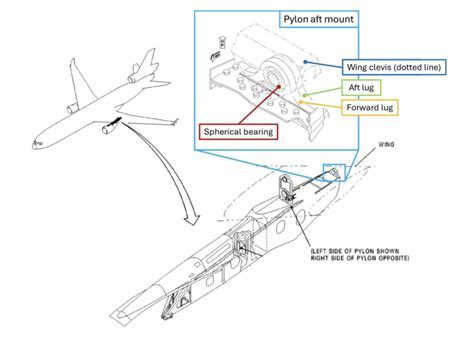
In contrast, the 767’s twin underwing engines provided cleaner airflow and simplified maintenance access. However, relying on two engines increased the importance of redundancy and reliability engineering.
Both aircraft thus required tailored implementations of the same core engine family.
Operational Economics and Longevity
The CF6’s durability became a defining factor in both aircraft programs. Modern turbofan engines are engineered for extended intervals between overhauls, reducing downtime and lifecycle costs. The CF6 established a reputation for long on-wing time and predictable maintenance cycles.
This reliability has extended the service life of both aircraft types. The MD-11 remains active primarily as a freighter, while the 767 continues in passenger, cargo, and military service. The fact that the CF6 remains in production for the 767 Freighter underscores its enduring relevance.
Beyond commercial aviation, CF6 derivatives power military transport aircraft and even serve aboard Air Force One. Few engine programs achieve such cross-platform success.
A Convergence of Technology and Timing
The shared engine heritage of the Boeing 767 and McDonnell Douglas MD-11 reflects a pivotal era in aviation. By the late 20th century, turbofan technology had matured to the point where a single engine family could power vastly different aircraft configurations—twinjets and trijets alike.
It was a convergence of technological capability, economic pressure, and regulatory evolution. The CF6 delivered the thrust required for heavy trijet operations while offering the reliability necessary for twin-engine transoceanic flight.
In essence, the engines are similar because the industry reached a moment when one well-engineered platform could satisfy diverse operational demands. The CF6 became a standardized solution to the widebody equation.
The Boeing 767 and McDonnell Douglas MD-11 may look different in silhouette, but at their core they share a common heartbeat—one forged in the high-bypass revolution and sustained by decades of operational excellence.