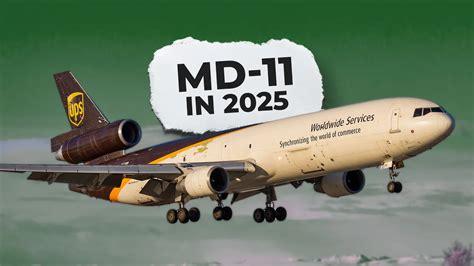
The world of commercial aviation treats aircraft names as far more than branding. A designation such as Boeing 747, Airbus A320, or McDonnell Douglas MD-11 represents decades of engineering documentation, certification records, airline training programs, and operational procedures. Changing that name after an aircraft has already entered service is not like rebranding a consumer product—it touches nearly every technical and regulatory system surrounding the aircraft.
When Boeing acquired McDonnell Douglas in 1997, the industry naturally wondered what would happen to the existing aircraft programs. The companies had been fierce competitors for decades, and suddenly Boeing found itself responsible for aircraft carrying the McDonnell Douglas badge. Among those aircraft, the MD-11 widebody tri-jet stood out as the most visible legacy program still in production.
Yet Boeing made a deliberate decision: the aircraft would remain the McDonnell Douglas MD-11 rather than becoming something like the Boeing 611 or Boeing 1011. That choice reflected not marketing laziness but a practical understanding of how aircraft certification, airline operations, and market economics actually work.
By the time the merger was completed, the MD-11 was already an established aircraft type, flying passengers and cargo around the world. Renaming it would have created complexity without delivering any real commercial benefit. The story reveals something fascinating about aviation: sometimes the most powerful brand decision is leaving a name exactly as it is.
The Origins of the MD-11: A Modernized Evolution of the DC-10
Before understanding Boeing’s decision, it helps to understand what the MD-11 actually represented within the evolution of commercial aircraft design.
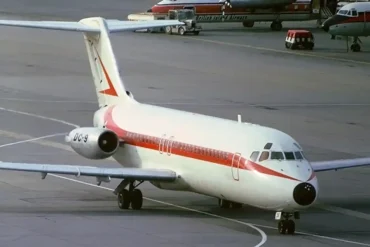
The aircraft emerged from McDonnell Douglas’ effort to modernize the DC-10, one of the most recognizable tri-jet airliners ever built. The DC-10 first entered service in the early 1970s and quickly became a staple of long-haul travel. However, by the 1980s airlines were demanding aircraft with greater range, improved fuel efficiency, and reduced crew requirements.
McDonnell Douglas responded with the MD-11 program. Rather than building an entirely new aircraft from scratch, engineers took the DC-10’s fundamental architecture and significantly refined it.
The resulting aircraft incorporated several major upgrades:
- A longer fuselage, allowing greater passenger capacity and cargo volume
- Winglets, which improved aerodynamic efficiency and reduced fuel burn
- New-generation turbofan engines from manufacturers such as General Electric and Pratt & Whitney
- Advanced avionics systems that replaced older analog flight instruments
Perhaps the most important change was inside the cockpit. The Advanced Common Flightdeck, a glass cockpit system, allowed the aircraft to operate with two pilots instead of three, eliminating the traditional flight engineer position.
This transition mirrored a broader technological shift happening across aviation during the late twentieth century. Digital avionics and automated systems allowed widebody aircraft to simplify cockpit crews, reducing operating costs while maintaining safety.
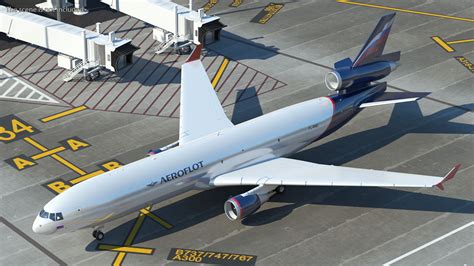
The MD-11 first flew in 1990 and entered airline service the following year. With a typical capacity between 300 and 400 passengers, it was designed to fill a niche between smaller twin-engine widebodies and the massive Boeing 747.
For airlines seeking high capacity and long range without operating a jumbo jet, the MD-11 initially appeared to be a compelling option.
A Tri-Jet Entering a Twin-Engine World
The early 1990s represented a pivotal moment in commercial aviation. Aircraft technology was rapidly shifting toward high-efficiency twin-engine designs, a trend that would reshape airline fleets over the following decades.
For many years, long-haul flights over oceans required aircraft with three or four engines due to safety regulations. These restrictions were based on the assumption that a twin-engine aircraft could not safely reach a diversion airport after losing an engine.
That assumption began to change with the introduction of ETOPS certification—Extended-range Twin-engine Operational Performance Standards. ETOPS allowed twin-engine aircraft to operate on long oceanic routes provided they met strict reliability standards.
This regulatory evolution transformed aircraft economics. Twin-engine aircraft were simply cheaper to operate because they had:
- Fewer engines to maintain
- Lower fuel consumption
- Reduced weight
- Simpler maintenance logistics
While the MD-11 represented the most advanced tri-jet ever produced, it entered service at precisely the moment when the industry was pivoting toward aircraft like the Boeing 777 and Airbus A330.
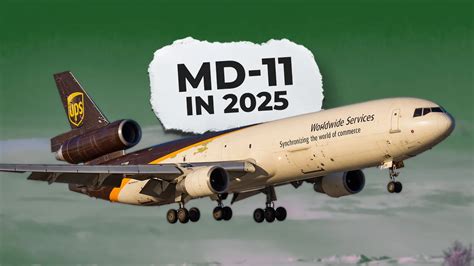
Those twin-engine aircraft offered comparable range with significantly better operating economics. Airlines that once relied on tri-jets increasingly transitioned to the new generation of long-range twins.
As a result, the commercial window for the MD-11 gradually narrowed. The aircraft still performed well operationally, but the economics favored newer designs.
Only 200 MD-11 aircraft were ultimately built, a relatively small production run compared with other widebody programs.
Airlines That Built Their Networks Around the MD-11
Despite its challenging market timing, the MD-11 still played an important role in global aviation during the 1990s and early 2000s. Several major airlines built portions of their long-haul networks around the aircraft.
Carriers including Swissair, KLM, Delta Air Lines, Finnair, and China Eastern Airlines operated significant MD-11 fleets. For these airlines, the aircraft offered a useful combination of passenger capacity and intercontinental range.
In many cases the MD-11 served routes that required more capacity than a Boeing 767 but did not justify the enormous size of a Boeing 747. That middle-ground capability made it particularly useful on transatlantic routes and long-distance regional services.
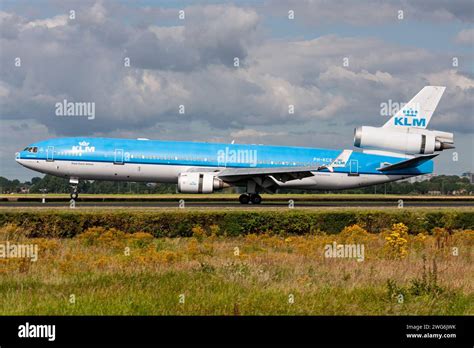
However, the economics of the aircraft eventually led airlines to phase it out of passenger service. Newer twin-engine aircraft delivered lower operating costs and greater flexibility.
By the early 2010s, most passenger MD-11 fleets had disappeared from commercial airline service.
Yet the aircraft found a second life in a different role—air cargo operations.
The Cargo Aircraft That Refused to Fade Away
While passenger airlines gradually retired the MD-11, cargo operators discovered that the aircraft possessed a unique combination of payload capacity, range, and cargo volume.
These characteristics made it particularly valuable for international freight operations.
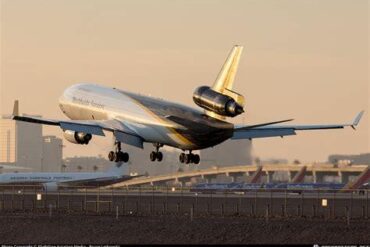
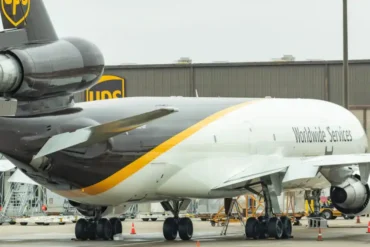
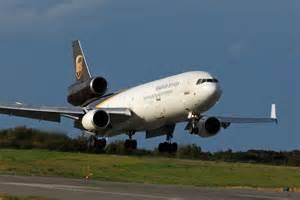
Companies such as FedEx, UPS, and Lufthansa Cargo became the largest MD-11 operators in the world. Among them, FedEx built one of the largest MD-11 fleets ever assembled, using the aircraft to connect global logistics hubs.
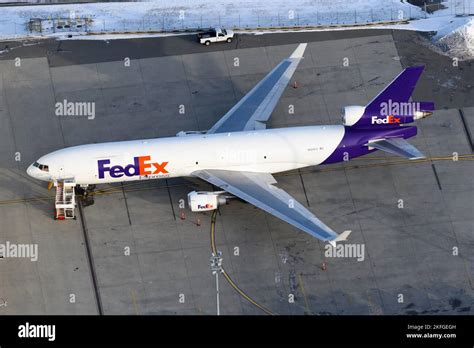
For cargo carriers, the economics looked different from passenger airlines. Cargo aircraft prioritize payload capacity and internal volume rather than passenger comfort or seating density.
The MD-11’s large fuselage and strong structural design made it ideal for transporting high-volume freight across continents.
Even as newer freighters like the Boeing 777F began entering service, the MD-11 remained a valuable workhorse for many cargo operators.
This extended operational life further explains why renaming the aircraft would have been unnecessary—and potentially disruptive.
Why Boeing Chose Not to Rename the MD-11
When Boeing completed its acquisition of McDonnell Douglas on August 1, 1997, the MD-11 program had already reached full maturity.
The aircraft was:
- Fully certified by aviation regulators
- Operating with multiple airlines worldwide
- Supported by extensive maintenance documentation
- Embedded within airline training programs
Changing the aircraft’s name would have required revising a massive ecosystem of technical documentation.
Aircraft certification involves thousands of documents, including maintenance manuals, parts catalogs, training guides, safety bulletins, and regulatory approvals. All of these materials referenced the MD-11 designation.
Renaming the aircraft would have required updates across:
- Airline training programs
- Maintenance documentation
- Leasing contracts
- Insurance paperwork
- regulatory certification documents
The aviation industry values clarity and consistency above marketing aesthetics. Confusion surrounding aircraft identification could affect maintenance procedures, pilot training, and operational safety.
Because the aircraft was already deeply integrated into airline fleets, the cost of renaming it would have outweighed any marketing advantage.
A Program Already Approaching the End of Production
Another decisive factor was simple economics.
By the late 1990s, the sales momentum of the MD-11 had already slowed significantly. Airlines increasingly preferred newer twin-engine widebodies.
Boeing quickly evaluated the future of the program after the merger. The conclusion was straightforward: there was insufficient demand to justify long-term production.
In 1998, Boeing announced plans to phase out MD-11 manufacturing once the remaining order backlog had been completed.
Production ultimately ended in 2000.
Given that the aircraft was already heading toward the end of its manufacturing lifecycle, investing resources in a global rebranding campaign made little sense.
Boeing’s focus shifted toward aircraft that represented the future of its product line, particularly the Boeing 777 and later the Boeing 787 Dreamliner.
The Boeing 717: A Rare Exception to the Rule
Interestingly, Boeing did rename another McDonnell Douglas aircraft after the merger.
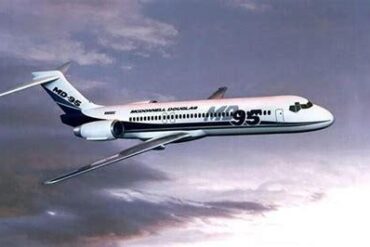
The aircraft originally known as the MD-95 became the Boeing 717.
At first glance this seems inconsistent. Why rename one aircraft but not another?
The answer lies in timing.
The MD-95 program was still in its early stages when Boeing acquired McDonnell Douglas. The aircraft had not yet gained a large customer base, and it had not entered widespread service.
Because the aircraft was still being marketed to airlines, Boeing saw an opportunity to reposition it within its own product lineup.
Rebranding the MD-95 as the Boeing 717 allowed the manufacturer to present the aircraft as part of the Boeing family rather than as a legacy McDonnell Douglas design.
The change also fit Boeing’s traditional three-digit numbering system.
In short, the 717 was a marketing decision designed to attract new customers, whereas the MD-11 was already an operational reality.
The Curious Case of the MD-10 Conversion
Aircraft naming sometimes reflects operational changes rather than corporate branding. The MD-10 provides a fascinating example.
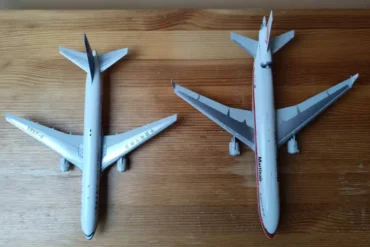
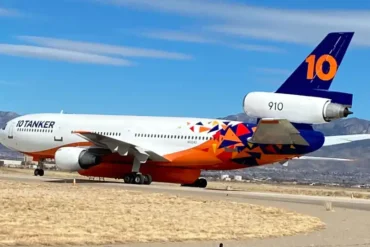
The MD-10 was not a completely new aircraft. Instead, it was a modernized version of the older DC-10.
Cargo giant FedEx initiated a program to upgrade its DC-10 fleet with the same Advanced Common Flightdeck used in the MD-11.
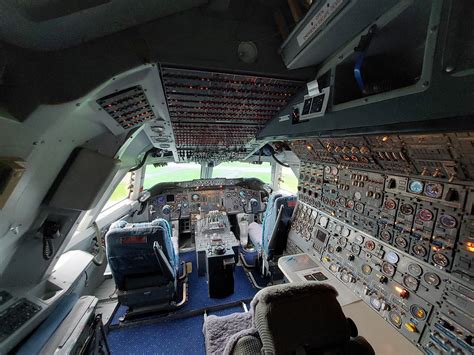
The retrofit replaced the traditional three-crew cockpit with a two-pilot glass cockpit system, significantly reducing operating costs.
Because the cockpit layout matched the MD-11, pilots could easily transition between the two aircraft types.
This commonality allowed airlines to simplify pilot training, spare parts inventories, and operational procedures.
The modified aircraft received a new designation—MD-10—to indicate the technological upgrade, even though the airframe remained fundamentally a DC-10.
Interestingly, aviation regulators treat both aircraft similarly. The FAA uses a shared type rating for MD-10 and MD-11 aircraft, allowing pilots qualified on one to operate the other.
Branding Versus Operational Reality in Aviation
The MD-11 story highlights a broader truth about aviation: aircraft names carry operational weight far beyond marketing value.
For passengers, a name like Boeing 737 or Airbus A350 may simply identify the aircraft on a ticket or safety card.
For airlines and regulators, however, the name connects to an entire ecosystem of engineering specifications, safety approvals, training systems, and maintenance procedures.
Changing that name after the aircraft enters service would ripple through thousands of operational processes.
Because of this complexity, aircraft manufacturers rarely rename existing aircraft types unless a major structural change justifies it.
The Legacy of the MD-11
Although the MD-11 never achieved the commercial success originally envisioned, it remains one of the most distinctive aircraft designs of the late twentieth century.
Its three-engine configuration, winglets, and stretched fuselage made it instantly recognizable in the skies.
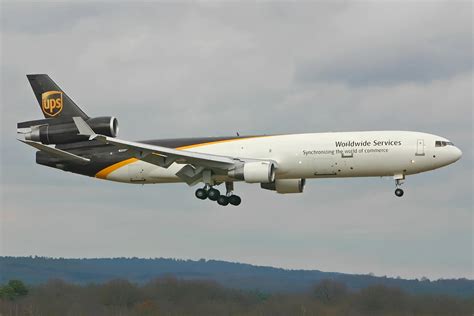
More importantly, the aircraft played a transitional role in aviation history. It represented the final generation of long-range tri-jet airliners, arriving just as twin-engine aircraft began dominating long-haul travel.
Today the MD-11 survives primarily in cargo operations, where its payload capability continues to prove useful even decades after its introduction.
The aircraft’s enduring presence in global freight networks demonstrates that commercial success is not always measured solely by production numbers.
The Bottom Line
Boeing did not rename the McDonnell Douglas MD-11 because the aircraft was already a fully established product by the time the 1997 merger occurred. Airlines around the world were already flying it, training pilots for it, and maintaining it under that designation.
Renaming the aircraft would have required extensive regulatory changes, operational adjustments, and documentation updates—all for a program whose production life was nearing its conclusion.
In contrast, the Boeing 717 represented a young aircraft program that still needed market momentum, making rebranding a useful strategy.
The MD-11 therefore retained its original identity, becoming a rare example of a major aircraft that continued to carry its predecessor company’s name long after a historic industry merger.
In aviation, where precision matters more than marketing flourish, continuity often wins. The MD-11 name remained because the entire global aviation system already understood exactly what it meant.