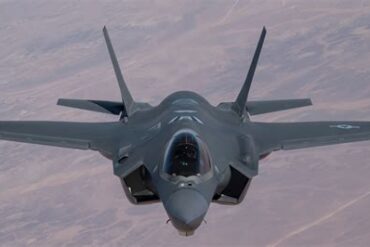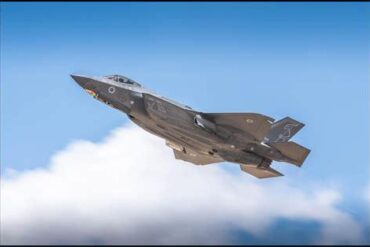
The Lockheed Martin F-35B Lightning II is often described as one of the most technologically sophisticated fighter aircraft ever built. Its ability to perform short takeoffs and vertical landings (STOVL) allows it to operate from amphibious assault ships, improvised airfields, and damaged runways where conventional fighters simply cannot. That unique capability has also fueled one of military aviation’s most persistent myths—that the F-35B is little more than an American copy of the Soviet Yakovlev Yak-141.
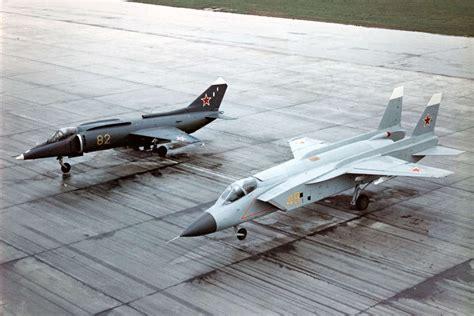
The reality is far more fascinating than the myth. The Soviet Yak-141, also known as the Yak-41M, was one of the most ambitious vertical takeoff fighter programs ever attempted. It became the world’s first supersonic aircraft capable of transitioning between vertical and horizontal flight, only to see its future destroyed after a dramatic carrier landing accident in 1991. Although the aircraft never entered operational service, its engineering work did not disappear with the collapse of the Soviet Union. Instead, portions of its research quietly found their way into Western aerospace development through a partnership between Yakovlev and Lockheed during the 1990s.
Rather than creating a direct copy, that collaboration allowed American engineers to study years of Soviet experimentation, avoid costly mistakes, and refine concepts that would eventually become part of the F-35B’s entirely different propulsion system. In many ways, the Yak-141 became one of aviation history’s greatest “what if” aircraft—an advanced fighter that never served in combat but still influenced one of the most successful military aircraft programs of the twenty-first century.
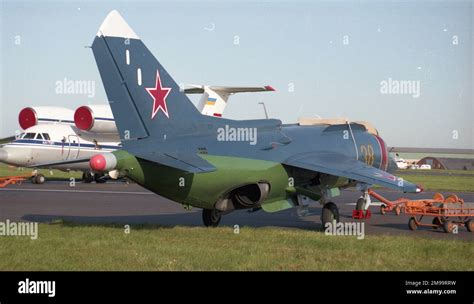
Why The Soviet Union Needed A Supersonic Jump Jet
Following the Second World War, aircraft carriers transformed from supporting naval assets into the centerpiece of global naval power. The United States demonstrated this during its Pacific campaign, where large carrier strike groups projected air superiority across thousands of miles of ocean. Massive ships carrying dozens of fighters allowed naval forces to strike virtually anywhere without relying on overseas airfields.
The Soviet Union recognized the importance of naval aviation much later. Unlike the United States, it never invested in a fleet of large fleet carriers comparable to the Essex-class or later Nimitz-class vessels. Instead, Soviet naval planners pursued a different philosophy centered on smaller aviation cruisers capable of operating vertical takeoff and landing aircraft.
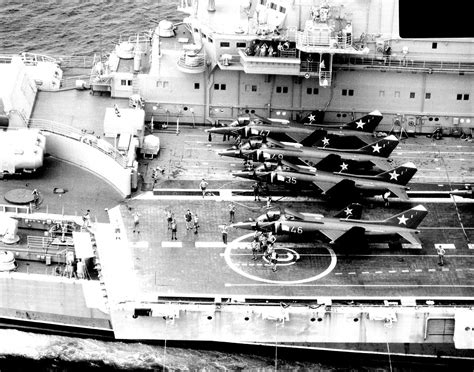
This strategy led to the introduction of the Kiev-class aircraft carriers during the mid-1970s. These ships combined guided missile weaponry with a modest flight deck designed primarily for helicopters and the Yak-38 Forger, the Soviet Union’s first operational STOVL fighter.
The concept appeared promising on paper. A fighter capable of taking off without catapults and landing vertically could dramatically reduce carrier size while maintaining valuable air support capabilities. Unfortunately, the Yak-38 quickly revealed the enormous engineering compromises required to achieve vertical flight using Cold War technology.
The Yak-38 Exposed The Limits Of Early STOVL Technology
The Yak-38 represented an impressive engineering accomplishment for its time, yet its operational effectiveness remained severely limited. Unlike contemporary Western fighters, it lacked onboard radar, making interception missions almost impossible beyond visual range. Pilots depended largely on visual identification before engaging enemy aircraft, placing them at a significant disadvantage against opponents equipped with modern radar-guided missiles.
Ground attack capabilities also proved underwhelming. The aircraft carried relatively small bomb loads and suffered from limited range, particularly when operating in vertical takeoff mode. Every kilogram dedicated to lift engines reduced available fuel or weapons, forcing difficult compromises during mission planning.
Perhaps most critically, the Yak-38’s overall performance left Soviet carrier battle groups vulnerable. While surface-to-air missile systems aboard Kiev-class carriers provided substantial defensive firepower, the fleet lacked a truly capable airborne interceptor capable of contesting modern naval fighters.
These shortcomings convinced Soviet military planners that an entirely new generation of STOVL aircraft would be required if the Soviet Navy hoped to challenge Western naval aviation.
The Yak-141 Became The World’s First Supersonic Vertical Landing Fighter
Recognizing the Yak-38’s deficiencies, Soviet authorities officially launched development of an advanced successor in 1974. The resulting aircraft, designated the Yak-141, aimed to eliminate nearly every weakness of its predecessor.
Unlike the Yak-38, the Yak-141 featured modern radar, dramatically improved speed, greater payload capacity, and true fleet defense capability. Even more impressive was its propulsion system. Engineers designed an aircraft capable of transitioning from vertical hover into supersonic forward flight—a feat no previous aircraft had successfully demonstrated.
Development proved lengthy and technically demanding. By December 1989, the first prototype successfully hovered under its own power. Several months later, the aircraft completed the world’s first transition from vertical takeoff into sustained supersonic horizontal flight before returning safely for landing.
These achievements established the Yak-141 as one of the most advanced experimental aircraft of its era. During testing, it accumulated twelve world aviation records, showcasing the remarkable sophistication of Soviet aerospace engineering despite the country’s mounting economic troubles.
For a brief period, the Yak-141 appeared poised to become the Soviet Navy’s next-generation carrier fighter and perhaps redefine naval aviation altogether.
The Carrier Deck Accident That Ended The Program
The Yak-141’s breakthrough achievements ultimately could not overcome one catastrophic moment.
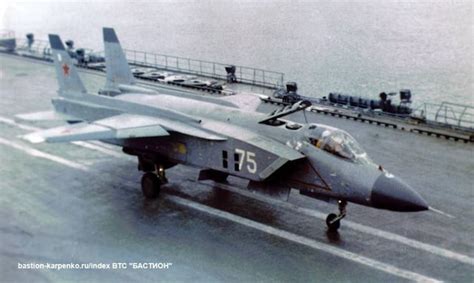
On September 26, 1991, a prototype successfully landed aboard the aircraft carrier Admiral Gorshkov, demonstrating that the aircraft could operate from sea exactly as designers intended. Less than two weeks later, disaster struck.
During another carrier landing on October 5, 1991, one prototype descended too aggressively. The impact ruptured a fuel tank, causing an immediate fire that rapidly engulfed the aircraft. Although the pilot safely ejected, the dramatic accident effectively halted flight testing.
Standing alone, the crash may not have doomed the project. Military aircraft frequently recover from prototype losses during development. However, timing proved devastating. The Soviet Union itself was collapsing politically and economically. Defense budgets evaporated almost overnight, military priorities shifted dramatically, and ambitious aviation programs became unaffordable luxuries.
The Yak-141 entered suspension almost immediately after the accident, never receiving the funding required to continue development or enter serial production.
Its career ended after only a handful of prototypes had flown.
How Lockheed Gained Access To Yak-141 Technology
The Soviet Union’s collapse unexpectedly created opportunities for cooperation that would have been unimaginable during the Cold War.
With government funding disappearing, the Yakovlev Design Bureau struggled simply to preserve its remaining prototypes and engineering workforce. Meanwhile, Lockheed, which would later merge into Lockheed Martin, was competing to develop America’s future STOVL strike fighter.
Rather than purchasing an aircraft design, Lockheed entered into a cooperative engineering agreement with Yakovlev during the early 1990s. Reports suggest that the American company provided between $300 million and $400 million in financial assistance, allowing Yakovlev to continue portions of its research while giving Lockheed access to extensive flight-test data accumulated during years of Soviet experimentation.
For aerospace engineers, this data represented enormous value. Vertical flight presents countless aerodynamic challenges involving hot exhaust gases, aircraft stability, transition control, and structural stress. Learning from completed testing can eliminate years of expensive experimentation.
Importantly, the agreement did not transfer an operational fighter design. Instead, it transferred engineering knowledge—particularly regarding thrust-vectoring nozzles and STOVL flight behavior.
Why The F-35B Is Not A Copy Of The Yak-141
One of the most common misconceptions surrounding the F-35B claims that it simply copied the Yak-141’s propulsion system. While superficial similarities exist, the engineering differences are profound.
The Yak-141 relied upon one primary afterburning engine accompanied by two dedicated lift engines positioned vertically behind the cockpit. During conventional flight, those lift engines became dead weight, consuming valuable internal volume while contributing nothing to propulsion.
The F-35B, by contrast, employs an entirely different architecture centered around the Pratt & Whitney F135-PW-600 engine working alongside the Rolls-Royce LiftSystem.
Instead of carrying unused lift engines throughout every mission, the F-35B transfers engine power through a shaft to a large vertically mounted lift fan located immediately behind the cockpit. During vertical operations, the lift fan provides upward thrust while a sophisticated Three-Bearing Swivel Module (3BSM) rotates the engine exhaust downward. Additional roll-control nozzles within the wings maintain lateral stability throughout hover.
This integrated arrangement produces significantly greater lifting efficiency while reducing the penalties associated with permanently installed lift engines.
Although both aircraft feature rotating exhaust nozzles, the complete propulsion systems operate according to fundamentally different engineering principles.
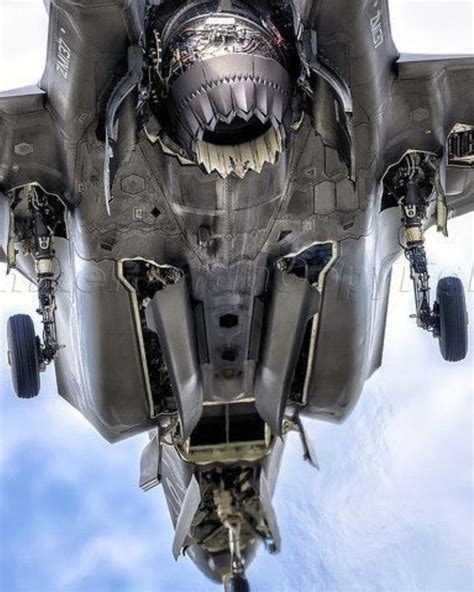
Engineering Lessons That Quietly Crossed The Cold War Divide
Innovation rarely occurs in complete isolation. Throughout aviation history, competing nations have frequently studied one another’s technological breakthroughs whenever opportunities emerged.
The Yak-141 demonstrated practical solutions to numerous STOVL challenges, including nozzle durability, thermal management, transition stability, and thrust vector control. Lockheed engineers benefited enormously from reviewing real-world flight testing instead of beginning every experiment from scratch.
That does not diminish the achievement of the F-35B program. Developing an operational fifth-generation stealth fighter capable of vertical flight required solving vastly more complicated problems involving stealth shaping, sensor fusion, digital flight controls, thermal signatures, structural materials, and integrated software.
The Soviet research served as one valuable source of engineering insight within a much larger American development effort rather than acting as a complete blueprint.
In many respects, the relationship resembled scientists building upon earlier discoveries. Previous work shortens development time, but entirely new engineering remains necessary to produce a fundamentally different system.
Why STOVL Aircraft Still Matter In Modern Warfare
The strategic importance of STOVL fighters extends well beyond impressive demonstrations of vertical landings.
The United States Marine Corps operates as an expeditionary force designed to deploy rapidly during crises. Marine Expeditionary Units travel aboard Amphibious Ready Groups, carrying infantry, helicopters, tiltrotor aircraft, logistics personnel, and fixed-wing aviation together.
Unlike conventional Air Force fighters operating from established bases, F-35Bs can launch directly from amphibious assault ships or temporary forward operating locations located much closer to combat zones. This dramatically reduces response times while decreasing dependence on vulnerable large airfields.
The aircraft can support missions including amphibious assaults, humanitarian operations, maritime security, crisis response, close air support, and precision strike operations without requiring full-sized aircraft carriers.
Operational flexibility has become even more valuable as military planners increasingly anticipate conflicts where traditional airbases may come under missile attack. The ability to disperse aircraft across smaller locations complicates enemy targeting while improving overall force survivability.
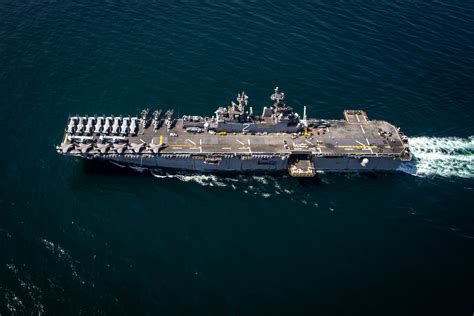
Combat operations first validated these concepts in 2018, when Marine Corps F-35Bs flying from USS Essex conducted strike missions against Taliban targets in Afghanistan, demonstrating that STOVL capability could deliver meaningful operational advantages rather than merely engineering novelty.
The Yak-141’s Greatest Legacy Was Never Entering Service
The Yak-141 occupies an unusual place in aviation history. It failed to reach operational squadrons, never defended a Soviet carrier group, and disappeared almost as quickly as it emerged. Yet its influence extended far beyond the handful of prototypes that ever flew.
Its successful demonstration of supersonic vertical flight proved that ambitious STOVL concepts were technically achievable. The aircraft generated invaluable engineering knowledge precisely at the moment when geopolitical changes made international collaboration briefly possible. Lockheed’s access to Yakovlev’s research accelerated understanding of complex thrust-vectoring challenges, even though the American company ultimately pursued an entirely different propulsion solution.
Today, the F-35B stands as the world’s premier operational STOVL fighter, serving not only the United States Marine Corps but also allied air arms and navies across multiple continents. Its combination of stealth, advanced sensors, precision strike capability, and expeditionary flexibility bears little resemblance to the Cold War aircraft that indirectly informed parts of its development.
The Yak-141 therefore deserves recognition not because it became the world’s next great naval fighter, but because its unfinished story quietly helped shape one that did. Its fiery end aboard a Soviet carrier deck marked the conclusion of one remarkable aviation program, yet the engineering lessons it produced continued flying long after the aircraft itself had disappeared from history.