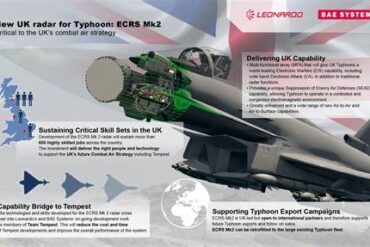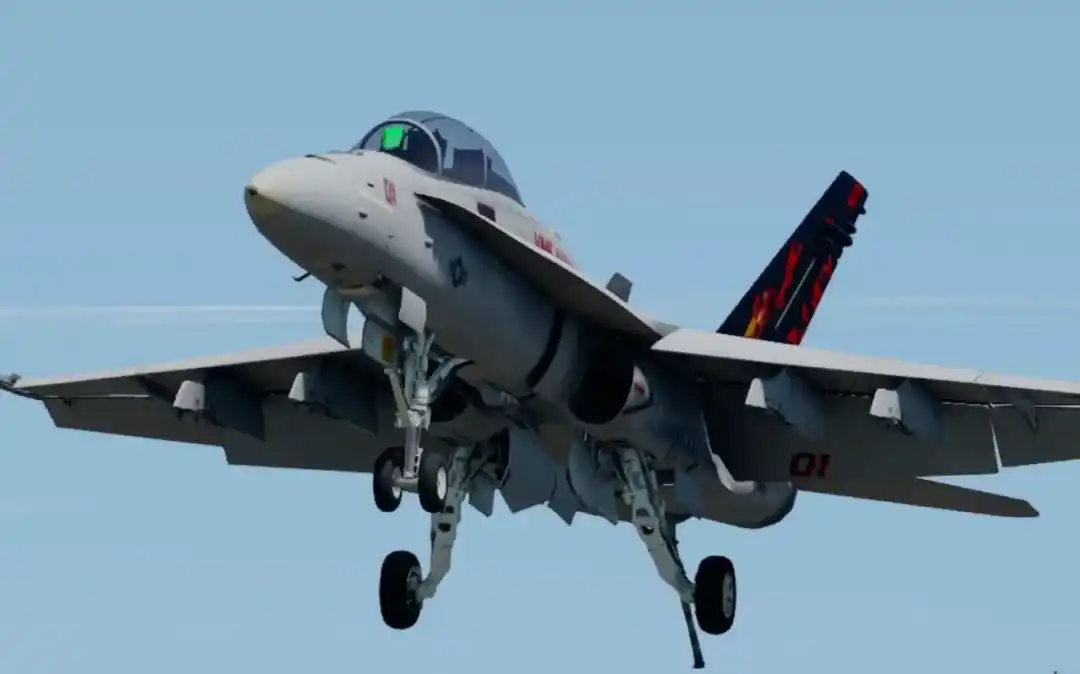
The F/A-18 Hornet and its advanced Super Hornet variant have undergone significant radar upgrades, enhancing their combat effectiveness in modern aerial warfare. From the early AN/APG-65 to the cutting-edge AN/APG-79 AESA radar, these advancements have provided superior situational awareness, target tracking, and electronic warfare capabilities.
AN/APG-65 Radar: The Early Standard
Introduced with the F/A-18A and F/A-18C models, the AN/APG-65 was a pulse-Doppler radar operating in the I/J bands (8-12.5 GHz). It had a maximum detection range of approximately 120 km, making it capable of engaging targets beyond visual range (BVR).
Key Features
- Air-to-Air Modes: Included velocity search, track-while-scan (TWS), and single-target tracking, enabling engagement of multiple threats.
- Air-to-Ground Capability: Provided real-time terrain mapping and Doppler beam sharpening for enhanced ground-target detection.
- Weapons Integration: Compatible with AIM-7 Sparrow medium-range missiles, allowing for mid-course guidance and precise targeting.
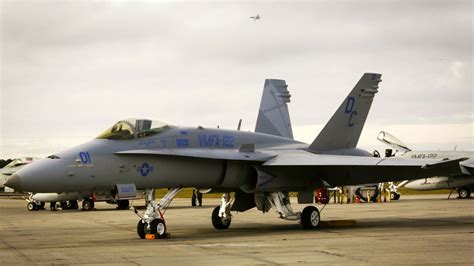
While revolutionary for its time, the APG-65 had limited processing power and resolution constraints, necessitating an upgrade for improved combat performance.
AN/APG-73 Radar: Enhanced Resolution and Reliability
A successor to the AN/APG-65, the AN/APG-73 introduced greater processing speed, increased reliability, and improved synthetic aperture radar (SAR) functionality. It was installed on later F/A-18C/D models and the early F/A-18E/F Super Hornets.
Advancements Over APG-65
- Higher Resolution: Enhanced radar imagery for precise ground-target identification.
- Synthetic Aperture Radar (SAR): Allowed for high-resolution ground mapping, crucial for targeting precision-guided munitions (PGMs).
- Integration with SHARP Pod: Supported the Shared Reconnaissance Pod (SHARP), enabling electro-optical/infrared (EO/IR) image collection at a slant range of 83 km.
- Improved Low-Altitude Penetration: Assisted in terrain-following flight and precision strikes with JDAMs (Joint Direct Attack Munitions).
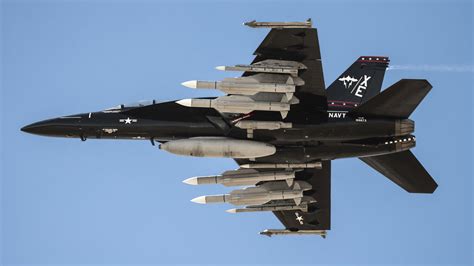
Despite these upgrades, mechanical radar scanning limited its multi-target tracking speed and electronic warfare resilience, prompting the need for an Active Electronically Scanned Array (AESA) solution.
AN/APG-79 AESA Radar: The Cutting Edge
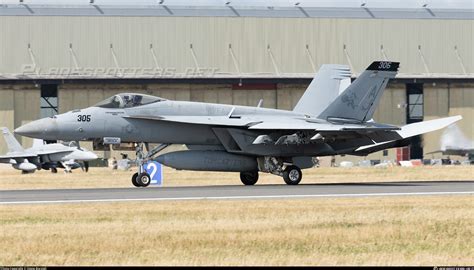
The AN/APG-79 represents the most significant technological leap in the F/A-18E/F Block II and Block III models. Featuring AESA technology, it provides superior detection, tracking, and electronic warfare capabilities.
Core Features
- Extended Detection Range: Capable of detecting and tracking multiple airborne targets at significantly greater distances than mechanically scanned predecessors.
- Simultaneous Multi-Target Tracking: Can track over 10 targets simultaneously, prioritizing high-threat engagements.
- Electronic Warfare (EW) Integration: Includes Electronic Support Measures (ESM) and Electronic Countermeasures (ECM), reducing reliance on dedicated EW aircraft like the EA-18G Growler.
- Broad Frequency Spectrum: Operates from 0.5 GHz to 40 GHz, allowing for enhanced jamming resistance and improved electronic attack capabilities.
Integration with Electronic Warfare Systems
Integrated Defensive Electronic Countermeasures (IDECM)
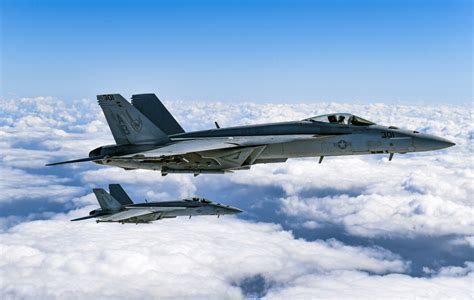
The IDECM system, composed of the AN/ALQ-214 electronic countermeasure pod and AN/ALR-67(V)3 radar warning receiver, works in conjunction with APG-79 to provide multi-layered electronic defense.
- Jamming Capabilities: Can disrupt enemy radar and missile guidance systems.
- Automatic Threat Response: Identifies and prioritizes threats, deploying countermeasures accordingly.
- Data Fusion: Shares radar intelligence with allied aircraft via secure datalinks, enabling coordinated electronic warfare tactics.
Future Developments: Block III Enhancements and Unmanned Integration
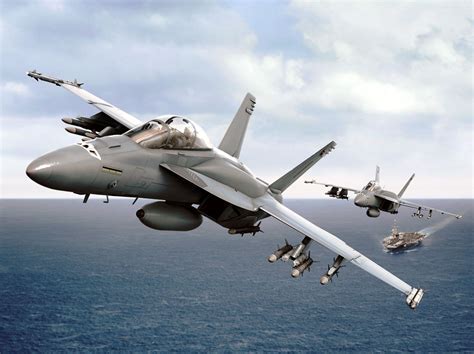
With the introduction of the F/A-18E/F Block III, the AN/APG-79(V)4 variant is being further enhanced with Artificial Intelligence (AI)-assisted target recognition and low-observable target detection.
Key Upgrades
- AI-Assisted Targeting: Uses machine learning algorithms to analyze radar returns for faster and more accurate threat identification.
- Improved Sensor Fusion: Integrates data from satellites, ground stations, and other aircraft, forming a network-centric combat picture.
- Unmanned Aerial Vehicle (UAV) Collaboration: Can share radar data with UAVs, extending situational awareness and improving coordinated strike missions.
Conclusion
The evolution of F/A-18 radar technology from the AN/APG-65 to the AN/APG-79 AESA reflects a transition from basic pulse-Doppler systems to multi-role, networked combat solutions. The AN/APG-79 AESA radar not only enhances air-to-air and air-to-ground capabilities but also incorporates electronic warfare functions, allowing the F/A-18 Super Hornet to dominate modern battlefields. As future developments progress, integrating AI-driven targeting and UAV networking, the F/A-18’s radar system will remain at the forefront of carrier-based airpower.
FAQ
1. How does the AN/APG-79 AESA radar improve combat effectiveness?
The AN/APG-79 AESA radar enhances multi-target tracking, extends detection range, and integrates electronic warfare functions, allowing F/A-18 pilots to detect and engage threats with superior precision and survivability.
2. Can the F/A-18 Super Hornet operate effectively without dedicated electronic warfare support?
Yes. Thanks to the AN/APG-79’s integrated electronic warfare features, the Super Hornet can conduct electronic attack missions independently, reducing the need for a dedicated EA-18G Growler.
3. What are the future upgrades planned for the F/A-18 radar system?
Future upgrades include the AN/APG-79(V)4 variant, which will integrate AI-assisted targeting, enhanced low-observable target detection, and UAV collaboration, significantly boosting the Super Hornet’s battlefield adaptability.