In a decisive move set to reshape low-cost air travel across Europe, Ryanair has announced a significant 20% increase in the size allowance for free cabin baggage. This marks a pivotal shift in customer experience strategy for the continent’s largest budget airline and arrives at a time when the European Union and its aviation regulators push for standardized baggage policies across carriers. The initiative not only enhances Ryanair’s competitiveness but also reinforces the growing momentum behind harmonizing passenger rights and expectations across European skies.
Ryanair’s 20% Cabin Bag Boost: What Passengers Can Expect
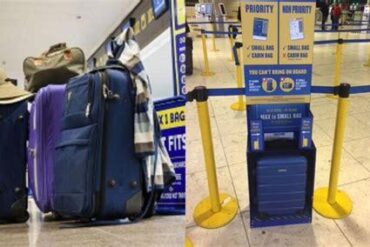
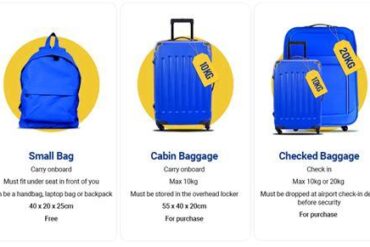
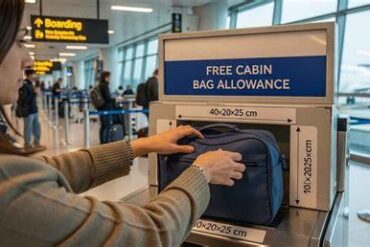
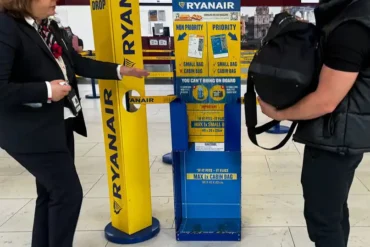
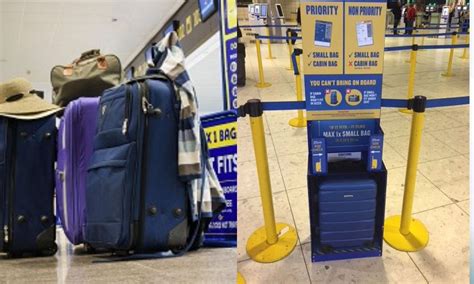
Ryanair will soon roll out the new dimensions for its free cabin bag policy, expanding capacity in response to consumer pressure and ongoing industry discussions. This expansion applies to the free cabin bag all passengers are allowed to bring on board. The new standard will be implemented via adjusted airport bag sizers, enabling travelers to carry slightly larger items without incurring additional costs.
The previous dimensions—frequently a source of confusion and frustration—will be replaced by roomier allowances, though Ryanair has not specified the exact new measurements as of press time. The airline’s representative confirmed that this change will apply across all European routes, meaning passengers won’t be subjected to inconsistent enforcement depending on their departure airport.
This 20% increase, while modest in numbers, is significant in operational terms. It is intended to reduce boarding gate friction, prevent last-minute bag rejections, and improve passenger satisfaction, especially as summer travel demand surges.
EU-Backed Standardization: The Push for Uniform Baggage Policies
The Ryanair policy shift is not happening in isolation. It aligns with a broader EU-wide initiative, driven by Airlines for Europe (A4E) and Transport Commissioner Adina Valean, aiming to bring order to the chaotic disparity in carry-on rules among European airlines.
Under the latest mandate supported by the EU, airlines must allow all passengers to bring on board at least one cabin bag sized 40 x 30 x 15 cm. This sets a minimum industry baseline, intended to provide clarity and predictability for travelers tired of guessing which bag will be allowed by which airline.
A4E’s managing director, Ourania Georgoutsakou, emphasized that this effort will “align A4E members with the decision of member states made last month” and help create a more seamless passenger experience across the continent. This regulatory push is especially timely, as European aviation continues to rebound post-pandemic and travelers demand better service standards.
Diverging Strategies: EasyJet and Wizz Air Remain Unmoved
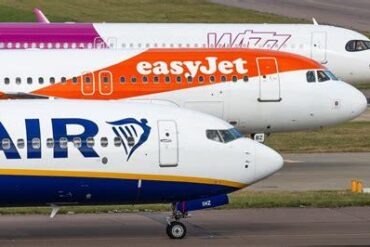
While Ryanair takes a proactive approach, EasyJet and Wizz Air have chosen not to adopt the new EU-backed dimensions for cabin bags. EasyJet’s existing policy permits bags up to 45 x 36 x 20 cm, which already exceeds the EU’s standardized minimum, offering travelers a 32-liter volume that remains more generous than the new threshold.
Wizz Air too has declined to make any alterations, keeping its cabin bag dimensions unchanged. Both carriers argue that their current policies are sufficiently flexible and competitive within the low-cost market.
These decisions expose a growing strategic divergence among European airlines. On one hand, Ryanair is leveraging regulatory winds to reinforce its image as passenger-friendly and reform-driven. On the other, EasyJet and Wizz Air see no incentive to adjust, banking instead on their existing allowances to maintain brand consistency.
Regulatory Conflict: The Two-Bag Controversy
Despite progress on size standardization, a more controversial topic continues to divide the industry: the European Parliament’s recent vote to require airlines to allow two cabin bags per passenger. While the move is championed by consumer advocacy groups, the operational consequences have triggered resistance from multiple carriers.
Ryanair, EasyJet, and Wizz Air argue that enforcing a mandatory two-bag allowance will introduce bottlenecks in boarding, increase delays, and threaten turnaround times—a key operational metric for low-cost carriers. The trio has collectively voiced concerns about airport logistics, overhead bin space constraints, and cost implications.
Ryanair in particular is actively lobbying regulators to reconsider this policy, suggesting that a larger single-bag allowance offers a more pragmatic and efficient solution. The airline views its 20% bag size increase as a gesture of goodwill and a tactical compromise that respects both passenger needs and operational realities.
The Bigger Picture: Passenger Volume and Timing of the Rollout
Timing plays a crucial role in the effectiveness of this policy change. Ryanair’s announcement coincides with peak summer travel demand, when cabin baggage rules are most frequently tested. In June alone, Ryanair transported 19.9 million passengers, a 3% year-over-year increase, reflecting both resilient travel demand and the company’s expanding footprint in Europe.
By making the baggage policy more favorable now, the airline seeks to capitalize on seasonal travel spikes and attract budget-conscious customers who often prioritize generous baggage allowances when selecting carriers. The decision to implement the bag size increase before or during July is seen as strategically timed to amplify customer goodwill and to prevent mid-summer backlash over limited carry-on options.
Operational Implications and Long-Term Industry Effects
From an operations perspective, Ryanair’s policy change introduces both benefits and logistical challenges. The larger baggage sizers must be deployed and calibrated at hundreds of airports, requiring coordination with airport ground staff, training teams, and infrastructure managers. While the rollout demands capital expenditure and planning, the long-term objective is smoother boarding procedures and fewer altercations at gates.
For the broader industry, Ryanair’s move could set a new competitive benchmark. Airlines that refuse to match the enhanced allowance may risk perception gaps—especially if passengers begin to associate Ryanair with more lenient baggage rules and greater transparency. Conversely, if EasyJet and Wizz Air hold firm and experience no drop in loyalty or bookings, Ryanair may find itself shouldering higher costs without measurable returns.
In either case, the airline that succeeds in delivering clarity, fairness, and convenience in baggage policy will likely enjoy stronger customer retention and brand loyalty.
Conclusion: Simplification in a Fragmented Market
The European airline industry has long been plagued by inconsistent baggage rules, often viewed as revenue traps or hidden fees rather than customer service standards. Ryanair’s decision to boost its free cabin bag size by 20% is a clear sign that consumer sentiment—and regulatory pressure—are driving change in favor of travelers.
As the EU and A4E push for common-sense standardization, passengers will begin to see greater harmonization, particularly among A4E member airlines. However, with EasyJet and Wizz Air resisting elements of the change, the road to full uniformity remains complex.
For now, Ryanair’s increased cabin bag allowance is a welcome development, especially for families, digital nomads, and frequent weekend flyers seeking more freedom without fees. As airlines weigh costs, operations, and passenger expectations, one thing is clear: baggage policy is no longer a side issue—it’s a frontline battleground for customer loyalty in the post-pandemic travel era.