Commercial aviation feels inseparable from security checkpoints, ID checks, and screening lanes staffed by uniformed officers. That sense of permanence is deceptive. For most of aviation history, nothing resembling today’s Transportation Security Administration (TSA) existed. Its creation was abrupt, reactive, and rooted in a national trauma that reshaped how the United States thinks about travel, risk, and public safety.
To understand when the TSA was created and why it was established, it helps to rewind to a moment when airport terminals were open, informal spaces. Families walked loved ones directly to boarding gates, security lines moved quickly, and oversight was fragmented. That world ended in 2001, replaced by a centralized federal system designed to prevent catastrophic failure rather than merely inconvenience passengers.
The TSA’s story is not just about airports. It is a case study in how governments respond to unprecedented threats, how temporary emergency measures harden into permanent institutions, and how technology becomes inseparable from national security policy.
The Legislative Birth of the TSA in 2001
The Transportation Security Administration was officially created in November 2001 with the passage of the Aviation and Transportation Security Act (ATSA). This law fundamentally rewrote the rules of aviation security in the United States. It expanded the Department of Transportation to include a new agency tasked exclusively with safeguarding air travel.
At the center of this new structure was the Under Secretary of Transportation for Security, a role designed to give security policy executive authority rather than treating it as an operational afterthought. John Magaw, a former Director of the U.S. Secret Service, became the first person to hold this position. His appointment signaled a shift toward treating aviation security as a matter of national defense rather than customer service.
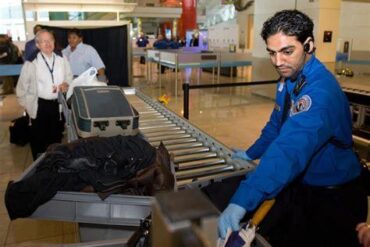
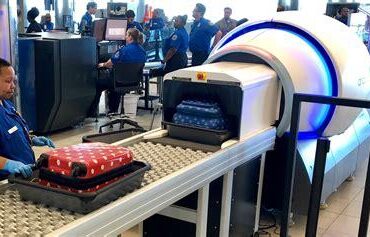
Magaw’s early priorities were both radical and immediate. Airport screening would no longer be outsourced to private contractors with uneven training standards. Instead, a federal workforce of screeners would be created and deployed nationwide. At the same time, mandatory screening of all checked baggage for explosives became law, eliminating discretion at the airport level. These decisions laid the foundation for the uniform security experience travelers recognize today.
Why the TSA Was Established After September 11
The motivation behind the TSA’s creation was unambiguous. The September 11, 2001 terrorist attacks exposed deep vulnerabilities in U.S. aviation security. Commercial aircraft had been turned into weapons using tools and access points that were legal under existing rules.
In the years since, airport leaders have been candid about the intent behind the agency. Chellie Cameron, former CEO of Philadelphia International Airport, summarized it clearly when she explained that the TSA was created directly to prevent a repeat of such an attack. The goal was not incremental improvement. It was structural transformation.
This urgency explains why the TSA was established with unusual speed. Within weeks of the attacks, Congress moved from investigation to legislation. Security was no longer a local or commercial concern. It became a federal responsibility tied to national survival, with aviation as its most visible front line.
How Airport Security Worked Before the TSA Existed
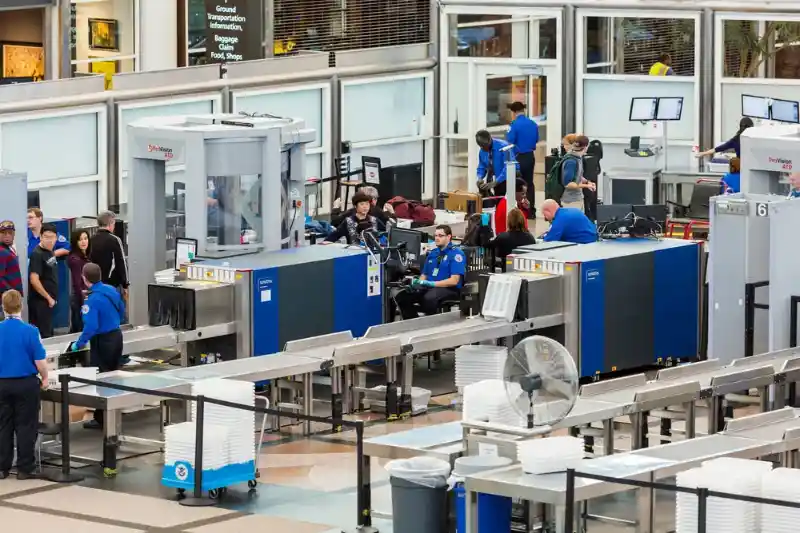
Before 2001, airport security in the United States was decentralized and remarkably permissive. Screening was typically handled by private security firms hired by individual airports, each operating under loosely enforced federal guidelines. Training standards varied widely, pay was low, and employee turnover was high.
According to Jeff Price, then assistant security director at Denver International Airport, travelers could walk up to a gate minutes before departure. Identification was not required. A boarding pass was optional. The primary screening tool was a walk-through metal detector calibrated to detect the metal mass of a small handgun. Items that are unthinkable today, including knives with blades up to four inches long, were permitted in carry-on bags.
There were no body scanners, no explosive trace detection, and no standardized prohibited items list enforced nationwide. Security depended more on deterrence than detection, an approach that proved fatally inadequate.
Immediate Changes After the Attacks
Even before the TSA formally began operations, emergency measures transformed airports almost overnight. Local law enforcement and National Guard units were deployed to assist with screening. Temporary bans were imposed on a wide range of items, and access to secure areas was sharply restricted.
These interim steps created a bridge between the old system and the new one. They also demonstrated a key lesson that shaped TSA policy: security fragmentation creates opportunity for exploitation. The TSA’s mandate would be to eliminate those gaps through standardization, federal authority, and intelligence-driven oversight.
Integration Into the Department of Homeland Security
In 2003, the TSA underwent another significant transformation. It was transferred from the Department of Transportation into the newly formed Department of Homeland Security (DHS). This move reflected the agency’s evolving role. Aviation security was no longer just about planes. It was part of a broader homeland defense strategy.
Centralizing the TSA within DHS allowed for tighter coordination with intelligence agencies, border protection, and emergency response organizations. The shift also reinforced the idea that transportation systems are interconnected targets, not isolated assets.
Expansion Beyond Airports and Into Cybersecurity
While the TSA remains primarily associated with airports, its mission has steadily expanded. Today, the agency’s scope includes mass transit systems, freight and passenger rail, highways, pipelines, and ports. This does not mean TSA officers patrol subways or inspect trains directly. Instead, the agency provides security oversight, training, and regulatory directives.
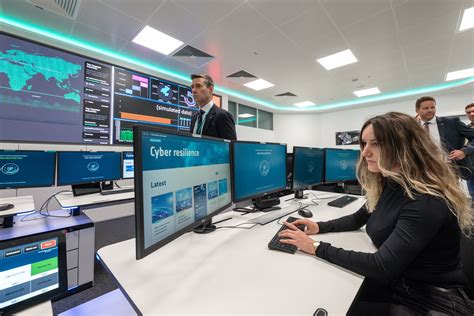
In 2019, the creation of the TSA Surface Operations Division formalized this expansion. Its importance became especially clear after the 2021 pipeline ransomware attack, which highlighted how digital vulnerabilities could disrupt physical transportation infrastructure. Since then, cybersecurity has emerged as one of the TSA’s most critical fronts, reflecting a shift from visible threats to invisible ones.
The TSA’s Lasting Impact on Modern Travel
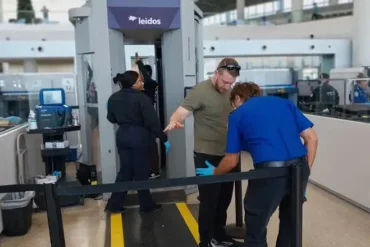
The TSA changed the culture of travel as much as its mechanics. Identification requirements, layered screening technologies, and behavioral detection programs normalized a level of scrutiny that once seemed extraordinary. Body scanners, introduced in 2010, addressed threats that metal detectors could never detect, while biometric tools signaled a future where identity verification and security converge.
More than two decades after its creation, the TSA processes millions of passengers daily, including over 10 million travelers during peak holiday weekends. Its presence is now so ingrained that imagining airports without it feels implausible.
The TSA was created in 2001 as a response to failure, fear, and urgency. It endures because the risks it was designed to counter have not disappeared. They have simply evolved, demanding a security institution built not for convenience, but for resilience.