Modern airport security is undergoing one of its biggest transformations since restrictions on liquids and electronics were introduced after the early 2000s. Across the United Kingdom, travelers passing through several major airports are already experiencing what many consider the future of passenger screening. Bags remain closed, laptops stay inside, and liquids no longer have to be squeezed into tiny 100-milliliter bottles. This dramatic improvement has not been led by a national government agency but by VINCI Airports, a private airport operator that has rapidly modernized security infrastructure across several of Britain’s busiest airports.
Meanwhile, in the United States, the Transportation Security Administration (TSA) is investing billions of dollars to deploy the same revolutionary screening technology. Although the agency has awarded contracts worth hundreds of millions of dollars and continues installing new equipment at an impressive pace, its rollout inevitably moves more slowly because of the enormous scale of the American aviation system. The difference highlights an important lesson about infrastructure modernization: speed is determined not only by funding but also by organizational structure, operational complexity, and the size of the network being upgraded.
The comparison is not about declaring one system superior to another. Instead, it demonstrates how private operators with concentrated responsibilities can implement technological change significantly faster than national agencies responsible for securing hundreds of airports.
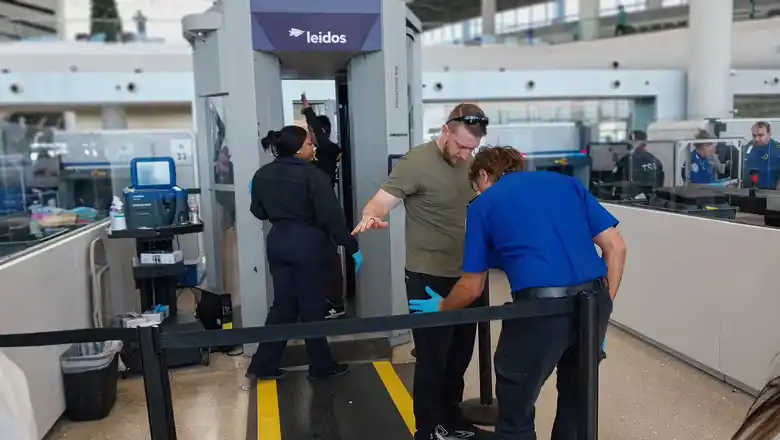
After decades of relatively unchanged passenger screening procedures, Computed Tomography (CT) scanners are finally transforming airport checkpoints into smarter, faster, and more efficient security environments.
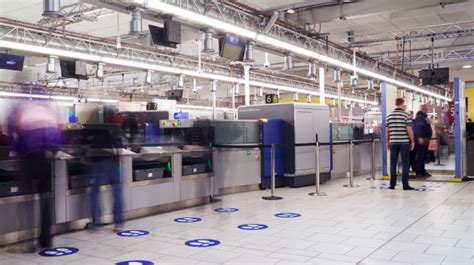
How Traditional Airport Security Became Limited
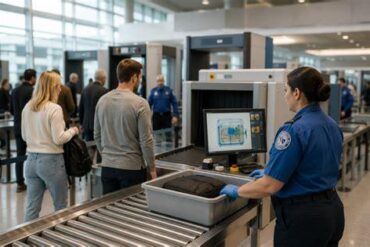
For years, airport security relied primarily on conventional 2D X-ray scanners. These machines generated flat images that required security officers to interpret overlapping objects based largely on color differences representing metals, plastics, organic materials, and other substances. While effective, the technology created significant limitations.
Large electronic devices frequently blocked the view of items underneath them. Thick liquids also prevented security officers from clearly seeing what existed inside bags. As a result, airports introduced procedures requiring passengers to remove laptops, tablets, cameras, and liquids before screening.
The internationally recognized 100 ml liquid restriction became one of aviation’s most familiar rules because traditional X-ray systems simply could not reliably inspect larger liquid containers while they remained packed inside luggage.
Every additional tray, every removed laptop, and every manually searched bag increased processing times while creating bottlenecks during peak travel periods. Millions of passengers grew accustomed to preparing for airport security long before arriving at the checkpoint.
Why CT Scanners Represent a Major Technological Leap
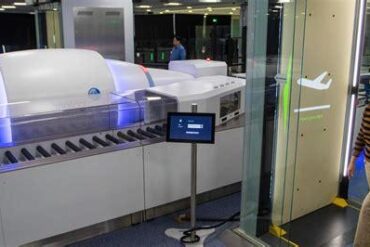
Unlike traditional X-ray machines, Computed Tomography scanners generate hundreds of high-resolution images from multiple angles while baggage moves through the scanner. Sophisticated software reconstructs those images into detailed three-dimensional models that security officers can rotate, zoom, and inspect from virtually any perspective.
Instead of interpreting shadows, officers can examine the exact density, shape, and position of every object inside a suitcase.
This dramatically improves detection accuracy while reducing the need for physical bag inspections. Integrated artificial intelligence and automated threat detection software can also identify suspicious items and immediately alert screening officers.
Passengers benefit because most belongings remain inside their luggage throughout the screening process. Electronics no longer require separate bins, while larger quantities of liquids can often remain packed without affecting image quality.
The technology also improves consistency, reducing reliance on manual interpretation alone and giving security staff significantly more information before deciding whether additional inspection is necessary.
VINCI Airports Accelerated Security Modernization Across Three Major UK Airports
Rather than gradually introducing the technology across isolated checkpoints, VINCI Airports pursued an ambitious strategy focused on complete deployment.
Its three UK airports—London Gatwick Airport, Edinburgh Airport, and Belfast International Airport—now feature CT scanners across every security lane. Instead of passengers encountering different experiences depending on which checkpoint they enter, the modernization delivers consistency throughout each airport.
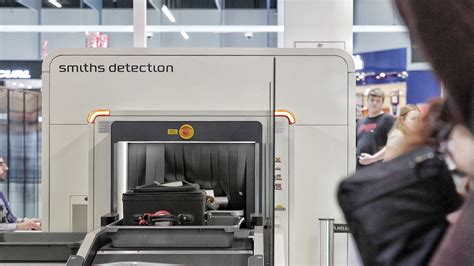
The rollout extended beyond simply replacing scanners.
VINCI simultaneously redesigned security halls, expanded passenger processing capacity, installed updated screening equipment, optimized passenger flow, and modernized surrounding infrastructure. These coordinated improvements allowed the airports to reduce congestion while making the security process substantially more efficient.
At Edinburgh Airport, security capacity increased through additional screening lanes equipped entirely with CT technology.
Belfast International Airport similarly expanded its screening facilities while replacing older systems.
At London Gatwick Airport, one of Europe’s busiest international gateways, both terminals now operate extensive security areas fully equipped with advanced scanners.
The result is a passenger experience where security processing frequently takes less than ten minutes under normal operating conditions.
The End of the Famous 100 Milliliter Rule at Selected Airports
Perhaps the most noticeable benefit for travelers is the relaxation of long-standing liquid restrictions.
Passengers using these upgraded UK airports no longer need to remove liquids from hand luggage, while containers of up to two liters may now pass through security without violating previous limitations.
For frequent travelers, this represents one of the most meaningful improvements to airport security in decades.
Business travelers no longer need to unpack expensive electronics.
Families traveling with children avoid repeatedly reorganizing bags.
International passengers experience less stress while preparing for screening.
Although security remains equally rigorous, the passenger experience feels considerably smoother because technology now performs much of the work previously requiring manual preparation.
Some Challenges Still Exist with CT Security Technology
Despite its advantages, CT screening technology is not perfect.
The scanners themselves feature relatively compact openings, which can occasionally reduce throughput if passenger flow is not carefully managed.
Automated detection software sometimes produces false alarms requiring secondary inspections.
Photographic film may also suffer damage when exposed to higher-energy CT scanning systems, making alternative screening advisable for travelers carrying undeveloped film.
Nevertheless, these disadvantages are generally outweighed by the technology’s superior imaging capabilities, higher threat detection performance, and reduced frequency of manual baggage searches.
Why the TSA Faces a Much More Complex Rollout
Although headlines frequently compare VINCI’s rapid deployment with the TSA’s slower implementation, the comparison requires important context.
The TSA does not oversee three airports.
It manages security operations across well over 400 commercial airports throughout the United States, including many of the busiest aviation hubs anywhere in the world.
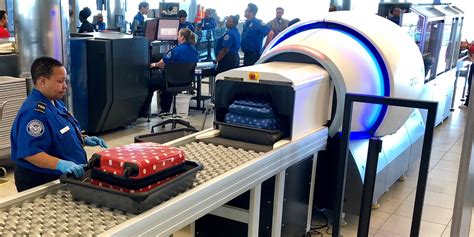
Facilities such as Hartsfield-Jackson Atlanta International Airport, John F. Kennedy International Airport, Los Angeles International Airport, Dallas/Fort Worth International Airport, and Chicago O’Hare International Airport contain enormous security complexes with dozens of screening lanes.
Replacing equipment across networks of this size requires thousands of scanners rather than dozens.
Every installation must also maintain daily operations without creating unacceptable passenger delays.
The logistical challenge extends far beyond purchasing new equipment.
Understanding the TSA’s $781 Million CT Scanner Investment
The TSA began evaluating CT scanners years before placing its largest orders.
Early testing started in airports including Phoenix Sky Harbor International Airport and Boston Logan International Airport, allowing engineers and security specialists to evaluate operational performance under real-world conditions.
Following successful testing, the agency awarded a $781.2 million contract in 2022 covering 938 CT scanners, all supplied by Analogic.
Deployment began during the busy summer travel season and continues today.
However, that contract represented only one stage of a much larger modernization effort.
Previous purchases occurred in 2019 and 2021, while an even larger procurement followed in 2023.
The TSA subsequently awarded approximately $1.3 billion in additional contracts covering more than 1,200 additional CT scanners supplied by Analogic, IDSS Holdings, and Smiths Detection.
Collectively, these investments represent one of the largest aviation security modernization programs ever undertaken.
Why Private Operators Can Move Faster Than Government Agencies
The primary reason behind VINCI’s faster deployment lies in organizational simplicity.
As the airport operator, VINCI controls multiple aspects of airport management simultaneously.
Security infrastructure, checkpoint redesign, passenger flow planning, contractor coordination, and facility upgrades all fall within a relatively unified decision-making structure.
This dramatically shortens planning timelines.
The TSA operates under a completely different model.
While responsible for passenger screening, the agency usually does not own airport terminals or checkpoint infrastructure.
Instead, modernization projects require coordination among airport authorities, terminal operators, construction contractors, airlines, equipment manufacturers, software providers, and multiple government stakeholders.
Each security checkpoint renovation often involves redesigning lanes, integrating automated tray return systems, upgrading power infrastructure, installing networking equipment, validating cybersecurity requirements, training officers, and maintaining uninterrupted passenger throughput throughout construction.
Every airport presents unique engineering challenges.
Every terminal operates under different layouts.
Every construction schedule must minimize operational disruption.
The complexity naturally extends project timelines.
Why the TSA Uses a Lane-by-Lane Installation Strategy
Unlike VINCI, which upgraded entire airports, the TSA generally installs CT scanners incrementally.
Instead of closing complete checkpoints for reconstruction, the agency replaces equipment one lane at a time.
This approach allows airports to maintain passenger capacity while modernization continues.
The trade-off is inconsistency.
Passengers entering neighboring security lanes may experience completely different screening procedures depending on whether they receive a traditional X-ray lane or a CT-equipped checkpoint.
Although less noticeable from a passenger perspective, the strategy significantly reduces disruption during construction and keeps airports functioning throughout lengthy upgrade programs.
The Scale Difference Explains Much of the Timeline
Simple passenger numbers reveal why direct comparisons require caution.
London Gatwick Airport handled approximately 42.8 million passengers during 2025.
Edinburgh Airport processed roughly 16.9 million travelers.
Belfast International Airport welcomed approximately 6.7 million passengers.
Combined, these three airports serve fewer passengers than several individual American mega-hubs.
Hartsfield-Jackson Atlanta International Airport alone handled more than 106 million passengers, while John F. Kennedy International Airport processed over 62 million, and Seattle-Tacoma International Airport exceeded 52 million.
Many of these facilities contain far more screening lanes than entire regional airport systems elsewhere in the world.
Consequently, equipment requirements increase exponentially.
Airport Security Is Becoming Smarter Rather Than Simply Stricter
The widespread adoption of CT scanners reflects a broader shift in aviation security philosophy.
Instead of increasing restrictions on passengers, airports increasingly rely on better technology to improve both safety and convenience simultaneously.
Artificial intelligence, automated threat recognition, advanced image reconstruction, and smarter screening algorithms allow officers to detect prohibited items more effectively while reducing unnecessary inconvenience for travelers.
Rather than asking passengers to compensate for technological limitations, modern security systems increasingly overcome those limitations themselves.
The Future of Airport Security Is Already Taking Shape
The modernization occurring across the United Kingdom offers a glimpse into what airport security is likely to become worldwide over the coming decade.
Private operators such as VINCI Airports have demonstrated how quickly transformational technology can reshape passenger experiences when organizational structures allow rapid implementation.
Meanwhile, the TSA’s enormous investment underscores the scale of America’s commitment to achieving the same objective across one of the world’s largest aviation networks.
Although travelers in the United States may wait longer before every checkpoint receives next-generation scanners, progress continues steadily through one of the most ambitious security infrastructure programs ever attempted.
Ultimately, both approaches point toward the same destination: airport security that is simultaneously faster, more accurate, less intrusive, and better equipped to identify genuine threats. As CT technology becomes standard worldwide, the familiar ritual of unpacking laptops, separating liquids, and preparing dozens of plastic bins may eventually become a relic of aviation history rather than an unavoidable part of every journey.