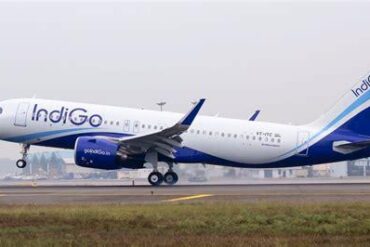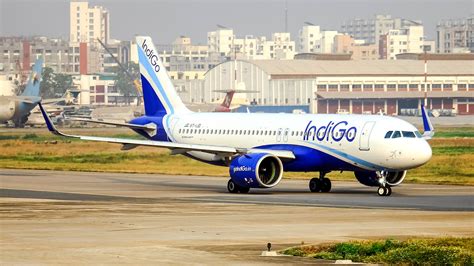
An operational delay can be an inconvenience. A rolling delay can be a psychological trap. On February 5, 2026, a short 183-mile hop from Tiruchirappalli (TRZ) to Chennai (MAA) became a case study in airline communication breakdown when Vijay Gopalan, former CFO of AirAsia India, missed his IndiGo flight amid shifting departure times and ambiguous gate information. What followed was not just a missed connection, but a public confrontation that has reignited questions about airline boarding policies, delay transparency, and customer service accountability.
The flight in question, IndiGo 6E7268, was scheduled to depart at 2:55PM. Gopalan had checked in online and arrived at the airport around 1PM, comfortably ahead of departure. With time to spare, he proceeded to the lounge to work, relying on the airport’s departure monitors to track his flight’s status. What appeared to be routine delay updates gradually evolved into a classic rolling delay scenario.
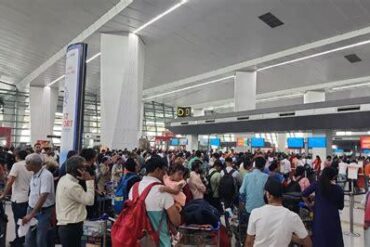
Departure time first moved to 3:10PM, then 3:15PM, then 3:25PM. The screen consistently displayed the status as “security,” not “boarding” or “departing.” From a passenger’s perspective, particularly one accustomed to airline operations, this suggested that boarding had not yet commenced. The gate itself was only a short walk away. The situation appeared controlled, even predictable.
Rolling Delays and the Illusion of Extra Time
Rolling delays create a subtle but powerful behavioral effect. Each incremental push of the departure time signals flexibility. Passengers recalibrate. They answer one more email. They finish a coffee. They interpret silence as stability.
In this case, that interpretation proved costly. At 3:05PM, Gopalan received a call from IndiGo staff—not warning that boarding was closing, but informing him that the flight had already departed. The aircraft had left without him.
The timeline is striking. The revised departure time was showing 3:25PM. Yet boarding gates, according to IndiGo’s published policy, close 25 minutes before departure. If the system still displayed 3:25PM, the implied gate closure should have been 3:00PM. Instead, by 3:05PM, the aircraft was airborne or taxiing.
The disconnect between displayed information and operational execution lies at the heart of this dispute.
The Gate Confrontation
When Gopalan reached the gate, the exchange escalated. A gate agent reportedly accused him of choosing to “eat good food” in the lounge instead of arriving on time. The implication was clear: personal indulgence had caused the problem.
For a former airline executive, that framing was more than dismissive—it was operationally inaccurate. He argued that he had relied on the information provided. The monitors did not indicate boarding. The delay kept extending. From a systems perspective, he believed he had acted reasonably.
Frontline staff, however, maintained that boarding announcements had been made and that he should have been at the gate at least 40 minutes before departure. In strict procedural terms, airlines often require passengers to be present well before departure, regardless of rolling updates.
This clash illustrates a familiar tension: policy versus perception. Airlines operate on standardized closure rules. Passengers respond to real-time signals. When those signals conflict, friction is inevitable.
What IndiGo’s Policy Actually Says
IndiGo’s official guideline states that boarding gates close 25 minutes prior to departure. Passengers must be present no later than the time specified at check-in or through airport announcements.
On paper, this gives the airline procedural cover. If the gate closed within that window, the airline can argue compliance. Yet policy assumes clarity in departure timing. Rolling delays muddy that clarity.
If a flight’s departure time is adjusted, the corresponding gate closure logic should update transparently. When monitors continue to display “security” rather than “boarding,” passengers are given implicit assurance that the boarding process has not yet begun.
The additional wrinkle is the courtesy call. Calling a passenger after departure serves no operational purpose. A call before door closure could have salvaged the situation. The timing of that communication suggests procedural formality rather than customer care.
The Broader Context: IndiGo’s Operational Pressures
IndiGo operates one of the largest fleets in India, built on efficiency and tight turnaround times. The airline’s model prioritizes punctuality and cost discipline. In such systems, flexibility is minimal. Once the departure sequence begins, reopening doors can cascade into downstream delays.
Compounding matters, IndiGo had recently faced operational disruptions that led to widespread passenger frustration. Frontline staff often absorb that tension. Emotional fatigue at the gate can shape interactions, even when professionalism is expected.
Yet scale and pressure do not negate the importance of communication clarity. Rolling delays demand synchronized messaging across screens, announcements, and boarding procedures. When one channel lags behind another, the passenger experience fractures.
Executive Perspective Meets Passenger Reality
Gopalan’s background adds complexity. As a former CFO of AirAsia India, he understands airline cost structures and on-time performance metrics. His public critique carries industry weight, not merely consumer irritation.
Notably, his recorded interaction appeared measured rather than explosive. He questioned the logic of the timing. He did not appear to demand that the flight be delayed solely for him. His argument centered on inconsistent information flow.
From a neutral standpoint, both sides adhered to their respective logic. The airline followed internal timelines. The passenger followed displayed data. The breakdown occurred in the seam between those two frameworks.
Rolling Delay Risk: A Communication Failure
Rolling delays are operationally common but psychologically deceptive. Each incremental update changes expectations without resetting behavioral anchors. Airlines often treat revised departure times as flexible markers, while passengers interpret them as new commitments.
The critical failure here was not the enforcement of gate closure rules. It was the absence of synchronized messaging that made those rules intelligible in context. When a departure board shows “security” minutes before takeoff, the system signals inactivity. That signal, whether intentional or not, carries authority.
In aviation, timing precision is paramount. A five-minute mismatch between displayed status and operational reality can strand a passenger, even one who arrived nearly two hours before departure.
Customer Service Versus Operational Compliance
Technically, IndiGo may not have violated its policy. Operationally, it likely protected its on-time metrics. From a customer service standpoint, however, the optics are less favorable.
Airlines operate within a delicate balance: efficiency must coexist with clarity. Rolling delays demand proactive alerts, visible boarding status updates, and real-time accuracy across all passenger-facing systems. Without that coherence, passengers bear disproportionate risk.
This episode underscores a broader truth in aviation: missing a flight is rarely about the final minute. It is about the chain of micro-decisions leading up to it—each influenced by the information provided.
The incident between Vijay Gopalan and IndiGo transforms a routine missed flight into a case study on delay management. In an industry measured by minutes, clarity is not a courtesy. It is infrastructure.