Boeing has announced the appointment of Jesus “Jay” Malave, the former Chief Financial Officer of Lockheed Martin, as its new CFO and Executive Vice President, effective August 15, 2025. The news signals a major leadership realignment at a pivotal time for the aerospace giant, which continues to navigate a complex recovery phase following years of operational setbacks and reputational damage.
A Strategic Appointment Amid Turbulence
The appointment of Jay Malave is not a routine executive shuffle. It represents a calculated move by CEO Kelly Ortberg, who is leading an aggressive overhaul of Boeing’s top leadership. The decision to bring in a seasoned financial strategist with a defense-sector pedigree is rooted in the company’s urgent need for fiscal discipline, investor confidence restoration, and corporate stabilization.
Malave’s transition from Lockheed Martin, where he served as CFO since 2022, underscores Boeing’s growing intent to infuse external discipline into its internal operations. His earlier tenure at L3Harris Technologies and a nearly 25-year stretch at United Technologies Corporation (UTC)—including leadership roles at Pratt & Whitney, Carrier, and Hamilton Sundstrand—highlight a deep expertise in financial stewardship within highly regulated, capital-intensive sectors. However, the pivot from military to commercial aviation presents a significant learning curve, given the unique challenges Boeing faces in its civilian aircraft divisions.
New CFO to Shape Boeing’s Financial Future
As Boeing’s new CFO, Malave will oversee a broad spectrum of responsibilities: from financial reporting and audit controls, to business planning, investor relations, and controller services. The weight of this role is considerable, especially as the company seeks to rebuild credibility after the 737 MAX debacle and a series of quality and regulatory failures.
CEO Kelly Ortberg expressed confidence in the incoming CFO, stating, “Jay will become CFO at an important time in helping build Boeing’s next chapter as we continue to make progress on our recovery and implement fundamental changes rooted in safety and quality. He is a well-respected financial and business leader, and brings decades of experience developing people and teams across complex aerospace and manufacturing businesses.”
Boeing’s Crisis-Laden Decade
To understand the gravity of Malave’s task, it’s necessary to trace Boeing’s downward spiral. Once a titan of the aerospace industry, Boeing entered the 2010s with confidence. The 787 Dreamliner received praise and significant commercial traction. The 737 MAX, while launched as a cost-effective answer to the A320neo, still enjoyed robust orders. Boeing’s 777X program, particularly the freighter variants, also looked promising upon announcement.
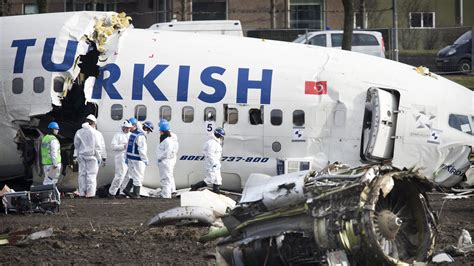
However, optimism unraveled with tragic consequences. The two fatal crashes involving the 737 MAX in 2018 and 2019, which killed 346 people, precipitated the largest safety crisis in Boeing’s history. Groundings, lawsuits, regulatory investigations, and lost orders culminated in a reported $20 billion financial fallout. The crisis exposed systemic failures in corporate governance, engineering oversight, and a culture of cost-cutting that had taken root since the early 2000s.
Quality Control and Certification Woes
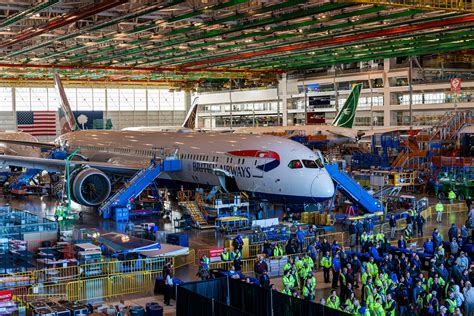
The damage didn’t stop with the MAX. The 787 Dreamliner encountered numerous manufacturing quality issues, prompting the FAA to halt deliveries multiple times. The 777X program, originally slated for commercial service by 2020, is now delayed until at least 2026. Even as Boeing attempted to regain momentum, disaster struck again: a door-plug blowout on an Alaska Airlines 737 MAX 9 in January 2024 forced an FAA-mandated grounding of all MAX 9s in the U.S.
These setbacks not only cost Boeing billions in delayed orders and rework but also severely impacted its long-term reputation among regulators, airlines, and the flying public. Investor sentiment has been volatile, and internal morale has suffered. Against this backdrop, Malave steps into a role where financial acumen must be matched with strategic vision and operational empathy.
Rebuilding From the Inside Out
Boeing’s approach to recovery hinges on leadership reform, operational restructuring, and a renewed focus on in-house production capabilities. In 2024, Boeing announced it would reacquire Spirit AeroSystems, the Wichita-based manufacturer of 737 fuselages that Boeing originally spun off two decades ago. The move is a signal that Boeing recognizes the dangers of outsourcing critical manufacturing, especially for high-volume, high-risk aircraft programs.
The company has also restructured its leadership significantly. Following Dennis Muilenburg’s ousting, David Calhoun stepped in, only to be succeeded by Kelly Ortberg in 2024. Alongside Ortberg, Stephanie Pope was appointed President and CEO of Boeing Commercial Airplanes, becoming the face of Boeing’s civilian aircraft business. These leadership changes reflect a broader cultural shift—one that prioritizes transparency, safety, and long-term operational health over short-term stock performance.
Challenges Ahead for Jay Malave
Malave’s military aviation background may give him a solid understanding of complex aerospace projects, but Boeing’s commercial sector will require new skill sets. Unlike the defense sector—where long-term contracts provide revenue predictability—commercial aviation is subject to market volatility, regulatory scrutiny, and consumer perception.
He must also navigate:
- A highly sensitive investor environment, where patience has worn thin.
- FAA regulatory pressures demanding transparency and proof of reform.
- A labor force under strain, including union negotiations and quality control retraining.
- Global supply chain challenges, particularly in sourcing high-precision components post-COVID.
Internally, Malave will need to foster a culture of financial clarity and operational accountability, which may require difficult decisions around resource allocation, program prioritization, and restructuring legacy agreements. His performance will be evaluated not only by bottom-line figures, but by Boeing’s ability to deliver safe, reliable aircraft on time and on budget.
Market Reaction and Industry Context
The announcement of Malave’s appointment was met with a measured but optimistic reaction from Wall Street. Analysts have noted that the CFO role is now one of the most critical in Boeing’s leadership lineup, with direct implications for credit rating stability, debt management, and capital investment strategies.
Investors are also watching how Malave will handle Boeing’s mounting debt, which reached staggering levels during the height of the 737 MAX and pandemic-related crises. Strategic refinancing, disciplined cost-cutting, and clearer forecasting models will all be on the docket.
Moreover, Boeing’s position vis-à-vis Airbus, its primary rival, has grown more precarious. While Boeing stumbled, Airbus capitalized, increasing its backlog, gaining market share, and solidifying airline partnerships. Malave’s strategies must also account for competitive benchmarking, particularly in pricing strategy and R&D investment.
A Defining Moment in Boeing’s History
Malave’s appointment may seem like just another name in a press release, but in reality, it is one of the most consequential personnel moves in Boeing’s modern history. His decisions over the next 12 to 24 months will shape the company’s financial foundation, stakeholder confidence, and public accountability for years to come.
Whether Boeing returns to its position as a respected titan of aerospace or continues to struggle under the weight of past missteps will depend in large part on how leaders like Malave execute in this critical period. This is not merely a financial appointment—it’s an inflection point for a company whose reputation, revenue streams, and relevance are all on the line.
In a turbulent sky, Boeing is banking on Jay Malave to be a steady hand on the fiscal controls. His path forward is laden with complexity—but also with the possibility of one of the most meaningful turnarounds in aerospace history.