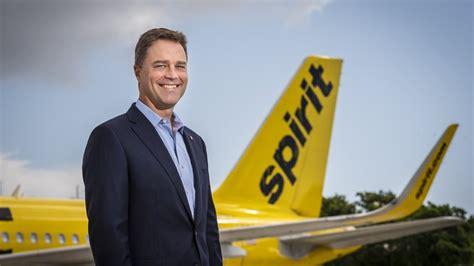
In a stunning move that underscores the turbulence Spirit Airlines has been navigating, CEO and President Ted Christie has officially resigned, effective immediately. The departure marks a significant moment for the ultralow-cost carrier (ULCC), coming just weeks after it emerged from Chapter 11 bankruptcy protection, a process that had seen the airline trade debt for equity in a high-stakes bid to stay solvent.
Spirit Airlines now finds itself under interim leadership, jointly managed by Chief Financial Officer Fred Cromer, Chief Operating Officer John Bendoraitis, and General Counsel Thomas Canfield. This unexpected restructuring signals both internal instability and the urgency with which Spirit is seeking to recalibrate in a fiercely competitive and economically uncertain market.
Christie’s Sudden Exit and Strategic Implications
Ted Christie’s resignation did not come with an accompanying statement of explanation from either the airline or Christie himself. However, his departure—alongside Chief Commercial Officer Matt Klein, who was instrumental in designing Spirit’s market repositioning strategy—suggests mounting pressure from both the boardroom and operational front lines. These resignations coincide with a broader transformation strategy aimed at evolving Spirit’s rigid ULCC model into one that could court higher-yield passengers through bundled fare products and customer-centric innovations.
Klein’s departure has already seen a rapid response: he has been replaced by Rana Ghosh, Spirit’s former Chief Transformation Officer, who had been tasked with realigning the airline’s structure and services during its most vulnerable phases. This reshuffling of key leadership figures, while abrupt, is emblematic of the carrier’s push to move from survival mode into a phase of aggressive reinvention.
Post-Bankruptcy Reality and Financial Pressures
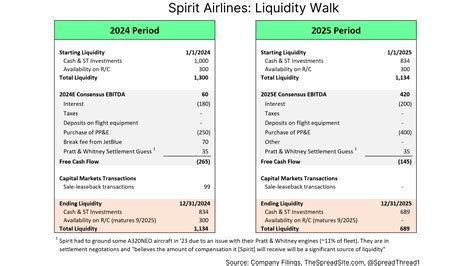
While Spirit may have technically exited bankruptcy in March 2025, the financial scars are deep. The airline concluded 2024 with a staggering net loss of $1.23 billion and maintains just $902.1 million in cash and equivalents, a slender cushion for a carrier facing intensifying competitive and economic headwinds.
Crucially, part of Spirit’s post-bankruptcy strategy involved a debt-to-equity swap worth $795 million, converting bondholder claims into shares. This financial engineering helped avoid immediate insolvency but diluted shareholder value and has yet to translate into operational breathing room. With margins already paper-thin and yields under pressure, every misstep is magnified, and every leadership change scrutinized.
Union Reaction: A Demand for Transparency and Stability
The leadership vacuum has not gone unnoticed by Spirit’s pilot union, which issued a sharp, unambiguous message through Ryan Miller, president of the Spirit unit of the Air Line Pilots Association (ALPA). Miller stated that the union “expects—and will demand from day one—decisive leadership that is willing to listen, willing to act and ready to lead with integrity.”
These comments reflect deep-seated frustrations, particularly in light of stalled contract negotiations and the shadow of the failed JetBlue merger, which had promised job security and expanded fleet opportunities for Spirit’s pilots. That deal, blocked by the U.S. Department of Justice, has left many employees feeling stranded between old promises and new uncertainties.
The union’s push for transparent, long-term leadership—rather than temporary management committees—emphasizes the importance of labor confidence in the airline’s survival. At stake is not only management credibility but also operational reliability as employee morale wavers.
Operational and Market Challenges Post-Southwest Shift
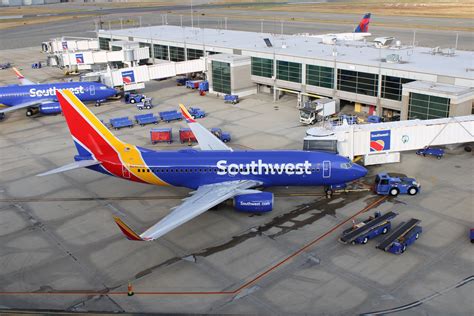
Adding another layer of complexity is Southwest Airlines’ recent decision to introduce a Basic Economy fare—a move that directly encroaches upon Spirit’s core market: price-sensitive travelers. As Southwest, a carrier known for its no-fee policies and generous baggage rules, undercuts Spirit on fares while offering superior service, the latter’s pricing advantage becomes far less compelling.
This development places Spirit in a precarious position. Its traditional strategy of stripping away amenities for cost efficiency is under pressure to evolve quickly. Yet, change is expensive and time-consuming. Leadership voids at the top make it even harder to craft and execute a coherent counter-strategy.
The Larger Industry Context and Political Pressures
Spirit’s crisis comes amid an industry-wide downturn triggered, in part, by declining consumer confidence linked to the Trump administration’s economic and aviation-related policies. With discretionary spending shrinking and business travel still lagging behind pre-pandemic levels, airlines operating on razor-thin margins are especially exposed.
The timing of this downturn, colliding with Spirit’s restructuring efforts, creates a perfect storm. Even with newer aircraft and leaner operating procedures, the airline now faces an uphill battle against both macroeconomic forces and better-positioned competitors. Christie’s departure may reflect an acknowledgment that the existing playbook was no longer sufficient.
The Search for a CEO and the Path Forward
The Spirit board has launched an executive search for a new CEO, a task that carries immense strategic weight. Whoever takes the reins will be responsible not just for stabilizing the airline but for reinventing its identity in a marketplace that no longer rewards simply being cheap.
This new leader will need to:
- Win back employee trust, especially among pilots and frontline staff.
- Differentiate Spirit’s brand in a landscape where low cost alone is not enough.
- Manage legacy debt while funding capital-intensive service improvements.
- Navigate increasingly complex regulatory environments post-JetBlue merger decision.
The appointment must be swift but not hasty. Spirit cannot afford another leadership misstep. A misaligned CEO would risk derailing transformation efforts and eroding already-fragile stakeholder confidence.
Conclusion: A Pivotal Moment of Reckoning for Spirit Airlines
Ted Christie’s resignation is not just an executive shuffle—it’s a moment of reckoning for Spirit Airlines. Emerging from bankruptcy was never the endgame; it was the beginning of a new, uncertain phase. The airline now sits at the intersection of financial fragility, labor unrest, and market disruption, with no margin for error.
As the search for a permanent CEO intensifies, the industry will be watching closely. The next few months will determine not just who leads Spirit, but whether the airline can evolve fast enough to remain relevant. For now, Spirit’s future remains in flux, and its survival hinges on a delicate balance of strategic foresight, stakeholder trust, and operational resilience.