The decision to reinstate two U.S. Army Apache helicopter pilots following a highly publicized flyby over musician Kid Rock’s Tennessee property has reignited a fierce debate about military neutrality, operational discipline, and the boundaries between public service and political perception. What initially appeared to be a routine training mission quickly evolved into a viral controversy, raising questions that extend far beyond a single flight path.
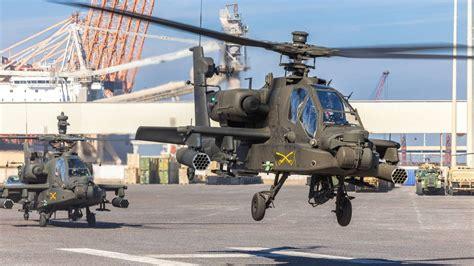
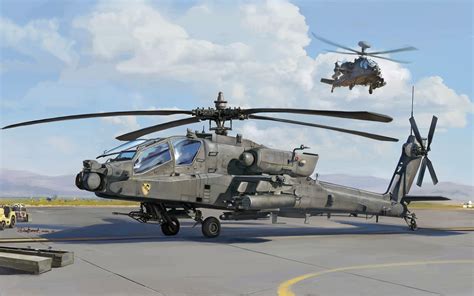
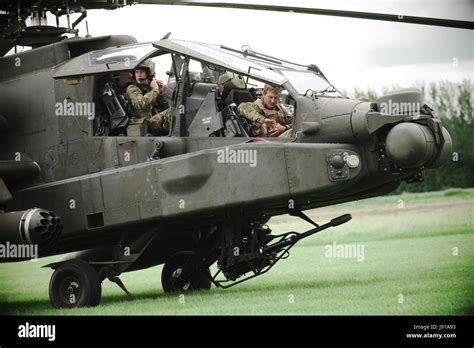
The incident involved two Boeing AH-64 Apache helicopters assigned to the 101st Combat Aviation Brigade of the 101st Airborne Division. The aircraft reportedly executed a staggered aerial pass over Kid Rock’s residence near Nashville, a sprawling estate the artist has dubbed the “Southern White House.” The maneuver, which resembled a ceremonial salute, gained widespread attention after being shared on social media alongside politically charged commentary.
Despite the initial suspension of the pilots pending review, the Army ultimately reversed course. A spokesperson confirmed that the aircrews had been reinstated without further disciplinary action, a move reinforced publicly by Secretary of Defense Pete Hegseth, who dismissed the need for investigation and framed the situation as inconsequential.
Controversial Flyby Raises Questions of Intent
At the center of the controversy lies a critical distinction: whether the flyby was a coincidental overlap with a standard training route or a deliberate gesture that risked violating the military’s strict apolitical stance. Official statements assert that the helicopters remained within authorized low-altitude training corridors commonly used by units operating out of Fort Campbell.
However, the optics tell a more complicated story. The timing of the flyby near a politically charged protest and the distinctive pause-like maneuver over a recognizable private landmark have fueled skepticism. While the pilots themselves did not express any political message, the association created by external narratives has proven difficult to separate from the event.
Military aviation training often involves “nap-of-the-earth” flying—low-altitude maneuvers designed to simulate combat conditions and avoid detection. Yet such operations are tightly regulated, especially over residential areas, where safety and legal constraints typically limit aggressive flight profiles. The apparent precision of the flyby suggests more than mere coincidence, even if it technically remained within approved parameters.
The Cost and Accountability Factor
Each hour of operating an Apache helicopter carries an estimated cost of approximately $5,000, placing additional scrutiny on how and why such maneuvers are conducted. In an institution known for rigorous oversight of expenditures, even minor deviations from mission objectives can trigger extensive review processes.
The decision to dismiss the incident without formal investigation has therefore drawn criticism from observers who argue it contradicts long-standing efforts to prevent “fraud, waste, and abuse.” These accountability frameworks are foundational to maintaining operational integrity and public trust, ensuring that taxpayer-funded resources are used strictly for authorized purposes.
This case, however, appears to mark a departure from that tradition. By opting not to pursue further inquiry, leadership has signaled a more lenient interpretation of what constitutes acceptable conduct—an approach that may have broader implications for discipline across the ranks.
Celebrity, Symbolism, and Military Perception
Kid Rock’s involvement adds another layer of complexity. A long-time supporter of U.S. troops through entertainment tours and morale-boosting appearances, the artist occupies a unique cultural position that blends patriotism with outspoken political expression. His Tennessee estate, designed as a replica of the White House, amplifies this symbolism.
When military assets appear in proximity to such a setting—especially in a manner that can be interpreted as ceremonial—it risks creating an unintended endorsement. Even absent explicit intent, perception can carry significant weight, particularly in an era where social media rapidly amplifies and reframes events.
The U.S. military has historically maintained a strict separation from political activity, emphasizing its role as a nonpartisan institution serving the nation as a whole. Any ambiguity in this stance can erode confidence in that principle, both domestically and internationally.
Leadership Response Signals Cultural Shift
Secretary of Defense Pete Hegseth’s public response has been one of the most contentious aspects of the episode. By characterizing the incident as unworthy of punishment or investigation, he effectively reframed the narrative from one of potential misconduct to one of overblown criticism.
This stance contrasts sharply with the approach of previous defense leaders, who have typically emphasized caution and thorough review in similar situations. The divergence highlights an evolving leadership philosophy that places greater emphasis on discretion and less on procedural rigor.
Critics argue that such messaging could undermine established norms of accountability, while supporters contend it reflects a more pragmatic recognition of operational realities. Either way, the response has intensified scrutiny of how standards are applied—and whether they are being applied consistently.
The Broader Implications for Military Neutrality
Beyond the immediate circumstances, the reinstatement of the Apache pilots underscores a deeper tension within the modern military landscape. As public visibility increases and digital platforms blur the lines between private expression and official action, maintaining a clear boundary between service and politics becomes increasingly challenging.
The incident serves as a reminder that neutrality is not only a matter of policy but also of perception. Even routine operations can acquire unintended meaning when placed in a charged context, requiring heightened awareness from both personnel and leadership.
Ultimately, the decision to move forward without punishment closes one chapter while opening another. It leaves unresolved questions about where the line should be drawn—and who decides when it has been crossed.