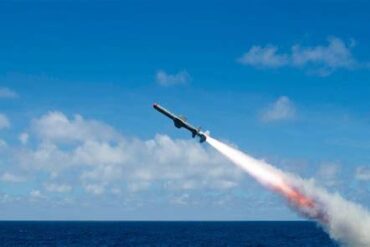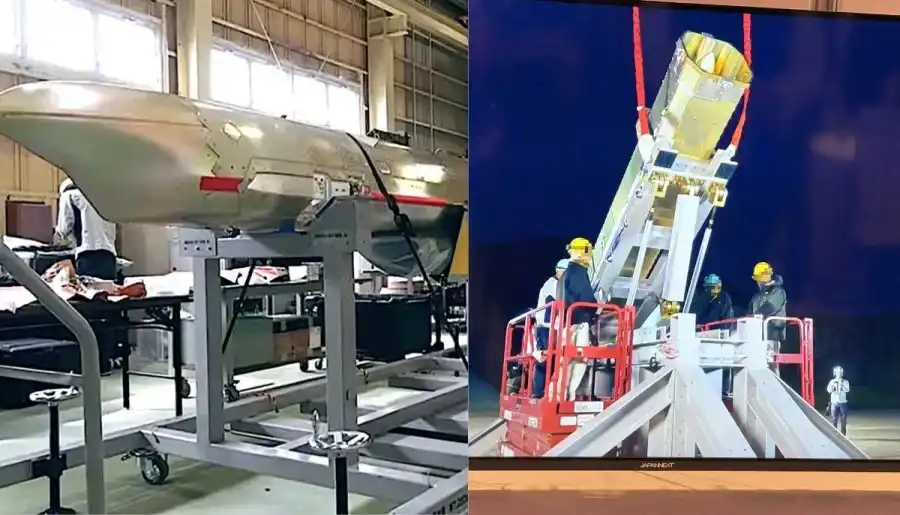
Japan has publicly revealed test footage of a new coastal anti-ship missile prototype that showcases an aggressive rolling terminal maneuver designed to defeat modern naval close-in weapon systems. Released by the Acquisition, Technology & Logistics Agency under the authority of the Ministry of Defense, the footage offers a rare look into how Tokyo is reshaping its maritime strike doctrine to address increasingly sophisticated shipboard defenses and evolving security pressures in the Western Pacific.
The disclosure arrives amid Japan’s accelerating efforts to reinforce sea denial around its southwestern approaches, particularly the Nansei island chain. These waters form a strategic gateway between the East China Sea and the wider Pacific, making them central to Japan’s deterrence posture. By highlighting a missile optimized not only for range but also for survivability in the final seconds before impact, Tokyo signals a sharper focus on defeating the last line of naval defense rather than relying solely on standoff distance.
Unlike traditional sea-skimming missiles that maintain a largely predictable flight path until impact, the newly revealed system transitions into a sustained rolling or spiral motion during its terminal phase. This maneuver, executed at extremely low altitude over the sea surface, represents a significant departure from earlier Japanese designs and reflects lessons drawn from decades of naval air defense evolution. The intent is clear: compress defensive reaction time while undermining the tracking stability required by close-in weapon systems to achieve a successful intercept.
From the outset of the test sequence, the missile is shown launching from a land-based platform before descending to a low-altitude cruise over open water. The flight profile appears carefully optimized to minimize radar exposure while preserving sufficient control authority for the demanding terminal maneuver. As the missile closes on its notional target, it begins a continuous rolling motion that rapidly changes its apparent orientation, presenting defenders with a constantly shifting engagement problem.
This rolling terminal behavior directly targets the innermost defensive layer of modern surface combatants. Close-in weapon systems, whether gun-based or missile-based, depend on highly stable target tracking to generate accurate fire-control solutions. A missile that rolls continuously alters its aspect angle, radar return characteristics, and line-of-sight rate, forcing defensive algorithms to recalculate aim points under severe time pressure. Even minor delays or tracking errors at this stage can be decisive, making such maneuvers disproportionately effective relative to their apparent simplicity.
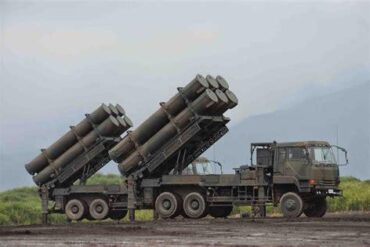
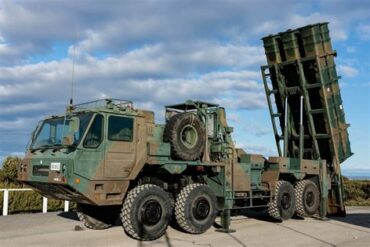
Open-source Japanese references frequently describe the weapon as a “New SSM,” linking it to the broader modernization of the Type 12 anti-ship missile family. While official specifications remain limited, the concept aligns with Japan’s evolving doctrine of distributed coastal defense. Under this approach, land-based missile units dispersed across multiple islands are intended to hold adversary surface forces at risk, supported by networked sensors, offboard targeting, and joint-domain cueing. In such a system, penetrating close-in defenses becomes a core requirement rather than an incremental improvement.
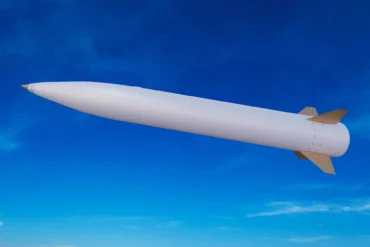
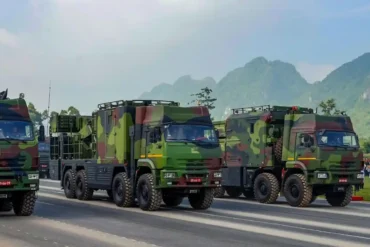
The missile’s visible design features suggest a compact cruise missile optimized for sustained low-altitude flight. Pop-out wings and a configuration incorporating twin vertical stabilizers indicate a balance between aerodynamic efficiency and maneuverability. The airframe appears sized for road-mobile launchers, reinforcing the concept of survivable, relocatable coastal batteries that can complicate enemy targeting and sustain pressure across a wide maritime area.
Propulsion is believed to rely on a compact turbofan engine optimized for endurance rather than extreme speed. Japanese reporting associates the missile with the XKJ301-1, derived from Kawasaki’s KJ300 engine line, a choice consistent with long-range subsonic cruise and efficient fuel consumption. This emphasis suggests that Japan prioritizes persistence, flexibility, and integration with existing logistics over pursuing supersonic sprint performance, instead relying on flight profile management and terminal maneuvering to defeat defenses.
Guidance architecture is assessed to combine inertial navigation and satellite guidance during the midcourse phase with a multimode seeker for terminal engagement. Analysts point to a likely mix of active radar and imaging infrared sensors, enabling the missile to maintain target discrimination in cluttered maritime environments and under electronic countermeasures. Maintaining seeker lock during a rolling terminal maneuver demands high processing capability and robust control laws, underscoring the technological maturity required to make such tactics operationally credible.
Operationally, the missile’s demonstrated behavior increases the probability of successful penetration against layered naval defenses. Rather than relying on a brief terminal acceleration, the design focuses on denying defenders a stable firing solution. When combined with coordinated salvo tactics, timing control, and external targeting data, such missiles can overwhelm even advanced warships by exploiting the narrow margins available in the final seconds of an engagement.
At a strategic level, the test footage underscores Japan’s intent to impose greater uncertainty on any naval force operating near its shores. A land-based anti-ship missile with extended reach and demanding terminal intercept characteristics raises the cost of close-in operations and challenges assumptions about the reliability of close-in defenses as a guaranteed safety net. This is particularly relevant in littoral environments, where reaction times are already compressed and sensor performance can be degraded by clutter and geography.
The release of the footage itself carries signaling value. By publicly demonstrating terminal maneuverability, Tokyo communicates that future Japanese strike systems will emphasize survivability against modern defenses, not merely incremental range increases. It also aligns Japan more closely with global trends in anti-ship missile development, where designers increasingly prioritize guidance sophistication and endgame agility over raw speed alone.
As testing progresses, the critical measure will be how the system performs under more complex, operationally representative conditions. Electronic attack, decoys, coordinated defensive networks, and cluttered littoral terrain will all challenge the missile’s guidance and control systems. Yet the decision to showcase rolling terminal maneuvers suggests confidence that these technologies have matured beyond experimental novelty.
In the broader context of regional security, the new missile reinforces Japan’s evolving role as a proactive maritime defender. By investing in capabilities that complicate adversary planning and erode confidence in naval defenses, Tokyo strengthens deterrence without relying on escalation in platform numbers alone. The revealed system illustrates how precise engineering choices at the tactical level can carry strategic weight, shaping the balance of risk and restraint in increasingly contested seas.