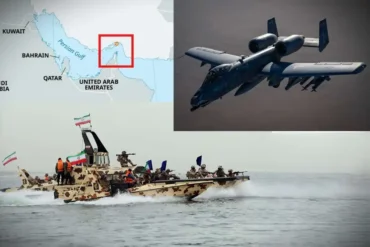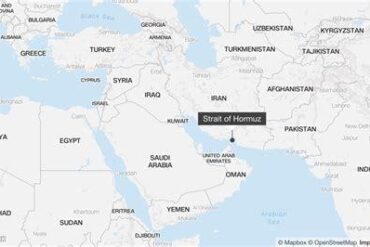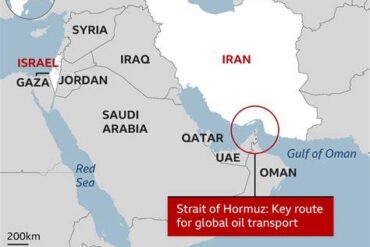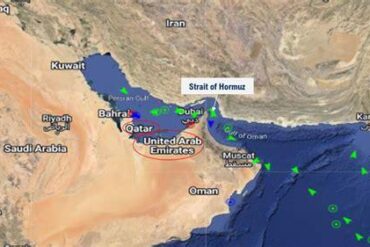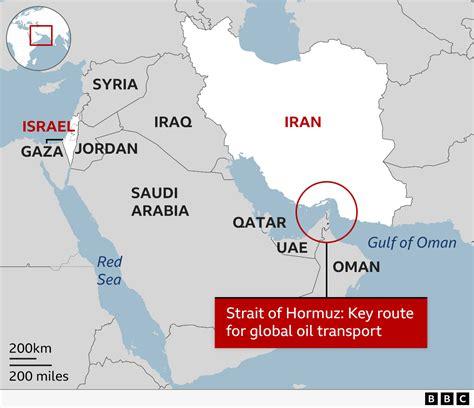
The strategic calculus in the Persian Gulf is shifting rapidly as the United States evaluates a bold escalation: deploying ground forces to dismantle Iran’s layered coastal defense network and secure the Strait of Hormuz. This narrow maritime corridor, through which a significant portion of the world’s oil supply flows, has long been a flashpoint of geopolitical tension. Now, it stands at the center of a potential transformation from a precision strike campaign to a territorial control strategy aimed at ensuring uninterrupted global energy flows.
At the heart of this consideration is a fundamental military question—whether control of terrain, rather than temporary suppression of threats, is the only reliable way to guarantee maritime security in a contested littoral environment. The proposal signals a departure from conventional naval dominance toward a hybrid approach combining sea control, air superiority, and selective ground occupation.
Strategic Shift: From Strike Campaign to Physical Control
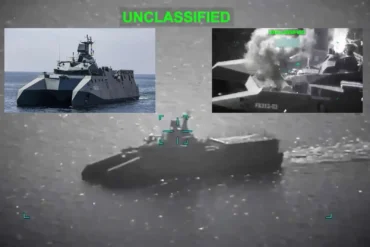
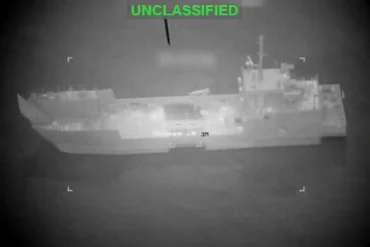
Since late February, U.S. forces have conducted sustained operations under Operation Epic Fury, targeting Iranian naval assets, missile infrastructure, and elements of its defense-industrial base. These strikes have already degraded Iran’s immediate ability to contest maritime access, reportedly neutralizing over 120 vessels. Yet, despite these successes, the persistence of mobile missile launchers, dispersed drone units, and mine-laying capabilities underscores a critical limitation: air and naval power alone cannot guarantee lasting security in the Strait.
This realization is driving discussions around inserting small, specialized ground units tasked with securing key infrastructure nodes—ports, chokepoints, and critical islands. Rather than occupying vast territories, these forces would focus on precision control of high-value targets, effectively denying Iran the ability to regenerate threats along the coastline.
The Operational Backbone: Naval and Air Superiority
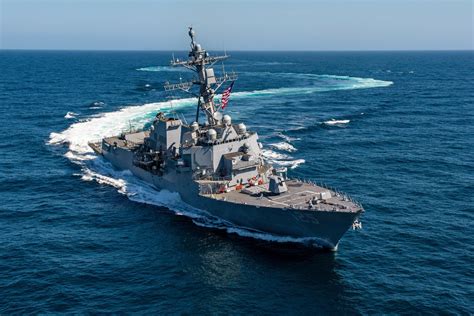
The current U.S. force posture in the Gulf provides a formidable foundation for such an escalation. Carrier strike groups, supported by Arleigh Burke-class destroyers equipped with the Aegis combat system, form a layered defense capable of tracking and intercepting multiple threats simultaneously. These ships, armed with SM-2 and SM-6 interceptors, create a protective umbrella against aircraft, cruise missiles, and select ballistic threats.
Complementing this maritime shield are F/A-18E Super Hornet strike fighters, delivering sustained offensive reach with a combat radius of approximately 700 kilometers. Persistent surveillance is maintained by MQ-9 Reaper drones, capable of remaining airborne for over 24 hours, continuously monitoring Iranian coastal activity and identifying emerging threats in real time.
Adding to this layered force is an amphibious ready group centered around the USS Tripoli, carrying a Marine Expeditionary Unit of roughly 5,000 personnel. These forces are specifically trained for expeditionary operations in contested littoral zones, making them ideally suited for rapid insertion missions along Iran’s coastline or on strategically vital islands.
Kharg Island: The Strategic Prize
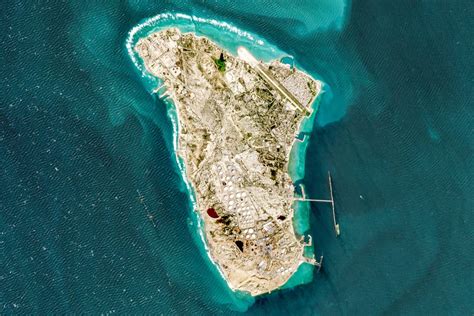
Any discussion of ground operations inevitably converges on Kharg Island, a critical node in Iran’s energy infrastructure. Located approximately 25 kilometers off the Iranian coast, the island accounts for nearly 90 percent of Iran’s crude oil exports. Its strategic significance extends beyond economics—it represents a pressure point capable of reshaping the balance of power in the Gulf.
Securing Kharg Island would allow U.S. forces to achieve multiple objectives simultaneously. It would disrupt Iran’s export capacity, limit its economic leverage, and provide a forward operating base for monitoring and controlling maritime traffic. However, such an operation would require a complex amphibious assault under constant threat from missiles, drones, and fast attack craft.
Iran’s Anti-Access Arsenal: A Layered Defense Network
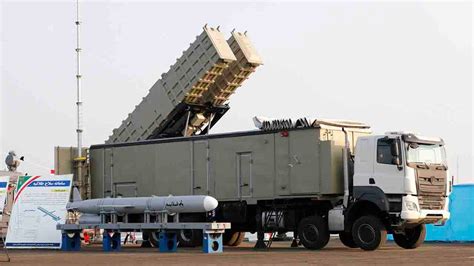
Iran’s defensive doctrine is built around an anti-access/area denial (A2/AD) strategy designed to counter technologically superior adversaries. Rather than relying on a conventional navy, Tehran has developed a decentralized system combining coastal missile batteries, naval mines, fast attack craft, and unmanned systems.
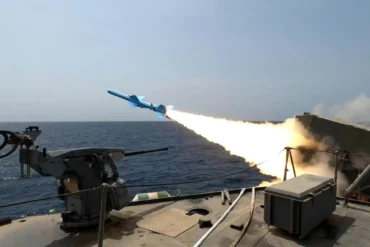
Anti-ship missiles such as the Noor, derived from Chinese technology, provide effective coverage of the Strait with ranges exceeding 120 kilometers. More advanced systems like the Qader and Ghadir extend this reach further, enabling strikes from deep inland positions. These systems are complemented by anti-ship ballistic missiles, including the Khalij Fars, which introduce high-speed threats that complicate interception.
Unmanned platforms further enhance this architecture. Loitering munitions like the Shahed-136 can execute saturation attacks, overwhelming even advanced defense systems. Meanwhile, surveillance drones such as the Mohajer-6 provide targeting data, enabling a seamless sensor-to-shooter chain that reduces response times and increases operational tempo.
Swarm Tactics and Maritime Disruption
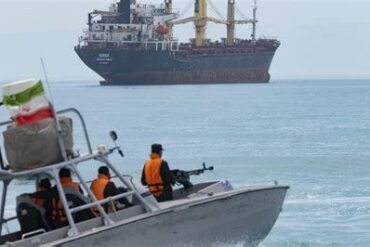
One of Iran’s most potent asymmetric tools lies in its use of swarm tactics. Fast attack craft, capable of speeds exceeding 40 knots, can converge on targets in large numbers, launching rockets, torpedoes, or light anti-ship missiles. These coordinated assaults are designed to saturate defensive systems like Aegis, exploiting gaps through sheer volume and speed.
Below the surface, Ghadir-class midget submarines operate in shallow waters, deploying mines or launching torpedoes in confined maritime spaces. These submarines are particularly difficult to detect, adding a stealthy dimension to Iran’s defensive network.
However, the most disruptive element remains naval mines. Iran’s inventory includes both traditional contact mines and advanced influence mines triggered by magnetic or acoustic signatures. Even limited deployment could halt commercial shipping, forcing costly and time-consuming clearance operations under constant threat.
The Phased U.S. Strategy
U.S. operational planning appears to follow a deliberate, phased approach designed to minimize risk while maximizing effectiveness. The initial phase focuses on suppressing Iran’s coastal defenses through precision strikes and electronic warfare. This includes targeting radar installations, missile batteries, and command-and-control nodes.
Once these threats are degraded, the second phase shifts toward securing maritime corridors. This involves escort operations for commercial vessels, expanded missile defense coverage, and intensive mine countermeasure efforts. Only after these conditions are stabilized would ground forces be introduced.
These forces would not engage in broad occupation but instead execute targeted seizures of critical infrastructure, such as port facilities or key islands. Their presence would serve as both a deterrent and a stabilizing force, ensuring that cleared areas remain secure.
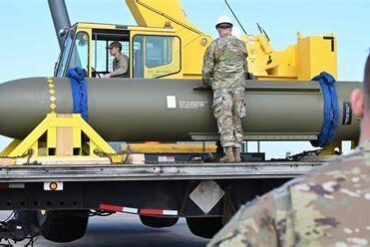
Hours ago, U.S. forces successfully employed multiple 5,000-pound deep penetrator munitions on hardened Iranian missile sites along Iran’s coastline near the Strait of Hormuz. The Iranian anti-ship cruise missiles in these sites posed a risk to international shipping in the… pic.twitter.com/hgCSFH0cqO
— U.S. Central Command (@CENTCOM) March 17, 2026
Risks of Escalation and Regional Fallout
Deploying ground forces on or near Iranian territory represents a significant escalation with far-reaching implications. Such a move would expose U.S. personnel to sustained asymmetric attacks, including missile strikes, drone swarms, and guerrilla-style engagements. The risk of miscalculation or unintended escalation would increase dramatically, potentially drawing in regional actors.
Moreover, the political dimension cannot be ignored. European allies have adopted a cautious stance, focusing primarily on defensive measures such as escorting commercial shipping. Their reluctance to participate in offensive operations could place additional burden on U.S. forces, complicating coalition dynamics.
The broader impact on global energy markets would be immediate. Any disruption—or perceived threat—to the Strait of Hormuz would likely trigger sharp fluctuations in oil prices, affecting economies worldwide. Conversely, successful stabilization could reinforce confidence in global supply chains, underscoring the strategic importance of the operation.
Redefining Control in Modern Maritime Warfare
The consideration of ground force deployment reflects a deeper evolution in military thinking. In an era where adversaries rely on distributed, asymmetric systems, traditional dominance in air and sea domains is no longer sufficient. Control of key terrain and infrastructure is emerging as a निर्णing factor in ensuring long-term stability.
By potentially combining precision strikes, naval superiority, and selective ground operations, the United States is exploring a multi-domain approach tailored to the complexities of modern conflict. The outcome of this strategy—whether implemented or merely planned—will likely influence future doctrines for securing critical maritime chokepoints.
As tensions continue to unfold, the Strait of Hormuz remains more than a geographic bottleneck. It is a proving ground for the next generation of military strategy, where technology, geography, and political will converge in one of the world’s most consequential theaters.