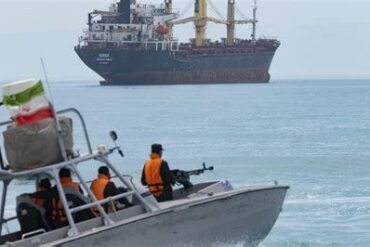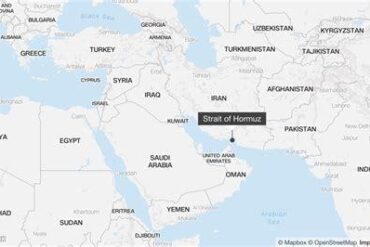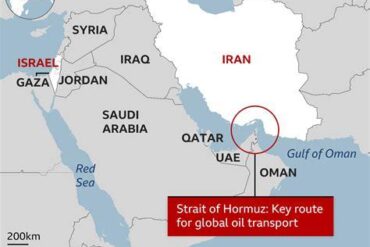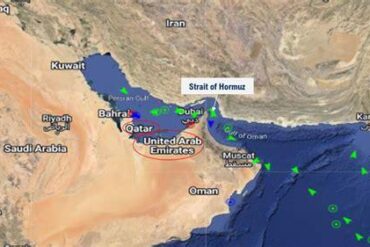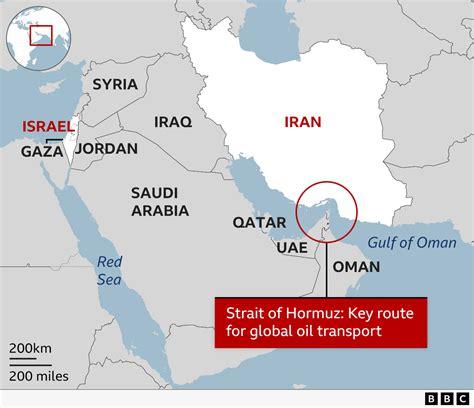
The narrow maritime corridor known as the Strait of Hormuz has long been one of the most volatile arteries of global energy. Roughly a fifth of the world’s oil passes through this thin stretch of water, making it both an economic lifeline and a geopolitical fault line. When tensions escalate between the United States and Iran, this waterway inevitably becomes the center of gravity. Today’s rising military posturing has eerie echoes from nearly four decades ago—when Washington came surprisingly close to launching a direct assault on Iranian-controlled islands guarding the strait.
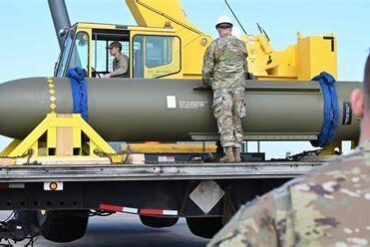
Recent events have reignited this historical parallel. U.S. forces carried out strikes on Kharg Island, Iran’s most important oil export hub, a location so economically vital that it has often been described as the country’s petroleum heartbeat. According to statements by Donald Trump, the strike targeted military installations while deliberately avoiding the island’s oil infrastructure. At nearly the same moment, American planners ordered the deployment of thousands of Marines aboard amphibious assault ships heading toward the Middle East.
Together, these moves triggered intense speculation among military analysts. If maritime security in the Hormuz corridor continues to deteriorate, the United States could consider seizing key Iranian islands overlooking the strait. Such an operation would theoretically ensure safe passage for oil tankers under persistent threat of attack. Yet history suggests that this seemingly straightforward solution is far more complicated—and potentially disastrous—than it appears.
The Tanker War: When Oil Shipping Became a Battlefield
To understand the modern strategic dilemma, one must revisit the final years of the Iran–Iraq War, particularly its brutal maritime phase known as the Tanker War. By the mid-1980s, both Iran and Iraq had begun attacking each other’s oil shipments to cripple economic lifelines. Tankers navigating the Persian Gulf became floating targets.
Between 1984 and 1988, more than 450 commercial vessels were attacked in the region. Nearly 250 of them were oil tankers, vessels carrying the raw fuel of the global economy. The toll was staggering: hundreds of civilian seafarers were killed or injured, shipping insurance costs soared, and the international oil market trembled with uncertainty.
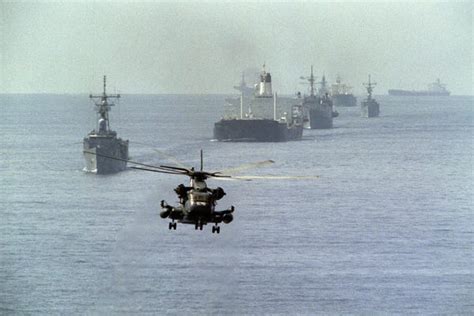
The United States entered the conflict not as a direct belligerent but as a protector of global trade routes. Under a controversial arrangement, Kuwaiti oil tankers were reflagged under the U.S. flag, allowing American naval escorts to accompany them through the dangerous waters of the Gulf. This escort mission placed the U.S. Navy directly into the crosshairs of regional hostilities.
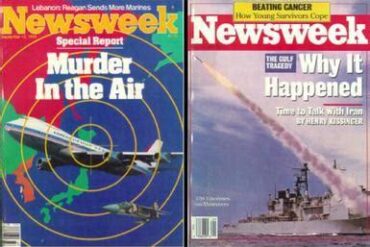
A dramatic turning point came in May 1987 when the guided missile frigate USS Stark was struck by two Exocet missiles fired from an Iraqi aircraft. Thirty-seven American sailors died. The irony was stark: Iraq, technically aligned with Washington against Iran, had delivered the deadly blow. Yet the incident accelerated the United States’ decision to deepen its military presence in the region.
Escalation in the Persian Gulf
The late 1980s represented a period of extraordinary tension between Washington and Tehran. The United States had already suffered a series of humiliations in the region during the previous decade. The 1979 Iranian hostage crisis, the failed Operation Eagle Claw rescue mission in 1980, and the devastating 1983 Beirut barracks bombing collectively eroded American prestige.
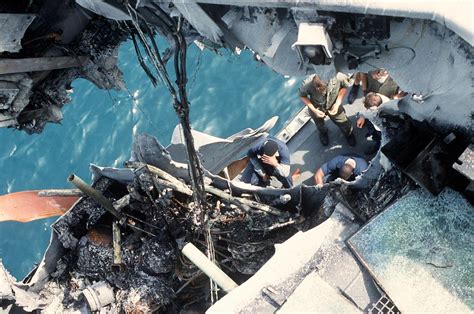
Against this backdrop, another crisis erupted in April 1988 when the frigate USS Samuel B. Roberts struck an Iranian naval mine in the Persian Gulf. The explosion nearly sank the vessel and injured several sailors. Washington responded swiftly.
Within days, the United States launched Operation Praying Mantis, a powerful retaliatory strike designed to cripple Iran’s naval capabilities. What followed was the largest naval engagement involving the United States since the Second World War.
American warships and aircraft systematically attacked Iranian targets across the Gulf. Two offshore oil platforms used for military surveillance—Sassan and Sirri—were destroyed. Iranian naval vessels were sunk or crippled. Armed speedboats were hunted down and eliminated. Iranian F-4 Phantom fighters were forced to retreat under missile fire.
In just a few hours of combat, the United States effectively neutralized nearly half of Iran’s operational naval fleet. Strategically, the operation demonstrated overwhelming American firepower and temporarily restored maritime deterrence in the region.
The Hidden Plan to Seize Hormuz Islands
Yet behind the scenes, American planners explored an even more ambitious option. According to recollections from former U.S. Navy intelligence specialist Malcolm Nance, the Pentagon conducted a classified war-gaming exercise examining the feasibility of seizing Iranian islands inside the Strait of Hormuz.
These islands were not random pieces of territory. Each held strategic significance that could transform control of the maritime chokepoint.
Among the key targets considered were:
- Larak Island, a rocky outpost capable of hosting radar and missile installations
- Hormuz Island, positioned directly at the mouth of the channel
- Qeshm Island, containing population centers and military infrastructure
- Hengam Island, often used for observation posts
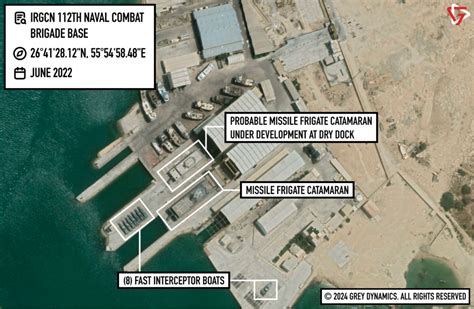
Capturing these islands would allow American forces to box in the Iranian naval base at Bandar Abbas, effectively controlling every entrance into the strait. Tankers could then transit the corridor under U.S. protection while Iran’s ability to interfere would be drastically reduced.
From a purely tactical perspective, the idea held appeal. Geography favors whoever dominates the high ground overlooking a narrow waterway. Control the islands, and you control the passage.
Yet the plan never left the planning stage.
Why Washington Chose Not to Invade
Military simulations quickly exposed the hidden costs of such an operation. Seizing islands might appear straightforward on a map, but the terrain surrounding the Strait of Hormuz is dominated by steep Iranian mountains, providing natural launch points for attacks.
According to Malcolm Nance’s recollection, U.S. planners feared a relentless wave of asymmetric warfare from the Islamic Revolutionary Guard Corps (IRGC) and the Basij, Iran’s massive volunteer militia network.
These forces could swarm the islands through unconventional tactics:
- Suicide assaults
- Small-boat raids
- Rocket and artillery bombardments from the mainland
- Waves of irregular fighters infiltrating mountainous terrain
What looked like a quick amphibious seizure risked transforming into a grinding occupation under constant attack.
Even logistics posed a nightmare. American troops stationed on captured islands would rely on supply lines running through the very waters Iran could mine or attack. Bases in Gulf states such as Qatar or the United Arab Emirates might become targets for retaliatory strikes, potentially forcing those governments to reconsider hosting U.S. forces.
In war planning, logistics is often the quiet tyrant. Armies march on fuel, ammunition, and food—and delivering those essentials across a contested strait would expose every resupply convoy to danger.
The Marine Numbers Problem
Another critical issue was force size. War-gaming conducted during the 1988 crisis suggested that an island seizure operation would require at least 6,000 Marines to establish secure control. Even that number carried substantial risk.
A modern Marine Expeditionary Unit typically fields around 2,200 to 2,500 personnel, supported by helicopters, amphibious vehicles, and landing craft. Such a force can conduct rapid raids or limited objectives, but holding contested territory against determined resistance is another matter entirely.
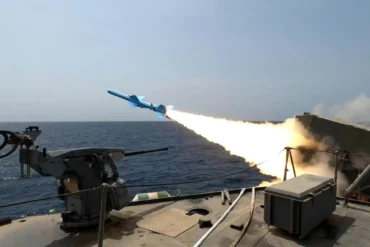
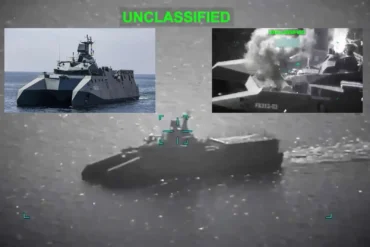
The problem becomes even more severe when facing modern Iranian capabilities—suicide drones, anti-ship missiles, unmanned boats, and sophisticated sea mines. These technologies did not exist in large numbers during the 1980s, yet even then planners concluded the mission was dangerously risky.
Military history is filled with examples where capturing territory proved far easier than keeping it.
A Cautionary Parallel: Hostomel Airport
Strategists today often point to a more recent cautionary tale: Russia’s attempted airborne seizure of Hostomel Airport near Kyiv during the opening days of the Ukraine war.
Russian airborne forces successfully parachuted into the airport, briefly capturing the facility. However, Ukrainian counterattacks quickly isolated the troops. Without a secure supply bridge, the elite paratroopers found themselves trapped under relentless artillery fire.
The operation collapsed within days.
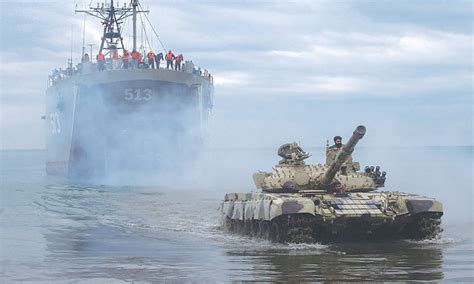
A similar scenario could unfold in the Strait of Hormuz. Paratroopers might seize an island quickly, but without continuous reinforcement and protection from Iranian counterattacks, they could become isolated targets.
Strategic Lessons From 1988
The decision not to invade Iranian islands in 1988 reflected a sober understanding of regional warfare. The United States possessed overwhelming naval superiority, yet planners recognized that geography, logistics, and asymmetric tactics could neutralize technological advantages.
That logic remains remarkably relevant today.
Control of the Strait of Hormuz cannot be reduced to simple military arithmetic. Any attempt to seize the islands would likely trigger a broader regional escalation. Gulf allies might hesitate to support operations that would make them immediate targets for retaliation. Global oil markets would react instantly. Insurance rates for shipping could skyrocket.
Even a limited amphibious campaign might be interpreted by Tehran as a direct invasion of Iranian territory, dramatically widening the conflict.
The Enduring Warning
The 1988 Hormuz crisis left behind a quiet but powerful lesson: some strategic objectives appear tempting precisely because they look simple on the map. In reality, they conceal layers of political, logistical, and tactical complexity.
The Strait of Hormuz is one of those places where geography magnifies every decision. A handful of rocky islands can influence global energy flows, military balances, and diplomatic alliances simultaneously.
In 1988, American commanders examined the possibility of seizing those islands—and ultimately stepped back from the brink. Their caution was not a sign of weakness but a recognition of the profound risks involved.
Decades later, as tensions once again rise across the Persian Gulf, that historical episode still functions as a warning from the past. Sometimes the most decisive move in strategy is the one not taken.