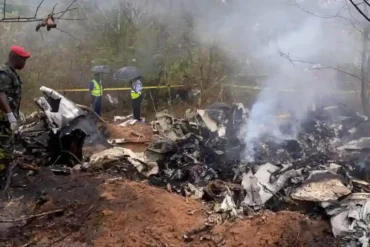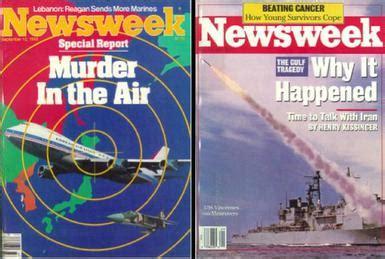
In the summer of 1988, as the brutal Iran-Iraq War neared its conclusion, a catastrophic military error altered the course of U.S.-Iran relations forever. On July 3, the guided-missile cruiser USS Vincennes mistakenly shot down Iran Air Flight 655, killing all 290 civilians aboard. The event, a blend of tragic miscommunication, high-stakes tension, and technological misjudgment, remains one of the most controversial incidents in modern military history.
The Persian Gulf was already a cauldron of hostility. The U.S. had ramped up its naval presence in the region to safeguard vital shipping routes and oil interests, especially under Operation Earnest Will, which aimed to protect Kuwaiti oil tankers from Iranian threats. Though officially neutral, Washington’s deepening involvement — effectively backing Saddam Hussein’s Iraq — placed it in direct opposition to Iran’s revolutionary regime.
An Atmosphere of Suspicion: U.S.-Iran Tensions in the Gulf
The seeds of the confrontation had been sown long before the ill-fated Airbus A300 took off. Relations between Iran and the U.S. had disintegrated following the 1979 Islamic Revolution, which deposed the pro-Western Shah and ushered in Ayatollah Khomeini’s Islamic Republic. The subsequent U.S. embassy hostage crisis poisoned bilateral ties further.
By the mid-1980s, the U.S. viewed Iran not just as a geopolitical irritant but a regional destabilizer. Iranian mine warfare, missile strikes on tankers, and aggressive naval maneuvers pushed Washington to escalate its own military footprint. Skirmishes became frequent. One key flashpoint occurred on April 14, 1988, when USS Samuel B. Roberts struck an Iranian mine. Severely damaged, the vessel narrowly avoided being split in two.
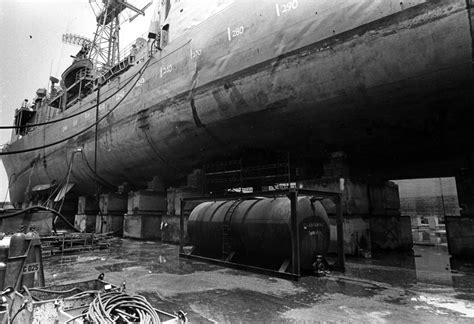
In retaliation, Operation Praying Mantis was launched by U.S. forces four days later, during which several Iranian vessels were sunk. These episodes contributed to a tense and hypervigilant operational environment — the backdrop to the downing of Flight 655.
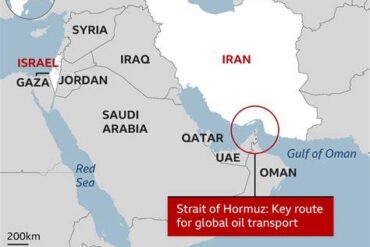
July 3, 1988: The Fateful Morning in the Strait of Hormuz
The USS Vincennes, commanded by Captain William C. Rogers III, was deployed to the Gulf under the pretext of defending American commercial interests. On that day, it was already engaged in a firefight with Iranian Revolutionary Guard gunboats believed to be threatening a Pakistani tanker. The USS Montgomery, a nearby U.S. frigate, was providing support.
Just as the surface engagement continued, Iran Air Flight 655 departed Bandar Abbas Airport — a facility shared by both civilian and military operations. The Airbus took off roughly 27 minutes late, bound for Dubai, a brief 28-minute flight across the Strait. However, the proximity of Iranian F-14 Tomcats, which operated from the same airport, would set the stage for misinterpretation.
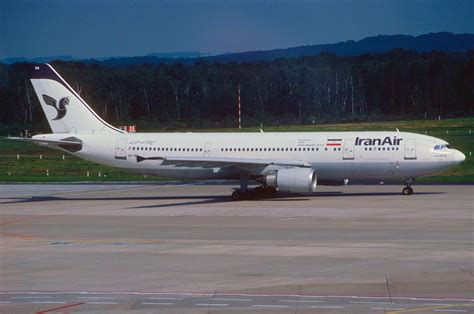
Misidentification: When an Airliner Became a Target
As the Iranian jetliner ascended within its designated commercial airway and emitted a civilian transponder code, it was picked up by the Vincennes’ radar. Onboard personnel, many of whom were experiencing combat for the first time, identified the signal as a potential hostile aircraft — specifically, an Iranian F-14.
The confusion was compounded by faulty intelligence. U.S. Navy records suggested that Iranian F-14s could be armed with AGM-65 Maverick missiles, capable of targeting ships within 16 kilometers. Believing they were under threat, the crew attempted to issue radio warnings across various frequencies. However, Iran Air 655 did not respond.
According to the U.S. investigation, the likely reason was that the aircraft’s crew were not monitoring the U.S. emergency channels. Moments later, under the belief that the plane was descending in an attack vector — although it was actually ascending — Captain Rogers made the decision.
The Vincennes fired two SM-2MR surface-to-air missiles, both of which struck the Airbus.
The Aftermath: All 290 Lives Lost
The civilian aircraft, carrying 66 children, disintegrated midair. All 290 passengers and crew were killed. It remains the deadliest shootdown of a commercial airliner by a military force.
Initially, the Pentagon stated the Airbus was flying outside its usual corridor and descending toward the ship — claims later disproven. The flight was well within its commercial route, climbing normally, and broadcasting its civilian IFF (Identification Friend or Foe) signal. Even more damning, it was later confirmed that USS Vincennes had entered Iranian territorial waters when it fired.
A Global Repercussion: Reactions and Diplomatic Fallout
Iran condemned the incident as a “barbaric massacre”, accusing the U.S. of deliberately targeting civilians. Tehran filed a formal complaint with the International Court of Justice in 1989. Despite evidence of error, Washington never issued a formal apology. Instead, the Reagan administration referred to the incident as a “tragic accident.”
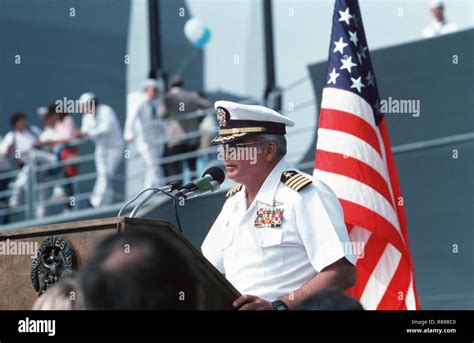
Compounding Iranian outrage was the award of the Legion of Merit to Captain Rogers in 1990 for “exceptionally meritorious conduct.” The move was interpreted in Tehran as tacit approval of his actions. Iran Air Flight 655 quickly became a symbol of American hostility in Iranian discourse.
In 1996, the U.S. reached a settlement at the ICJ, agreeing to pay $62 million in compensation to victims’ families — averaging around $213,000 per victim. However, the deal included no admission of legal liability.
Human Error and the Cost of Misjudgment
A formal U.S. Navy inquiry attributed the tragedy primarily to human error under extreme stress. The crew of the Vincennes had misread critical data and fallen victim to confirmation bias, interpreting all signs through the lens of a presumed hostile act. Their interpretation was shaped by combat conditions, recent attacks like the USS Stark incident, and the intensity of high-tempo operations.
This shootdown wasn’t the only civilian airline tragedy of its kind. The same fatal confusion reoccurred in 2020, when Iran’s Revolutionary Guard accidentally shot down a Ukrainian passenger jet in Tehran airspace shortly after the killing of General Qassem Soleimani. That event, which claimed 176 lives, painfully echoed the precedent set by Flight 655.
Legacy of Flight 655: A Wound That Never Healed
Decades later, the downing of Iran Air Flight 655 continues to fuel distrust between the U.S. and Iran. Despite the passage of time, Iranian officials and citizens annually commemorate the tragedy, emphasizing their view that the incident was not an accident but a calculated show of force designed to demoralize Iran during the final stage of the war.
Each year, July 3rd serves as a national day of mourning. In 2025, on the 37th anniversary, Iranian media once again circulated images of the doomed plane and its passengers, vowing to keep the memory of the victims alive.
While much of the world moved on, the tragedy of Flight 655 remains embedded in the Iranian collective memory as a symbol of Western aggression and military overreach. It also stands as a cautionary tale in the global discourse on warfare, underscoring the deadly consequences of split-second decisions, fog of war, and technological reliance.
In an age when geopolitics can still lead to lethal miscalculations, the lessons from this forgotten catastrophe are more urgent than ever. Despite advancements in identification systems, rules of engagement, and civil-military communication, the human factor — anxiety, error, assumption — remains an ever-present danger.
For the 290 victims of Iran Air Flight 655, the world was altered not by malice but by misjudgment — an error that still casts a long shadow over the waters of the Persian Gulf.