The F/A-18 Super Hornet, a flagship of American naval airpower, secured its first air-to-air kill in dramatic fashion over the battle-worn skies of Syria. This engagement—unfolding amid the maelstrom of the Syrian Civil War and escalating US-Iran tensions—was a pivotal moment for both the aircraft and its pilot, Lieutenant Commander Michael “Mob” Tremel. As the Middle East today witnesses heightened tensions due to the Israel-Iran conflict, the Super Hornet’s combat record offers critical insight into the aircraft’s real-world performance under pressure.
A Sky Crowded With Adversaries: The Precursor to the Kill
In 2017, Operation Inherent Resolve was at full throttle. With a coalition of international forces conducting relentless air campaigns against ISIS targets, Syria’s skies became one of the most contested arenas of modern warfare. American aircraft, particularly F/A-18 Super Hornets, were deployed from US Navy carriers to conduct precision airstrikes, provide Close Air Support (CAS) for Syrian Democratic Forces, and patrol zones teeming with Russian, Iranian, and Syrian combat aircraft.
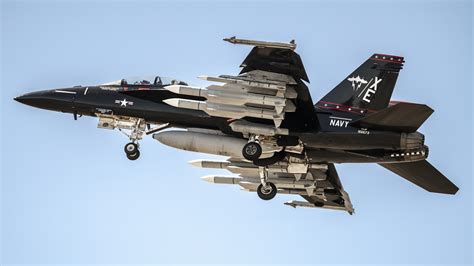
The Super Hornet, flying from the USS George H.W. Bush, was instrumental in delivering thousands of munitions—including JDAMs, laser-guided bombs, and AGM-154 JSOWs—against enemy infrastructure. Precision targeting pods like the AN/ASQ-228 ATFLIR ensured minimal collateral damage despite the densely populated war zones. Yet, the greatest test of this platform’s capabilities came not from ground targets, but from an unexpected confrontation in June 2017.
June 18, 2017: The Rules of Engagement Are Tested
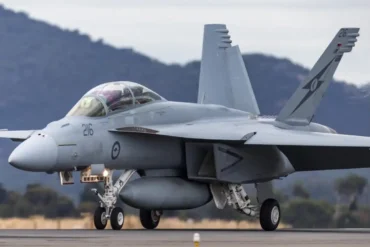
On that fateful day, Syrian government forces launched an offensive against SDF positions near Ja’Din, triggering an urgent request for coalition air support. Among the aircraft dispatched were four Super Hornets: two F/A-18Es flown by Tremel (Freedom 33) and his wingman Jeff Krueger (Freedom 34), and two F/A-18Cs piloted by Stephen Gasecki and William Vuillet.
As they entered Syrian airspace from the north, the Hornets made contact with a Joint Terminal Air Controller (JTAC) operating near Al Tabqa. While awaiting strike orders in the CAS stack, Tremel noticed a Russian-built Su-27 or Su-35 loitering above. Though this Russian jet maintained distance, its presence added a layer of tension.
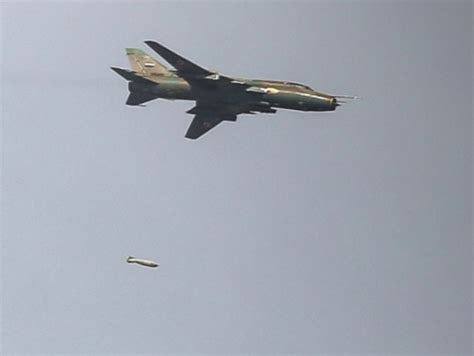
Then came a more pressing radar return—a fast-moving aircraft from the south. Visual confirmation revealed it as a Syrian Su-22 Fitter, notorious for prior chemical strike missions. Despite repeated radio warnings transmitted by an E-3 Sentry and visible deterrence maneuvers—including a “head-butt” pass and flare deployments—the Syrian pilot pressed on.
First Shot Misses: Soviet Flares Prove Effective
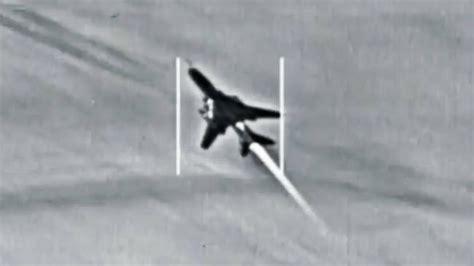
As the Su-22 began to dive and reportedly released munitions targeting friendly SDF positions, Tremel was granted clearance under self-defense protocols. He fired an AIM-9X Sidewinder, a missile known for its precision and tracking power. But surprisingly, the missile failed to strike its target—likely decoyed by the Su-22’s aged yet effective infrared flares.
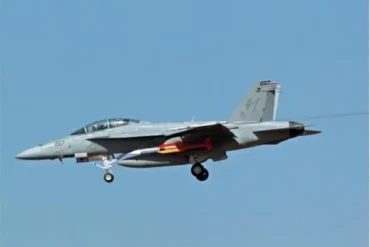
Unfazed and acting quickly, Tremel shifted to an AIM-120 AMRAAM, this time launched from the Super Hornet’s “cheek” station. The missile struck the Su-22 with clinical precision, sending it into a fatal descent. Tremel observed the Syrian pilot eject just before the aircraft was lost from view.
This eight-minute dogfight occurred at an altitude between 10,000 and 15,000 feet and was fought within visual range, a testament to the chaotic nature of modern warfare despite advances in long-range targeting technologies.
Aftermath and Global Fallout
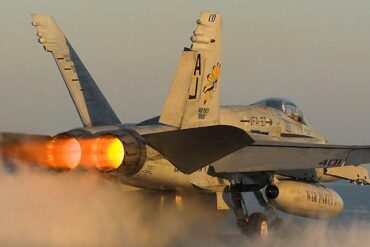
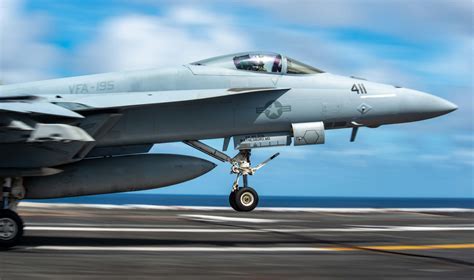
Tremel and his wingman returned safely to the USS George H.W. Bush, where his jet was later marked with a kill silhouette—a Syrian flag below a Su-22 outline. For his actions, Tremel received the Distinguished Flying Cross, and the Super Hornet officially secured its first kill in the skies.
Politically, the shootdown triggered strong condemnation from Syria, which claimed its aircraft was targeting ISIS, not SDF forces. Russia responded by suspending deconfliction coordination, a delicate communication channel that had previously prevented direct US-Russian military engagement. While tensions soared, no armed retaliation followed. Instead, the shootdown underscored how fragile and combustible the airspace over Syria had become.
Super Hornet Validated: A Platform Forged in Combat
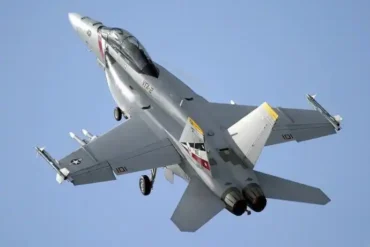
The significance of the event extended beyond headlines. For the F/A-18E Super Hornet, this engagement proved its air-to-air lethality. Unlike air superiority fighters like the F-15 or F-22, the Super Hornet is a multirole workhorse, designed for both strike missions and combat air patrol. The 2017 shootdown validated its ability to transition swiftly from one mission type to another—a vital trait in contested zones.
Despite the aircraft being configured primarily for ground support that day, it executed an air combat mission with precision and decisiveness. This encounter emphasized the need for versatile platforms capable of responding to unpredictable threats in fluid battlespaces.
Today’s Context: Super Hornets Return to the Middle East
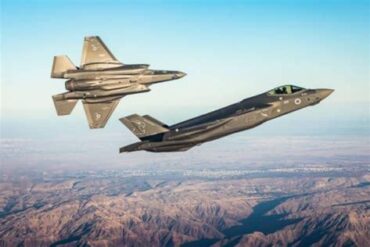
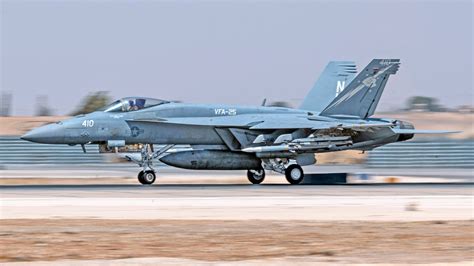
Fast forward to 2025, the USS Nimitz and USS Carl Vinson sail again into the tense Middle East waters, with decks loaded with Super Hornets, EA-18G Growlers, and F-35C Lightning II stealth fighters. These aircraft form a formidable shield around key US allies and strategic interests. In the likely scenario of conflict with Iran or its regional proxies, the F/A-18 Super Hornet will once again be tasked with missions ranging from interception to surgical strikes.
Since late 2023, the Pentagon has deployed five aircraft carriers to the region. The Air Wing of the USS Nimitz (CVN 68) includes:
- F/A-18C/E/F Super Hornets
- EA-18G Growlers
- E-2D Hawkeyes
- MH-60R/S Sea Hawks
The USS Carl Vinson (CVN 70) bolsters the fleet with:
- F-35C Lightning II
- F/A-18E/F Super Hornets
- CMV-22 Ospreys
This potent force, along with the deployment of F-35s and F-22s from land bases, showcases America’s readiness for escalation should diplomatic measures fail.
Conclusion: A Legacy Cemented in Smoke Trails
The 2017 downing of the Su-22 was more than a tactical victory. It was a symbolic moment, cementing the F/A-18E’s place in modern aerial combat history. As geopolitical tensions shift from Syria to the broader Israel-Iran theater, the legacy of that first kill carries forward—proof that when called upon, the Super Hornet is more than ready to defend, strike, and, if necessary, eliminate aerial threats.
With every deployment into conflict zones, the Super Hornet carries not just ordnance, but the burden and glory of past missions. In skies teeming with drones, hypersonics, and stealthy foes, its blend of power, flexibility, and combat-tested resolve ensures it remains a backbone of US naval airpower. Tremel’s split-second decisions and his aircraft’s unwavering performance now stand as defining moments—not only in a war over Syria, but in the continued evolution of air dominance in the 21st century.