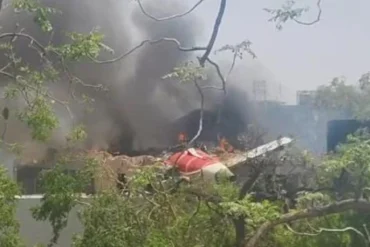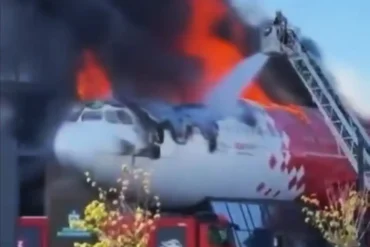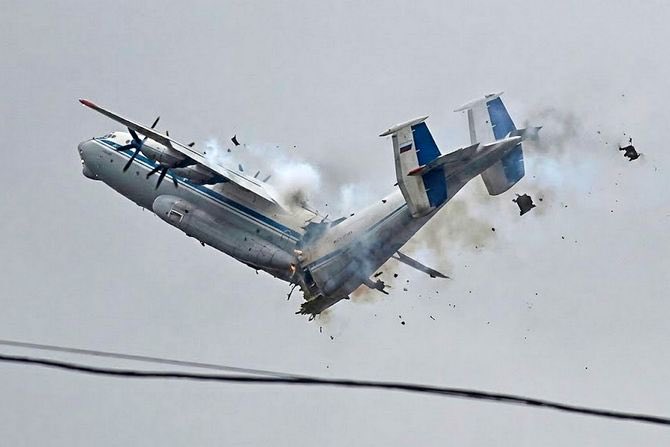
On December 9, 2025, a catastrophic mid-air disintegration of the Russian An-22 ‘Antei’ transport aircraft shook the aviation world, sparking intense scrutiny into the safety and readiness of aging military aircraft. The crash, which occurred over the Uvodskoye Reservoir in Russia’s Ivanovo region, claimed the lives of all seven crew members and reignited fears about the viability of Soviet-era aircraft still in use.
An-22 Antei: A Giant From a Bygone Era
The Antonov An-22, known by its NATO reporting name “Cock”, remains the largest turboprop-powered aircraft ever built. First introduced in 1967, it was designed during the Cold War to carry heavy military cargo across vast distances, even from rough or unpaved runways. With four turboprop engines and eight contra-rotating propellers, the An-22 was a beast of burden that served the Soviet Union with pride. However, in the jet-powered age, the An-22 was gradually retired in favor of more modern aircraft like the Ilyushin Il-76 and Antonov An-124.
Until recently, it was believed that Russia had completely retired the An-22 fleet. The aircraft involved in the crash, RF-09309, was reportedly the last operational unit. It had been earmarked for museum display in Verkhnyaya Pyshma in 2024 but never arrived. Instead, it was mysteriously returned to the skies—likely an emergency decision due to the loss of multiple Il-76s during the ongoing Ukraine conflict. Some analysts suggest this rushed reactivation was a desperate measure that ended in disaster.
Horrific Crash Footage: Aircraft Splits Mid-Air
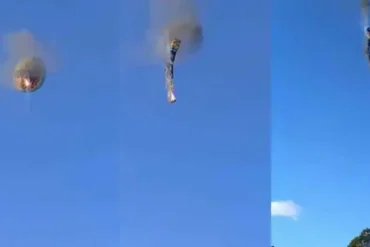
Footage shared by the Russian Telegram channel Mash shows the An-22 in a steep, uncontrolled dive before its fuselage splits in two, with the tail section detaching completely. The video, now viral on social media, is haunting in its clarity—revealing the sheer helplessness of the situation.
According to preliminary analysis, the aircraft suffered a catastrophic structural failure. The breakup likely began in the fuselage during a high-speed descent, resulting in total in-flight disintegration. Former Navy SEAL and analyst Chuck Pfarrer noted that two loadmasters aboard the aircraft appeared to attempt parachute escapes, but both suffered fatal malfunctions—one a ‘horseshoe malfunction’ and the other a ‘line over’, both unrecoverable.
Maintenance Failures and Metal Fatigue: A Lethal Combination
Although the official investigation is ongoing, early reports point to control actuator failure stemming from poor post-maintenance procedures. The Russian military aviation sector, already battered by war-related sanctions and logistical constraints, is reportedly struggling with a lack of qualified maintenance staff and limited access to original Antonov parts, which are produced in Ukraine.
Experts believe this crash may be the result of decades-old metal fatigue, worsened by rushed repairs. Long-term stress fractures in the airframe’s load-bearing structures are a known issue in aging Soviet-built aircraft, especially those without complete overhaul documentation.
Echoes of the Turkish C-130 Tragedy
Just a month before the An-22 disaster, the world witnessed a strikingly similar event. On November 2025, a Turkish Air Force C-130E Hercules, aged 57 years, broke apart mid-air at 24,000 feet, while flying from Azerbaijan to Turkey. The aircraft disintegrated near the Georgia-Azerbaijan border, killing all 20 military personnel on board.
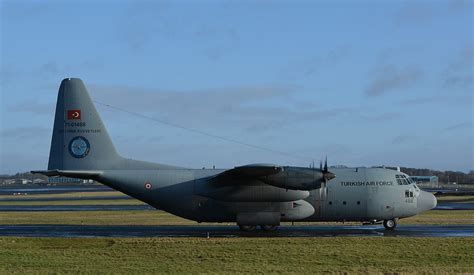
Footage showed the severing of both the nose section and tail, in a manner eerily reminiscent of the An-22 footage. Investigators suggested metal fatigue, propeller failure, or accumulated stress fractures as possible causes, again linked to operating obsolete military hardware beyond its safe lifespan.
A Pattern of Aerial Disintegration: Global Incidents
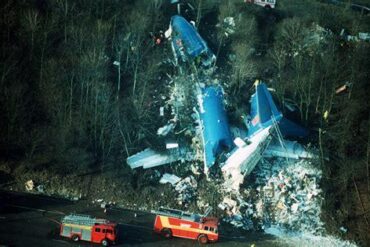
The An-22 and C-130 are far from isolated cases. Over the last two decades, multiple aircraft have experienced fatal in-flight structural failures, many stemming from overlooked fatigue cracks, poor maintenance, or outdated design tolerances:
- July 2017: A USMC KC-130T crashed in Mississippi after a corroded propeller blade detached, slicing into the fuselage. The resulting structural damage led to total disintegration. All 16 servicemen were killed.
- November 2007: A USAF F-15C disintegrated mid-air over Missouri during a training exercise. The upper right longeron, a critical structural component, failed due to undetected fatigue cracks, traced back to manufacturing defects. The accident grounded the entire F-15 fleet for inspection.
- January 1961: A B-52 Stratofortress disintegrated mid-air over North Carolina due to a fuel leak, resulting in the inadvertent drop of two 3.8-megaton nuclear bombs. Although they did not detonate, the incident highlighted the dangers of structural failure in airborne nuclear missions.
These accidents underscore a universal truth in aviation: metal fatigue and maintenance errors are unforgiving. Once a critical structural component gives way, there is often no chance of recovery.
Russia’s Aging Airlift Fleet Under the Microscope
The An-22 crash has intensified concerns over Russia’s deteriorating strategic airlift capability, particularly in the wake of sanctions, war-driven attrition, and limited aircraft production.
The Il-76, Russia’s workhorse jet transport, has suffered significant losses in Ukraine due to surface-to-air missile attacks. With supply lines strained, Russia’s reliance on legacy aircraft like the An-22 becomes both a necessity and a liability. Military observers fear that more such outdated aircraft may be pressed into service without adequate testing or overhaul, risking further tragedies.
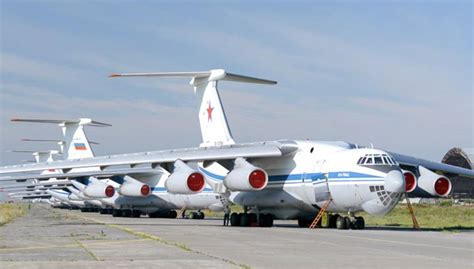
Moreover, the lack of access to Ukrainian Antonov expertise, spare parts, and structural data has crippled maintenance efforts. Russia’s attempts to domestically reverse-engineer parts have yet to meet reliability standards. In the case of RF-09309, it appears the airframe had surpassed its safe operational limits, and maintenance errors sealed its fate.
Why Mid-Air Breakups Are So Deadly
Mid-air disintegrations are rare but almost always fatal. Unlike mechanical failures where an aircraft can glide to an emergency landing, a structural breakup offers no margin for error. The forces involved often render parachute escape impossible, and the debris field makes recovery efforts grim.
In RF-09309’s case, the altitude was insufficient to allow crew members time to react. The speed of the breakup was such that the tail section separated instantly, severing vital control surfaces and leading to an uncontrollable spiral.
Military aviation must heed these warnings. Lifespan extension programs must go beyond patchwork repairs and include full structural inspections with non-destructive testing. The world has repeatedly seen that pushing aircraft beyond their limits costs lives.
Conclusion: A Tragedy Rooted in Neglect and Necessity
The An-22’s demise was not just a mechanical failure—it was a systemic failure. A confluence of geopolitical pressure, outdated hardware, maintenance bottlenecks, and overreliance on legacy systems led to the deaths of seven experienced crew members.
The aircraft was meant for museum display. Instead, it met a fiery end above a frozen lake. This tragic irony reflects the grim state of Russian military aviation in 2025, where desperation outweighs safety, and relics of Cold War engineering are dragged back into active duty without the infrastructure to support them.
Unless urgent changes are made to overhaul inspection protocols, phase out obsolete airframes, and invest in domestic manufacturing capabilities, more incidents like the An-22 and Turkish C-130 crashes may soon follow—not as isolated tragedies, but as predictable outcomes of aviation negligence.