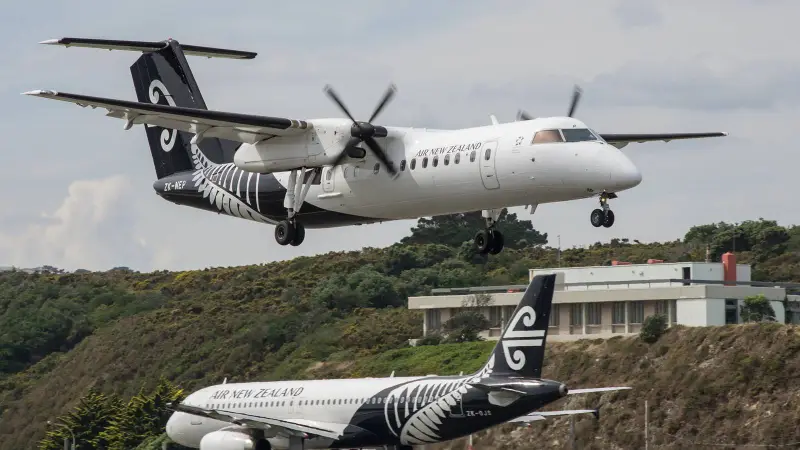
On August 28, 2023, the skies above Whangārei, New Zealand, nearly bore witness to a catastrophic aviation disaster. A routine regional flight and a small training aircraft came within seconds and just under 5 miles of a head-on mid-air collision, sparking immediate investigations and renewed scrutiny of New Zealand’s airspace management systems. The near-disaster exposed serious lapses in oversight, airspace design, and communication between pilots and controllers.
A Near Miss Over Whangārei: Critical Seconds in the Sky
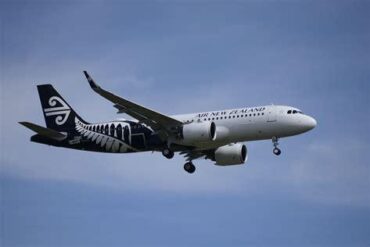
At the heart of the incident was an Air New Zealand Q300, a 50-seat turboprop with 40 passengers on board, departing Whangārei Airport (WRE) en route to Auckland. Simultaneously, a Beech Duchess twin-engine aircraft, operated by a local flying school, was navigating toward Whangārei from Ardmore, descending through the same sector of sky. Both aircraft were unknowingly converging at 6,000 feet, in cloudy conditions—a deadly mix when visibility is limited and reliance on instruments is paramount.
The Q300’s onboard airborne collision avoidance system (ACAS) issued a warning—an indication that another aircraft was dangerously close. Acting swiftly, air traffic control cleared the commercial flight to climb to 8,000 feet, narrowly avoiding an incident that could have claimed dozens of lives. The final recorded separation? A mere 41 seconds or 4.9 miles, with a combined closing speed of 700 km/h (434 mph).
Systemic Failures: How Did This Happen?
The New Zealand Transport Accident Investigation Commission (TAIC) immediately launched a probe. Their findings were damning. The collision was not prevented by robust design or operational excellence—it was averted by chance and a last-minute response. The report identified several alarming issues:
- Uncoordinated Airspace Management: The Northland airspace had not been reviewed since 2014, despite growing air traffic and earlier calls for reassessment.
- Insufficient Traffic Advisories: Both the air traffic controller and the Flight Information Service Officer (FISO) failed to deliver timely, adequate information to the pilots.
- Uncontrolled Airspace Confusion: Crucially, both aircraft were maneuvering in Class G uncontrolled airspace, with no guarantee of traffic separation or visibility due to cloud cover.
The Beech Duchess had descended blindly into the same altitude as the Q300, relying only on its own navigation and visual cues—impossible to use inside cloud banks. The responsibility for avoiding a collision fell squarely on the pilots, especially the trainee flight.
A Decade of Warnings Ignored
Pilots and aviation stakeholders had raised numerous red flags over the years, urging for a comprehensive review of Northland sector airspace. Yet bureaucratic inertia meant nothing had changed since 2014. The TAIC report found no agency clearly accountable for initiating airspace reviews or identifying evolving risks—leaving a gaping hole in safety governance.
This was not merely an isolated case. The Commission warned that similar risks exist across New Zealand, especially in Timaru, Hokitika, Whakatāne, and the Kāpiti Coast, where uncontrolled airspace is common, and traffic levels are rising.
What Has Changed Since the Incident?
Following the report, the Civil Aviation Authority (CAA) acknowledged systemic weaknesses. It has begun collaborating with local operators and stakeholders in Whangārei to introduce new safety protocols and reclassify airspace where necessary. A broader national review of uncontrolled airspace regions is also underway.
While these moves are welcome, aviation experts warn they may be too late for some areas and too slow to protect others. The near miss has become a wake-up call—a reminder that safety in aviation is only as strong as the systems, oversight, and communication behind it.
The Bigger Picture: Regional Aircraft and Risks
Air New Zealand’s Q300 fleet, including the aircraft involved, is part of a vital regional network. These aging turboprops—averaging 17.2 years in service—are well-suited to the short-haul, weather-prone, narrow runways of the country’s remote airports. Alongside the newer ATR 72-600s, they connect 20 domestic destinations, forming the backbone of the national air travel infrastructure.
Yet the reliance on visual flight rules in uncontrolled airspace—especially with such high traffic volumes—demands a higher standard of regulatory vigilance and modern oversight tools.
Conclusion: A Preventable Crisis Narrowly Averted
The events of August 28 were not an anomaly. They were the inevitable result of neglected oversight, outdated airspace design, and fragmented communication systems. In the world of aviation, where safety is measured in seconds and inches, there is no room for complacency.
Only through urgent reform—mandated reviews, clear agency responsibility, improved pilot alerts, and reclassified airspace—can New Zealand avoid turning the next near-miss into a tragedy. Until then, every cloud-covered flight through uncontrolled skies remains a roll of the dice.