The commercial aviation industry is built on layers of redundancy, precision, and human expertise. Yet, even within this meticulously engineered environment, rare and unpredictable human factors can suddenly disrupt normal operations. One such alarming incident unfolded aboard SWISS flight LX564, where a seemingly minor health issue—food poisoning—rapidly escalated into a high-risk cockpit emergency.
On August 26, 2018, the Airbus A320-214 departed Zurich en route to Nice, carrying 166 passengers and crew. The flight progressed uneventfully for most of its duration. However, as the aircraft began its descent toward the French Riviera, an unexpected medical crisis incapacitated the Captain, triggering a chain of events that tested the First Officer’s skill, situational awareness, and composure under pressure.
Sudden Incapacitation on Final Approach
As the aircraft entered its approach phase, the Captain began experiencing symptoms consistent with acute gastrointestinal distress. Initially, he managed to communicate his deteriorating condition to the First Officer, a critical action that would prove decisive. Within moments, however, his condition worsened dramatically, leading to a loss of consciousness.
What made this situation particularly dangerous was not just the Captain’s incapacitation, but the physical interaction between his unconscious body and the aircraft controls. Unlike traditional control yokes, the Airbus A320 uses a side-stick controller, which can register input even from unintended pressure.
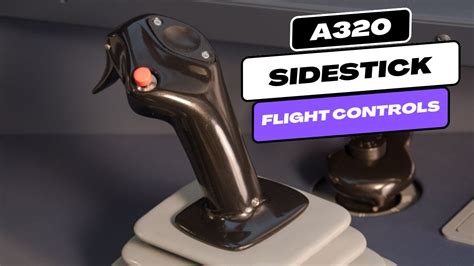
Within seconds of losing consciousness, the Captain’s body applied an involuntary input, causing the aircraft to bank approximately 10 degrees to the right. The First Officer immediately corrected the deviation, stabilizing the aircraft. However, the situation deteriorated further when the Captain’s slumped posture introduced another unintended input—this time resulting in an 8-degree bank to the left.
Each of these deviations occurred during a critical phase of flight, where altitude, speed, and alignment must be tightly controlled. The aircraft briefly experienced a sink rate exceeding 1,500 feet per minute, a potentially hazardous condition if not corrected promptly.
First Officer’s Rapid Response Prevents Catastrophe
Faced with a rapidly unfolding emergency, the First Officer demonstrated exceptional airmanship. Without hesitation, he assumed full control of the aircraft, counteracting each unintended movement while maintaining focus on the approach.
Recognizing that the Captain’s position posed a continued risk, he physically pushed the Captain’s seat backward, creating space between the unconscious pilot and the controls. This decisive action eliminated further interference and allowed the First Officer to stabilize the aircraft’s trajectory.
Despite the escalating tension, the approach continued. The First Officer managed the descent manually, without engaging the autopilot, due to the extreme time constraints and the immediate need for tactile control. His actions ensured that the aircraft remained within safe operational parameters as it approached the runway.
A Narrow Window Before Touchdown
In a remarkable twist, the Captain regained consciousness approximately 30 seconds before landing, as the aircraft descended through 200 feet. Though still recovering, his return added a layer of situational awareness to the cockpit during the final moments of the approach.
The aircraft touched down safely on Runway 04L at Nice Côte d’Azur Airport, with no injuries reported among passengers or crew. The immediate danger had passed, but the seriousness of the incident was far from over.
After clearing the runway, the First Officer issued a “Pan-Pan” distress call, signaling an urgent but non-life-threatening situation. The aircraft came to a stop on the taxiway, where emergency responders were already mobilizing to assist the Captain.
Once the engines were shut down, the Captain acknowledged that he had been feeling unwell throughout the flight, suggesting that the onset of symptoms had been gradual but underestimated.
Medical Explanation: Food Poisoning and Vasovagal Syncope
The investigation, later released by the Swiss Transportation Safety Investigation Board, identified the root cause as food poisoning, which triggered a rare physiological response known as vasovagal syncope. This condition involves a sudden drop in heart rate and blood pressure, leading to fainting.
In this case, the body’s overreaction to gastrointestinal distress resulted in a complete loss of consciousness. While fainting itself is not uncommon, its occurrence in a cockpit—during a critical phase of flight—introduces severe operational risks.
This incident highlights how even non-fatal medical conditions can become high-stakes threats in aviation environments, particularly when they affect the pilot in command.
Emergency Protocols and Cockpit Resource Management
Commercial aviation is designed to handle pilot incapacitation through well-established procedures. One such protocol is the “two communication rule,” which requires a pilot to take control if their colleague fails to respond to two verbal prompts. In this case, the Captain’s explicit warning eliminated ambiguity, allowing the First Officer to act immediately.
However, the situation unfolded so quickly that several standard procedures could not be implemented. The First Officer did not activate the “takeover” pushbutton, nor did he have time to restrain the Captain or call for cabin crew assistance. His priority remained clear: maintain control of the aircraft and ensure a safe landing.
Interestingly, the emergency signal was transmitted only after landing. The use of “Pan-Pan” instead of “Mayday” reflected the fact that the immediate danger had subsided, though urgent assistance was still required.
A Pattern Emerges: Another SWISS Food Poisoning Incident
This was not an isolated case. In August 2020, another SWISS Airbus A321 flight experienced a similar incident, where a pilot was suspected of suffering from food poisoning during approach. In that instance, the unaffected pilot declared a “Mayday” and successfully landed the aircraft.
These recurring events raise questions about airline catering safety protocols. Airlines typically require pilots to consume different meals before a flight, minimizing the risk of simultaneous incapacitation. However, if contamination occurs at the source, even this precaution may not be sufficient.
Lessons for Aviation Safety and Risk Management
The LX564 incident underscores the importance of redundancy in cockpit operations and the critical role of the First Officer as an equal partner in flight safety. It also highlights the unpredictable nature of human physiology, which can override even the most robust safety systems.
While technology continues to evolve, including automation and advanced monitoring systems, the human element remains central. Situations like this reinforce the need for continuous training, rapid decision-making, and adaptability in the face of unforeseen challenges.
Ultimately, what could have become a catastrophic incident instead stands as a testament to professionalism, training, and composure under pressure. The safe outcome was not a matter of luck, but the result of disciplined execution in a moment where every second counted.