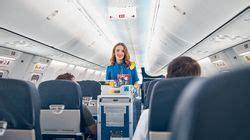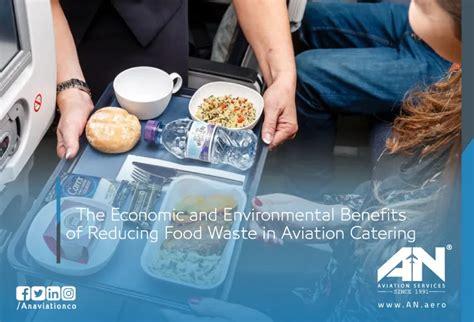
The aviation industry has spent decades refining fuel efficiency, aircraft design, and route optimization, yet one surprisingly stubborn inefficiency has lingered in plain sight: onboard catering waste. While airlines deploy sophisticated algorithms to calculate fuel loads down to the kilogram, food provisioning often remains rooted in historical averages and cautious overestimation. Airbus’ Smart Catering initiative steps directly into this gap, introducing a data-driven system designed to transform how airlines understand, predict, and manage inflight consumption.
At its core, Smart Catering represents a shift from guesswork to granular intelligence. Airlines have long operated under a simple but costly assumption—better to have too much food than too little. The result has been a consistent pattern of over-provisioning, generating unnecessary waste, increasing aircraft weight, and quietly inflating operational costs across global fleets. Airbus’ new approach challenges this legacy mindset by embedding real-time data analytics into the catering process, turning every meal served into a measurable data point.
This initiative arrives at a critical moment. As environmental scrutiny intensifies and margins remain tight, airlines are under growing pressure to address inefficiencies that were once tolerated. Smart Catering positions itself not merely as a sustainability tool, but as a strategic operational upgrade—one capable of reshaping how airlines balance cost, service quality, and environmental responsibility.
The Hidden Cost of In-Flight Food Waste
The scale of airline catering waste is far larger than most passengers realize. Globally, the industry generates approximately 3.97 million tons of cabin waste annually, with projections suggesting this could approach 4.4 million tons by 2025 and potentially double by 2040. Each passenger contributes an average of 1.5 kilograms of waste per journey, and a striking portion of that—around 18–20%—consists of untouched food and beverages.
This isn’t simply a matter of uneaten meals being discarded. Strict international regulations surrounding in-flight catering waste, particularly on international routes, often require unused food to be incinerated or sent to landfill, eliminating opportunities for redistribution or recycling. The environmental implications are significant, but the operational consequences are equally pressing.
Every additional kilogram loaded onto an aircraft increases fuel consumption. Multiply that across thousands of daily flights, and the cost becomes substantial. Airlines are effectively burning fuel to transport food that will never be consumed, creating a feedback loop of inefficiency that impacts both profitability and carbon emissions.
Complicating matters further is the inherent unpredictability of passenger behavior. Consumption patterns vary based on route length, time of day, cultural preferences, cabin class, and even weather conditions. Faced with this variability, airlines have historically defaulted to conservative planning—ensuring availability at the expense of efficiency.
What Smart Catering Actually Changes
Airbus’ Smart Catering system introduces a level of visibility that has been largely absent from inflight operations. Traditionally, once an aircraft door closes, catering data effectively disappears into what industry insiders describe as a “black hole” of information. What passengers eat, what they ignore, and what returns untouched has rarely been captured in a structured, scalable way.
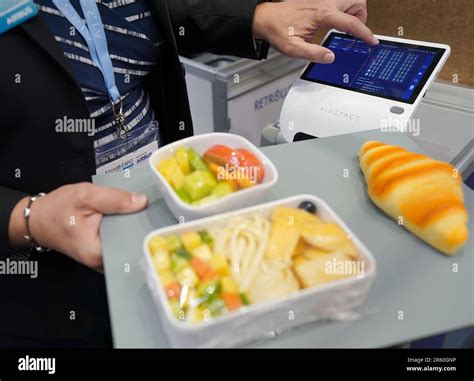
Smart Catering eliminates that blind spot through an integrated combination of AI-powered imaging and data logging. A Food Scanner, mounted on the catering trolley, uses a downward-facing camera to analyze meal trays as they are served and again when they are returned. Simultaneously, a barcode scanner records beverage distribution, creating a synchronized dataset of consumption versus waste.
What makes the system particularly compelling is its low-friction implementation. Rather than requiring entirely new hardware ecosystems, Smart Catering leverages existing onboard devices, including crew tablets and cameras. This design choice reduces adoption barriers and allows airlines to integrate the system without major operational disruption.
The result is a continuous stream of structured data: what was loaded, what was served, what was consumed, and what was discarded. For the first time, airlines gain a real-time, evidence-based understanding of passenger behavior at 35,000 feet.
From Raw Data to Predictive Intelligence
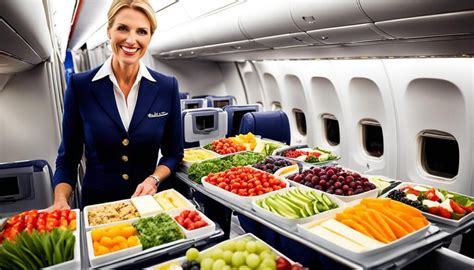
Collecting data is only the beginning. The true power of Smart Catering lies in how that information is processed and transformed into actionable insights. Each interaction—every scanned tray and logged beverage—is time-stamped, categorized, and linked to contextual variables such as route, cabin class, and service phase.
This data is transmitted to a cloud-based analytics platform, where machine learning models begin their work. These models clean and standardize the inputs before applying pattern recognition and predictive algorithms. Over time, the system identifies recurring consumption trends, enabling increasingly accurate forecasts.
Instead of relying on static historical averages, airlines can now access dynamic probability models. These models estimate how likely specific items are to be consumed on a given route, during a particular season, or within a certain passenger demographic. The output isn’t guesswork—it’s a statistically grounded framework that includes confidence intervals and variance ranges, giving planners a clearer understanding of both demand and uncertainty.
This continuous learning loop is critical. As more flights are analyzed, the system becomes smarter, refining its predictions and adapting to changing passenger behaviors. In effect, Smart Catering evolves alongside the airline’s network, transforming catering from a static function into a living, data-driven system.
Real-World Testing: Virgin Atlantic’s Early Adoption
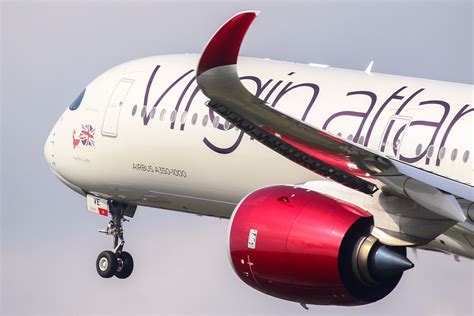
Airbus moved beyond theory with a series of controlled and live trials, most notably in collaboration with Virgin Atlantic. Initial testing took place in a cabin simulation environment in the United Kingdom, allowing engineers to evaluate system performance under realistic service conditions.
Following successful simulations, the technology was deployed on active routes, including London Heathrow to New York JFK and London Heathrow to Orlando flights operated by Airbus A330 and A350 aircraft. These trials provided valuable insights into how Smart Catering performs in real-world operations.
Feedback from cabin crew was notably positive. The system was designed to operate seamlessly in the background, requiring minimal additional input from staff. This is a crucial factor—any technology that increases crew workload risks resistance, regardless of its theoretical benefits.
Early results indicated that Smart Catering could deliver meaningful, actionable insights without disrupting service routines. Airlines were able to observe consumption patterns with unprecedented clarity, laying the groundwork for more precise catering strategies.
Efficiency Gains That Go Beyond Sustainability
While environmental benefits are a central selling point, the business implications of Smart Catering are equally compelling. Reducing excess food directly lowers aircraft weight, which in turn decreases fuel burn. Even small reductions can translate into millions of dollars in annual savings for large carriers.
Beyond fuel efficiency, the system enables airlines to better align catering with passenger preferences. By understanding what travelers actually consume, airlines can prioritize high-demand items while eliminating consistently unpopular options. This not only reduces waste but also enhances the passenger experience by increasing the likelihood that preferred meals are available.
There is also a potential revenue upside. More accurate provisioning allows airlines to optimize ancillary sales, ensuring that purchasable food and beverage options match real demand. Over time, catering could shift from being a cost center to becoming a data-informed revenue contributor.
However, this transition is not without risk. Moving away from overstocking introduces the possibility of occasional shortages, particularly in scenarios where predictive models misjudge demand. Airlines will need to carefully balance efficiency gains with service reliability, especially in premium cabins where expectations are higher.
A Broader Shift Toward Data-Driven Aviation
Smart Catering is part of a larger transformation within the aviation industry—one that prioritizes data visibility and real-time decision-making across all operational domains. Historically, many aspects of airline operations have relied on experience-based judgment and conservative planning. While effective, this approach often sacrifices efficiency for predictability.
The integration of AI systems like Smart Catering signals a move toward evidence-based optimization, where decisions are informed by continuous streams of data rather than static assumptions. This shift is already visible in areas such as predictive maintenance and flight operations, and catering is now joining that evolution.
Importantly, the implications extend beyond food service. The same principles—data collection, pattern recognition, and predictive modeling—can be applied to other onboard services, from inventory management to passenger experience personalization. Smart Catering may well serve as a gateway innovation, demonstrating how even overlooked aspects of airline operations can benefit from intelligent systems.
What Comes Next for Airbus and the Industry
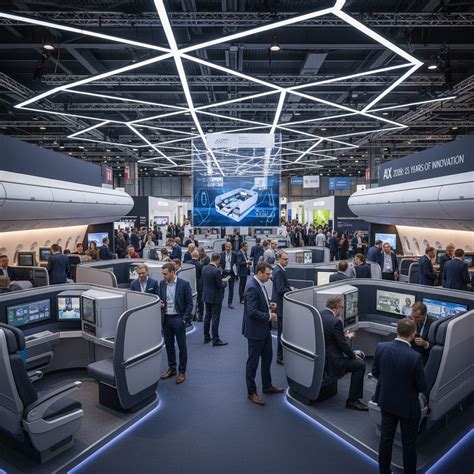
Airbus has already begun positioning Smart Catering for broader adoption, showcasing a functional prototype at the Aircraft Interiors Expo in Hamburg. The event served as a platform to introduce the technology to potential airline customers and highlight its scalability.
If adopted widely, Smart Catering could redefine industry standards for inflight provisioning. Airlines would no longer rely on generalized assumptions but instead operate with route-specific, data-backed precision. This could lead to significant reductions in waste, improved operational efficiency, and a more tailored passenger experience.
The long-term vision extends even further. As airlines experiment with pre-order meal systems integrated into the Smart Catering framework, the line between prediction and certainty begins to blur. Passenger choices made before boarding could feed directly into the system, creating a hybrid model that combines customer input with AI-driven forecasting.
Ultimately, Smart Catering reflects a subtle but powerful shift in aviation philosophy. Data is no longer a byproduct of operations—it is becoming a core operational asset. By capturing and analyzing information that was previously invisible, Airbus is enabling airlines to rethink one of their most persistent inefficiencies.
The promise is straightforward but transformative: fewer wasted meals, lighter aircraft, lower costs, and a more responsive service model. In an industry where incremental improvements can yield massive returns, Smart Catering stands out as a quiet revolution with measurable impact—one tray, one flight, and one data point at a time.