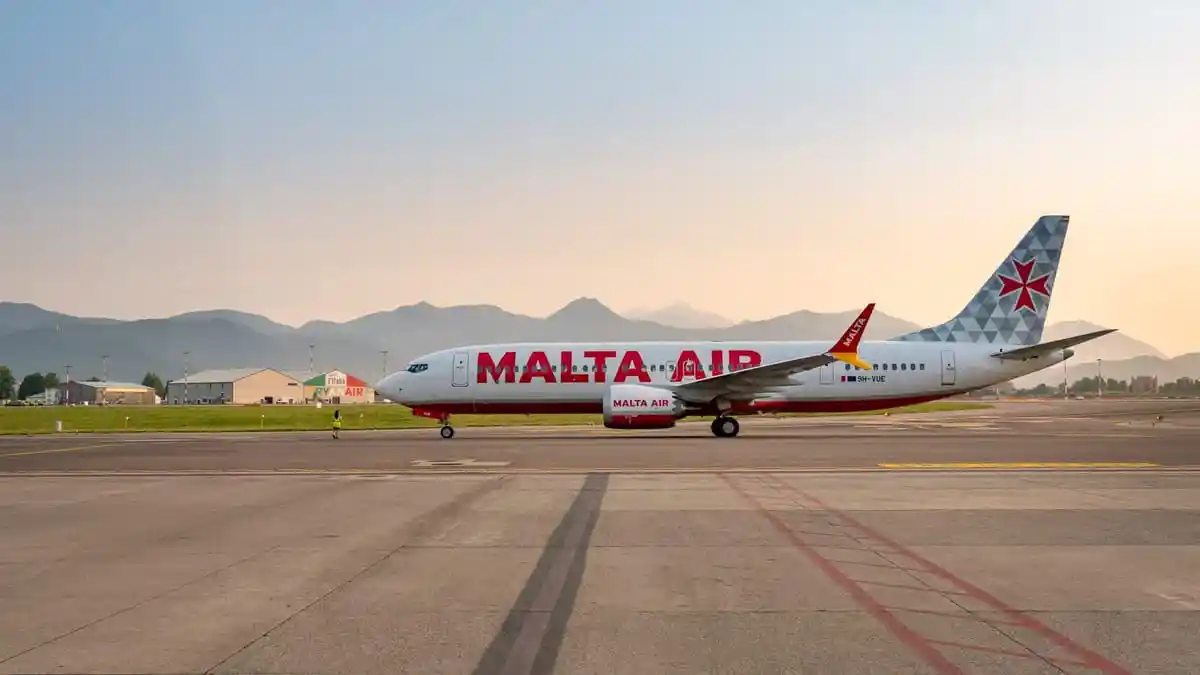
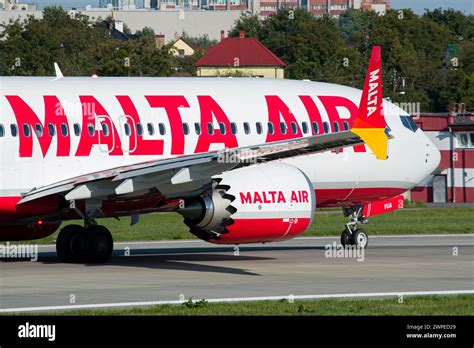
In a bizarre and rare incident that has captivated the aviation world, a Ryanair 737 MAX 8, operated by Malta Air, experienced a temporary in-flight engine shutdown earlier this month. While mechanical failures and bird strikes have historically made headlines for similar events, this situation was caused by something unthinkably simple and seemingly harmless—a cockpit sun visor.
Unexpected Turbulence: The Incident Unfolds at 8,000 Feet
The aircraft, a four-year-old Boeing 737 MAX 8200, was conducting a routine flight from Krakow (KRK), Poland, to Milan Bergamo (BGY), Italy, when the chaos ensued. During initial climb-out, at around 8,000 feet altitude, a cockpit sun visor became detached, striking the engine start lever on the pedestal. This unintentional contact led to the fuel cutoff for one of the CFM LEAP-1B engines, causing it to shut down mid-flight.
Pilots were immediately confronted with a scenario they could hardly have predicted during training. A sun visor—a tool meant for pilot comfort—had just compromised the powerplant of a state-of-the-art jet. Recognizing the urgency, the flight crew declared a “PAN PAN” emergency call, signifying a situation requiring urgent attention but not yet life-threatening.
From Climb to Crisis: The Crew’s Swift Response
Despite the jarring nature of the malfunction, the crew handled the event with remarkable professionalism and adherence to protocol. Following the engine shutdown, they leveled off at Flight Level 100 (10,000 feet) and began working through engine restart procedures.
The “PAN PAN” call ensured air traffic control prioritized communication with the flight, while not initiating a full-scale emergency response. After successfully restarting the engine, the flight continued its climb and resumed course to Milan, ultimately landing 29 minutes behind schedule.
Investigative Spotlight: Malta Authorities Step In
Because the aircraft is registered in Malta, the incident triggered an investigation by Malta’s aviation regulator. While such events involving minor cabin equipment rarely lead to systemic inquiries, the severity of the outcome—an engine shutdown at altitude—necessitated deeper scrutiny.
The Ryanair Group released a brief statement:
“As this is subject of an ongoing investigation, which we are cooperating fully with, we are unable to comment.”
This silence underscores the sensitivity and potential industry implications of the event. Safety regulators will likely explore whether the cockpit sun visor mechanism meets certification robustness standards and whether modifications or bulletins may be warranted fleet-wide.
Not an Engine Failure—But Still a One-Engine Flight
Technically speaking, this was not a mechanical engine failure but an accidental shutdown. However, to the average passenger—or even seasoned flyers—the distinction is small. One engine went quiet in flight, and the aircraft had to operate temporarily with just one engine.
Modern twin-engine jets like the 737 MAX are certified under ETOPS (Extended-range Twin-engine Operational Performance Standards), which allow them to fly long-haul routes even over remote areas. These aircraft are designed to fly safely with one engine inoperative, as long as the crew adheres to the specified procedures.
In this case, the engine was brought back online, and the aircraft never deviated to an alternate airport. But for a few tense minutes, the plane operated as a single-engine jet at 10,000 feet—a scenario every pilot trains for, but one that very few actually encounter due to a flying sun visor.
Training and Technology: Why Pilots Were Ready
Thanks to rigorous training programs and simulator drills, pilots are prepared for engine failures, shutdowns, and abnormal events as part of their recurring certification. The 737 MAX, despite its checkered past, is equipped with advanced monitoring systems and fail-safes, providing pilots with data and automation support to handle anomalies effectively.
This readiness and real-time diagnostic capability ensured that the Malta Air crew could:
- Identify the exact cause and extent of the issue
- Keep situational awareness under control
- Reignite the engine safely without further escalation
The quick cancelation of the “PAN PAN” signal after the engine restart is a testament to the aircraft’s redundancy systems and the competence of its crew.
Cockpit Layout and Design Implications
This incident also sheds light on cockpit ergonomics and component vulnerability. While the visor itself is not a mission-critical component, its proximity to essential engine controls raises questions. Was it a design oversight? Is the engine start lever too exposed? Could better locking mechanisms for such peripherals prevent accidental dislodgment?
Regulators may now consider requiring airlines to:
- Inspect visor retention strength
- Review control layout shielding
- Implement physical guards around high-priority engine switches
Such reviews could yield design improvements not just for Ryanair’s fleet but for Boeing 737 MAX aircraft worldwide.
Decoding the Emergency: PAN PAN vs. MAYDAY
The flight’s use of “PAN PAN” rather than “MAYDAY” was not just semantics. These standardized aviation calls help controllers gauge the urgency and nature of the event:
- PAN PAN: Signals urgent but not immediately life-threatening problems. Aircraft are given increased attention, but do not trigger full emergency protocols.
- MAYDAY: Indicates grave and immediate danger requiring immediate assistance. Typically used for uncontrollable fires, total engine failure, or structural compromise.
In this case, the temporary shutdown of one engine—while serious—was contained, and the ability to restart it allowed the crew to de-escalate the alert. That’s not always the outcome, making this a case study in calm under pressure.
Flying Public Reassurance: Just How Safe Is the 737 MAX?
Understandably, any headline involving the 737 MAX raises eyebrows. After the aircraft’s troubled history involving MCAS system failures and two high-profile crashes, its name still evokes caution. However, it’s crucial to differentiate those prior issues from the unrelated mechanical mishap in this incident.
The LEAP-1B engines powering the MAX have proven extremely reliable. This event wasn’t due to a design flaw in the engine or the airframe, but a cockpit item malfunction. The very fact that the engine restarted without complication reinforces the aircraft’s resiliency and safety envelope.
Furthermore, all 737 MAX aircraft now operate under intensified maintenance regimes, regulatory scrutiny, and upgraded software. If anything, today’s MAX jets are more closely monitored and maintained than nearly any other aircraft in service.
Lessons Learned: Human Factors and Safety Culture
More than anything, this event underscores the role of human factors in aviation safety. Even in the era of automation, simple issues—like a loose visor—can ripple into near-emergencies. This isn’t just a mechanical story; it’s about procedures, design philosophy, and constant vigilance.
The industry’s response will likely include:
- Reviewing non-critical component retention standards
- Revisiting cockpit ergonomics and impact zones
- Enhancing pilot awareness of physical vulnerabilities in equipment layout
It’s a reminder that even the most sophisticated machines are susceptible to the unexpected consequences of simple oversights.
Conclusion: The Visor That Brought Down an Engine
While headlines may sensationalize the incident, the truth is both sobering and impressive. A sun visor—dislodged in an unpredictable moment—caused the shutdown of a jet engine, and yet the situation was expertly handled. No lives were lost. The engine was restarted. The flight landed safely.
But this story will reverberate through aviation checklists, design reviews, and pilot briefings for years to come. Because sometimes, it’s not the complex systems that fail—but the small things we never expect to matter.